
This story was originally written and accepted as a profile for Fungi For Future. Then, Ms. Pittman asked me to review the TrustYouth I’s list and asked me if the I’s she added to my story (e.g., Idea, Influence, Invite, Inspire) did anything. I replied with: Absolutely! The I’s helped me to realize how fortunate I am to have so many adults respond to my ideas with enthusiasm. I hope they help you share yours, whether yours is a story of how trust from adults helped or lack of trust caused you to doubt yourself.

INSPIRATION. My inspiration comes from my father, a 26th-generation fisherman. In his small village, children and adults often went hungry. Today, I live a life of privilege, where I do not have to worry about where my next meal comes from. But this privilege comes with responsibility. The more I’ve learned about food insecurity in the U.S., the more I felt I owed it to him — and to those still facing the reality he grew up in — to take action.
In many food-insecure communities, the biggest hurdle is not just getting enough calories but accessing fresh, homegrown produce, which is often the first thing to disappear from the table due to high costs.
IDEA. My journey into food production began with a single lemon seed salvaged from a glass of lemonade. The seed was the first of many plants that I have gone on to grow. In the six years since then, I have experimented with dragon fruits, pomegranates, lemons, mangos, apples, avocados and pineapples. Keeping them alive was hard. When the season turned to winter, the air grew colder, and the tropical fruit trees needed warmth. Most would eventually die during those hard months.
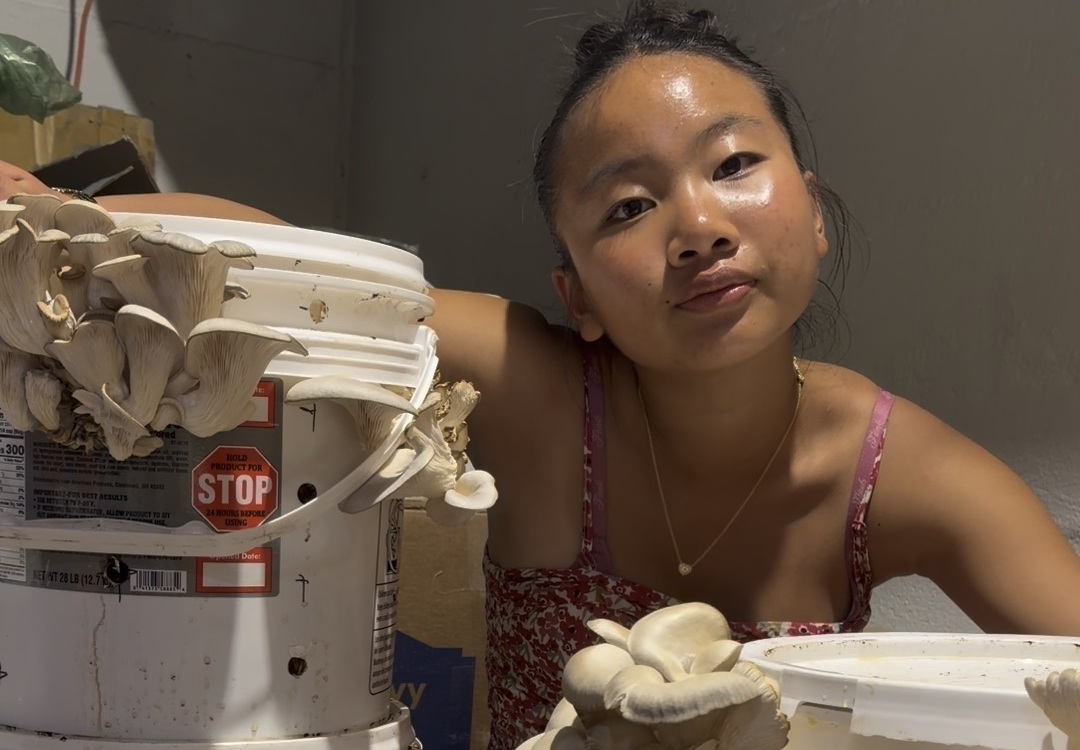
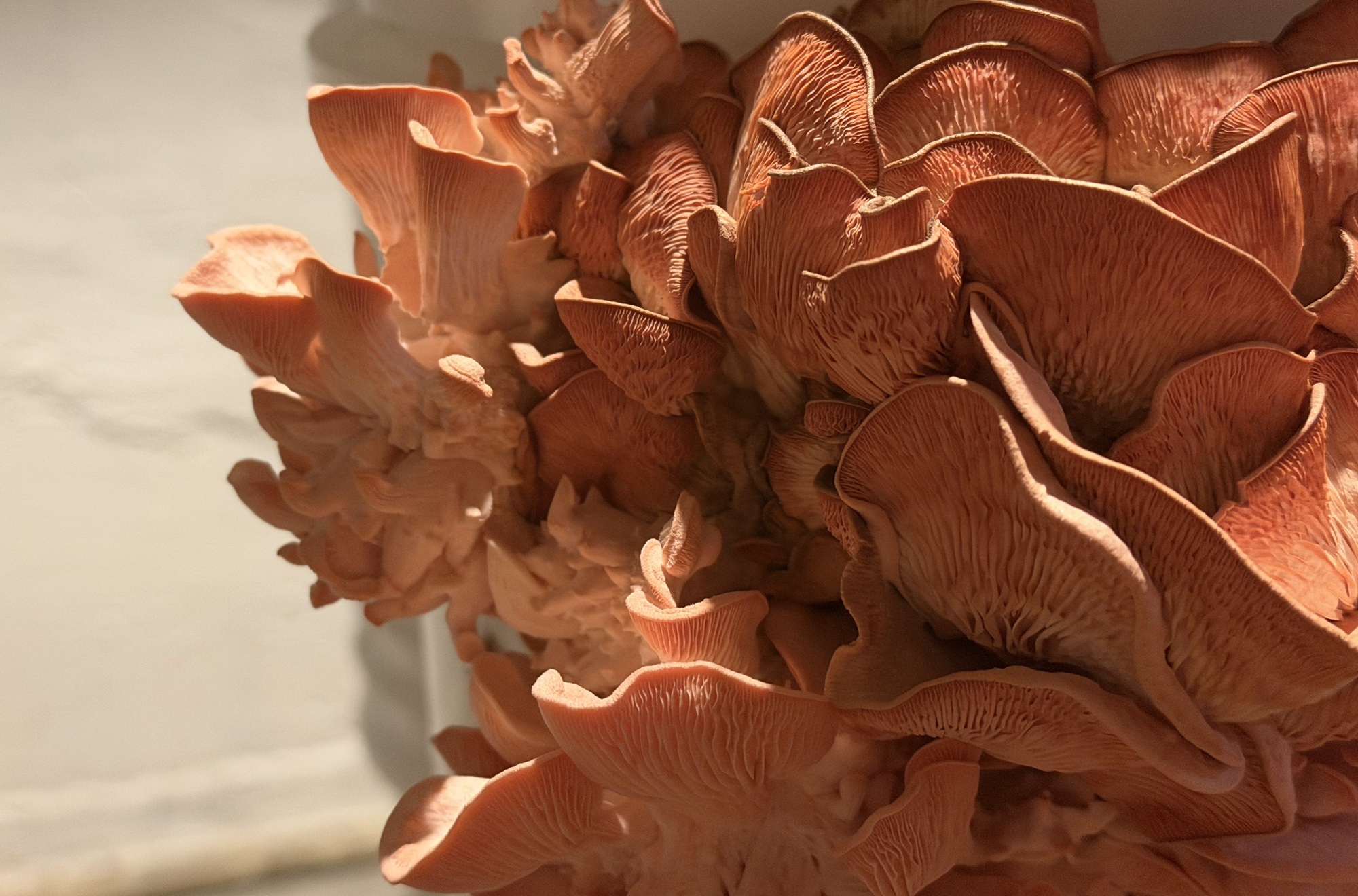
INFORMATION. I shifted my attention to fungi because I was curious how they grew. They don’t have seeds or visible roots or anything, so I thought it’d be an interesting at-home project. With my own money, I bought the Back to the Roots Organic Pink Oyster Mushroom Grow Kit to understand the basics. After that, I wanted to do the real thing. So, I ordered the mushroom spawn and began packing buckets with layers of coffee grounds and straw.
Fungi For Future
Pink oyster mushrooms grown by Gloria Chi.
INFLUENCE. The more time I spent on mushrooms, the more opportunities I ran into that influenced my thinking and planning. At the beginning of the 2025-2026 school year, I met Cortland V. Carrington III, the founder of American Mushroom & Spice Co., through a web search. I emailed him, inquiring about his business, and he promised to give me a tour of his mushroom facility. He showed me the machinery he built to grow their mushrooms and shared their techniques to keep a sterile environment, which is important to reduce contamination. He heard my idea and then enthusiastically encouraged me to go through with it.
Courtesy of Gloria Chi
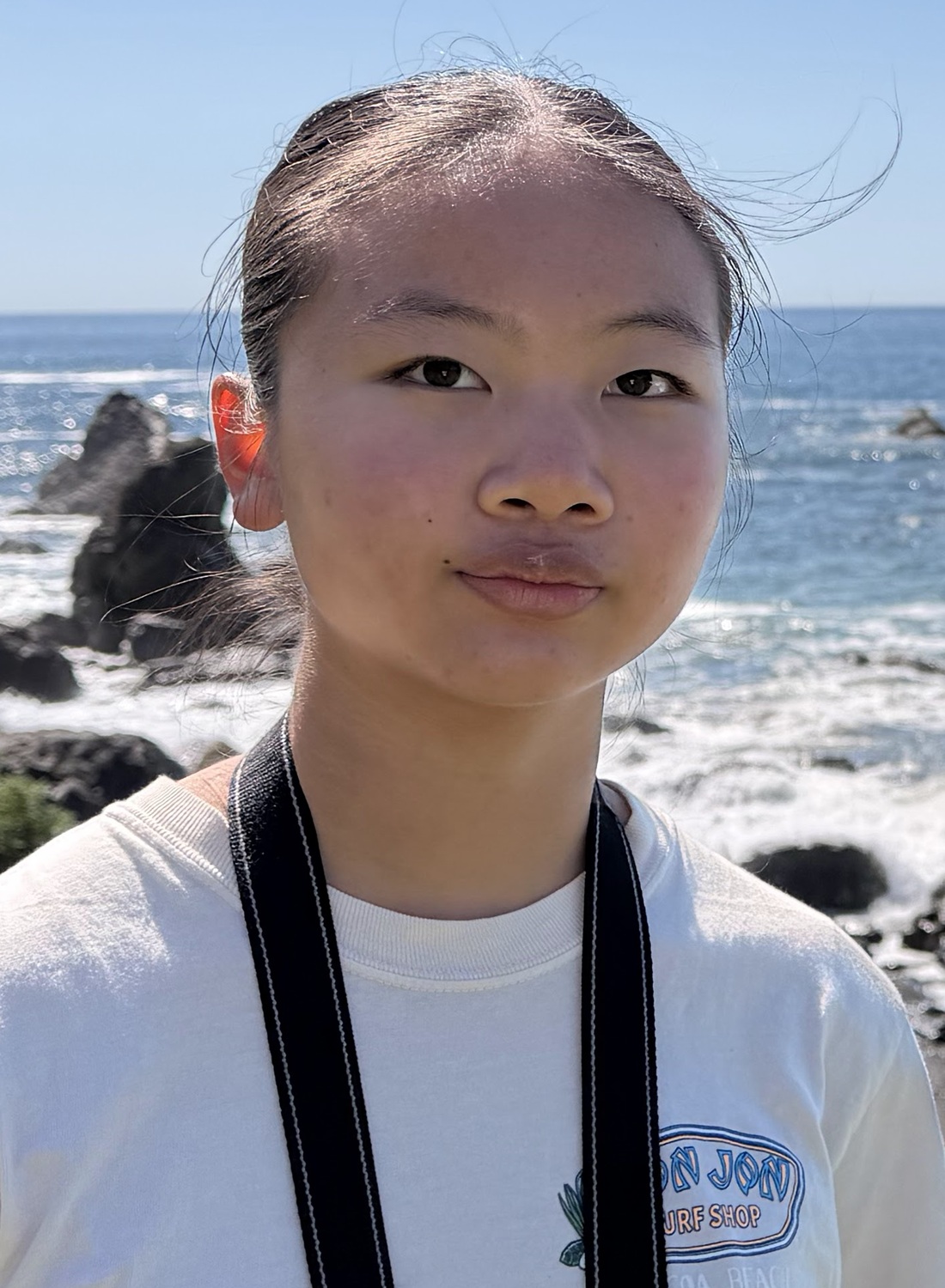
Gloria Chi
IMPLEMENTATION. I started Fungi For Future, a new nonprofit, in March 2026. At that point, I had been applying for grants to grow more mushrooms, and I had friends who wanted to help. I knew I needed to expand to more than just my basement, which is why my mushroom project turned into Fungi For Future. With a name and a team, I was able to partner with other organizations and grow more mushrooms. Right now, Fungi For Future is filing for 501(c)(3) status, which makes us an officially tax-exempt nonprofit. I can’t file it myself because I am under 18 years old, so my mother filed for me and handles the finances. I’m also in the process of deciding who to invite to be on my board.
[Related: The 15-year-old behind Florida’s new bipartisan drowning prevention law]
INVOLVEMENT. The support I have received from the Bloomington, Ind., community is incredible. People are willing and eager to help when given the chance. Partnerships have been essential to this work. Through collaborations with both national and local coffee shops, including Starbucks, Soma Coffee House & Juice Bar, Crumble Coffee and Bakery, The Inkwell Bakery & Cafe, Hopscotch Coffee, and the Bloomington Bagel Co., I have been able to collect used coffee grounds as a growing substrate. Crumble Coffee and Bakery has been a particularly supportive partner. All these partnerships began with a worker wanting to help. Every employee from every coffee shop filled my buckets to the brim with their used coffee grounds.
As Fungi For Future grows, so do our volunteers. Recently, my dad and I worked together to hang posters around coffee shops. Now our community can see the posters and reach out asking what they can do to help. Already, we have 10 eager volunteers who joined after seeing the posters.
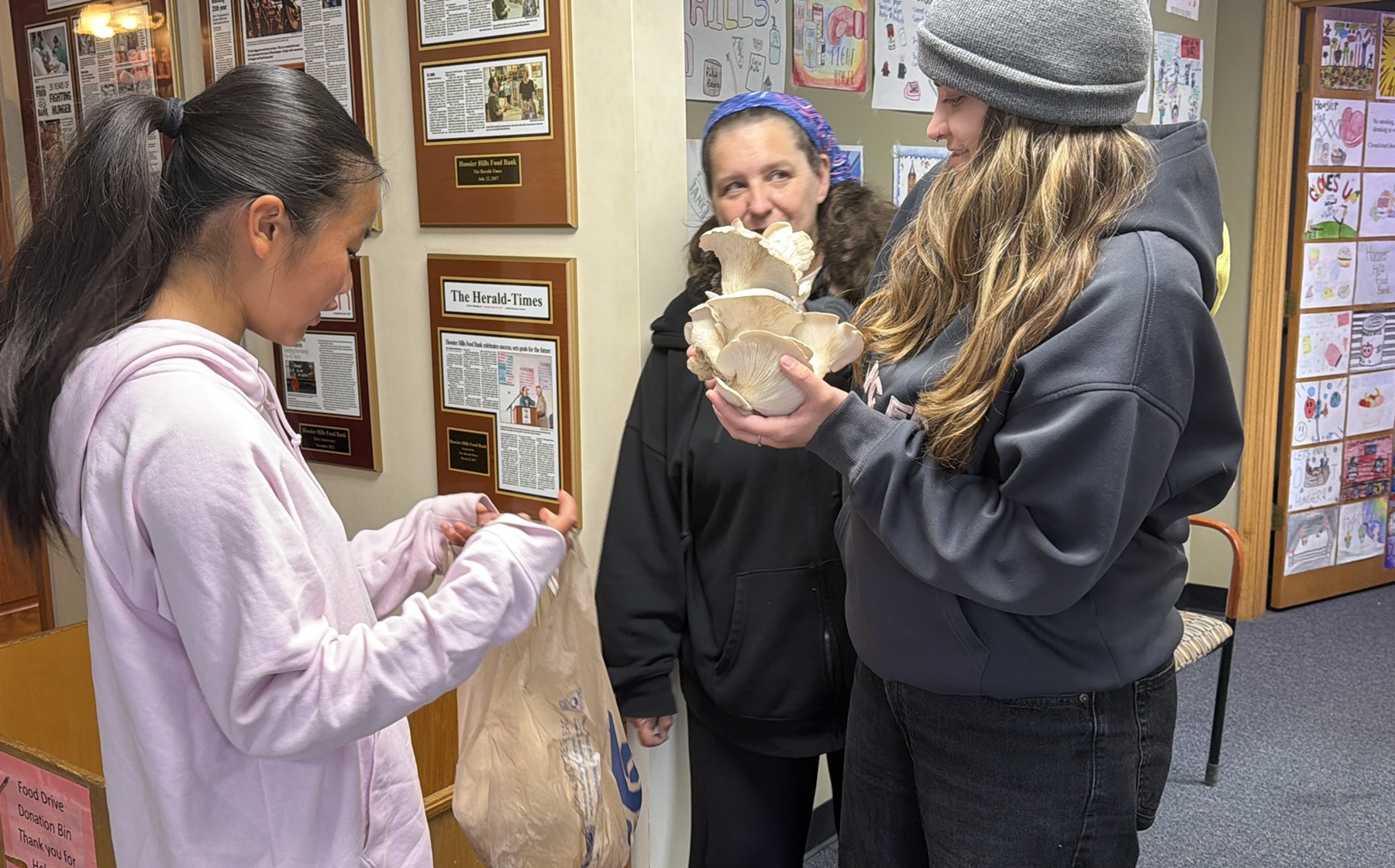
IMPACT. Once Fungi For Future was established, we reached out to the Hoosier Hills Food Bank to grow even more mushrooms for food distribution! This partnership allows us to grow mushrooms at Will Detmer Park, expanding our impact and reaching more people in need. We have received $2,500 in grants from Sodexo, Karma for Cara and Wayfinder to fund our work. To date, we have produced 90 pounds of mushrooms across three varieties of oyster mushrooms. In just one month, we repurposed 162 pounds of coffee grounds, which is the equivalent of 5,440 cups of coffee. In 2027, we hope to repurpose 500 pounds of coffee grounds and raise $5,000 in grants!
Fungi For Future
Fungi For Future donates mushrooms to the Hoosier Hills Food Bank for the first time.
IMPROVEMENT. I started Fungi For Future by growing the mushrooms in 5-gallon buckets with holes I drilled in my room. Originally, I hoped the mushrooms could become a sustainable food source for my community, but I’m not growing as many mushrooms as I thought I would. Still, I haven’t given up on my goal to solve hunger with my mushrooms. Not only is Fungi For Future focusing on food production, but it’s also reducing food waste, helping the environment and connecting the community.
INVITATION. My goal is to encourage kids to chase their passions even when those passions are uncommon. After all, mushroom growing isn’t exactly the most popular afterschool activity.
My experience with Fungi For Future has shown me that when young people pursue what excites them, community support often follows.
People want to help youth who are brave enough to be different.
INSIGHT. I feel like my generation is trading our authentic selves for a generic digital persona, something that ultimately leaves a lot of people feeling voiceless. When young people feel pressured to maintain a curated digital persona, they lose the safety to experiment, make mistakes and discover who they really are, the three most valuable experiences a kid can have. These experiences help youth build confidence and a sense of belonging.
As I reflect on this journey, one lesson stands out: We must build with youth, not just for youth. For teachers and youth development professionals, this means creating authentic opportunities for youth to co-design, lead and shape the programs meant to serve them. My teachers offer my peers and me lots of opportunities to participate and learn new things. But I wonder how much bolder we could be if these adults used the I’s to help create more authentic opportunities to drive wonder and our passions.
When youth and adults work together and trust one another, we can achieve amazing things.
***
Gloria Chi is the founder and executive director of Fungi For Future, a youth-led nonprofit that grows and donates mushrooms cultivated on spent coffee grounds.