

At Spring Valley High School in South Carolina, a student refused to put away her phone, then refused a teacher’s order to leave. A school resource officer was called. What followed was captured on video and seen around the world: a white officer grabbed the Black 16-year-old by the arm, overturned her desk, and dragged her across the floor — leaving her with a cast on her arm and rug burns.
What the video did not show, and what the teacher may not have known, was that this girl had just entered foster care after her mother’s death.
She needed compassion. Instead, she was arrested for disturbing the peace.

This is the school-to-prison pipeline — not a metaphor, but a documented process. The ACLU has recorded children as young as five arrested for throwing paper airplanes or wearing sagging pants.
I have spent years in education watching children get lost or disappear into the juvenile justice system. In South Carolina, Black residents comprise roughly 28% of the state’s population but account for more than 60% of children referred to the Department of Juvenile Justice (DJJ) and more than 75% of children detained. My interviews with staff suggest that the average student enters DJJ at 16, technically a junior, but with only around 5 of the 24 credits needed to graduate. The school system failed them before the justice system ever received them.
But these students have not given up. In surveys administered inside DJJ facilities in partnership with E.A.R.N. The Right Inc., a nonprofit serving incarcerated youth, students completed the prompt “I am…” with words like smart, strong, determined, not a bad person, not the reason I’m here. Asked “I need…,” they wrote a chance, a job, a safe home, a positive peer group. Asked what success looked like, they described earning a GED, attending college, buying their mother a home, becoming a mechanic. These are not the words of children who have surrendered.
The adults closest to these kids say the same thing. In more than 20 interviews with law enforcement officers, advocates, DJJ staff and teachers, I heard one consistent refrain: “These aren’t bad kids.”
They need help — help the juvenile justice system was never designed to provide.
An arrest or period of incarceration triggers a mandatory 365-day waiting period before a student may return to public school in South Carolina.
South Carolina’s DJJ serves roughly 500 students. Backlogs, worsened by COVID-19, have left youth waiting months beyond the legal 45-day maximum hold. One staff member I interviewed estimated that 45 or more youth spent over 200 days in detention awaiting trial. Inside those facilities, youth accused of truancy are housed alongside youth accused of murder. Federal investigators confirmed the danger: one facility with approximately 100 residents logged 134 fights and 71 assaults in just 11 months.
The failure follows youth home as well. An arrest or period of incarceration triggers a mandatory 365-day waiting period before a student may return to public school in South Carolina. My own scan of state policies shows this explicit 365-day ban is among the most severe in the nation, Texas is next in most restrictive with a discretionary ability to ban students with certain offenses for up to 365 days. Whereas in Maryland, students must be re-enrolled prior to release. Colorado, Connecticut and Washington have re-enrollment policies that require students in school within five days of release date. (If you are interested in learning more about state-by-state statutes, check out the extensive tracking done by the Juvenile Law Center.)
One young man I learned about had earned all but 12 credits toward his diploma after two and a half years in custody — yet could not return to his own school for a full year, despite a clean record and no in-school behavioral issues.
His DJJ superintendent built him a custom online program; he ultimately completed his degree remotely while living with his grandmother in another state and is now enrolled in college. He was fortunate. Most superintendents lack either the time or the resources to build such a program — and most youth are not so lucky.
Rearrest rates for youth leaving confinement can reach 75% within three years of release, according to a seminal report from the Council of State Governments Justice Center.
However, the RAND Corporation has found that correctional education reduces recidivism by 13% and returns $5 for every $1 invested.
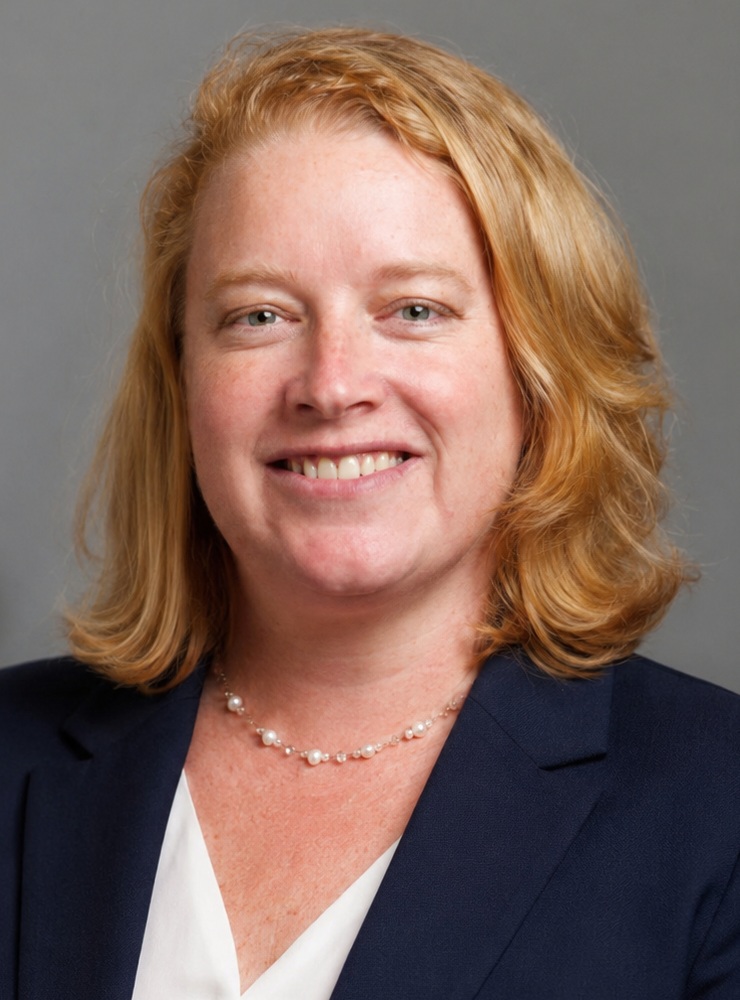
Courtesy of Kimberly Nolan
Kimberly Nolan
My research identifies five priorities, each grounded in what I found in South Carolina:
(1) End incarceration for status offenses — truancy, running away, incorrigibility — behaviors that are not crimes yet funnel children into the justice system.
(2) Replace assistant-delivered lesson plans with qualified, trauma-informed classroom teachers. Many students arrive with IEPs and 504 plans that were never implemented, having been out of school for months or years before their arrest. DJJ frequently inherits noncompliance it did not create.
(3) Repeal the 365-day exclusion policy, which tells returning students — like the young man who lost a year over 12 remaining credits — that they are not welcome back.
(4) Recruit Black male educators. DJJ’s population is disproportionately Black boys who, as one source told me, “cannot be what they cannot see.”
(5) Replace punishment with what one DJJ superintendent called “radical love” — shifting institutional culture from reactive to proactive, grounded in a single operating principle: Success is the only option.
None of this requires new science. The research on adolescent development and correctional education has been settled for years. What is missing is political will. There are signs of movement: a federal investigation into facility violence compelled South Carolina to publicly commit to reforms, and Murphy’s NAACP chapter continues pressing the legislature on conditions and oversight. But the 365-day exclusion policy and the incarceration of status offenders remain law today — the two changes advocates say would matter most.
What is also missing is mentors who lead with trust. E.A.R.N. The Right Inc. operates from the belief that “if a person can begin to cultivate Empathy, Attitude, Respect, and Knowledge as a part of their daily lives, they have the basic tools to thrive in a professional setting as well as in their relationships with others.” The organization works to equip at-risk youth with the skills and confidence to self-advocate and build productive futures.
The children inside these facilities call themselves smart, strong, determined — not the reason they’re here. They are still trying.
They deserve adults willing to try with them.
***
Kimberly Nolan, Ed.D., is a teaching professor in the Graduate School of Education at Northeastern University. She is the author of “Getting Out of South Carolina’s Juvenile Justice System: Education for Young Incarcerated Offenders” (Lived Places Publishing, 2024), available as open access at www.livedplacespublishing.com.