
“When it comes to achieving challenging goals, grit is necessary but not sufficient. The situation also matters — and to an astonishing degree.”
— Angela Duckworth
“What Dilla created was a third path of rhythm… a new, pleasurable, disorienting rhythmic friction.”
— Dan Charnas, “Dilla Time”

 Lately, I keep hearing the same concern about artificial intelligence in schools: it removes productive struggle.
I understand the concern. Learning takes effort. Students need opportunities to get stuck, make mistakes, rethink what they are doing and find their way through.
Still, I have started to wonder what we mean when we say “productive struggle.”
Education has a habit of taking complicated ideas and making them portable. Angela Duckworth’s grit gets reduced to perseverance. Carol Dweck’s growth mindset becomes encouragement to keep trying. Howard Gardner’s multiple intelligences somehow helped produce decades of talk about fixed learning styles, despite his objections. Eventually, the name remains while much of the concept disappears.
Productive struggle feels vulnerable to the same thing.
A difficult assignment is not educationally valuable because it is difficult. Whether the struggle produces anything depends on the young person sitting in front of it.
[Related: The Odyssey’s epic tale of productive struggle]
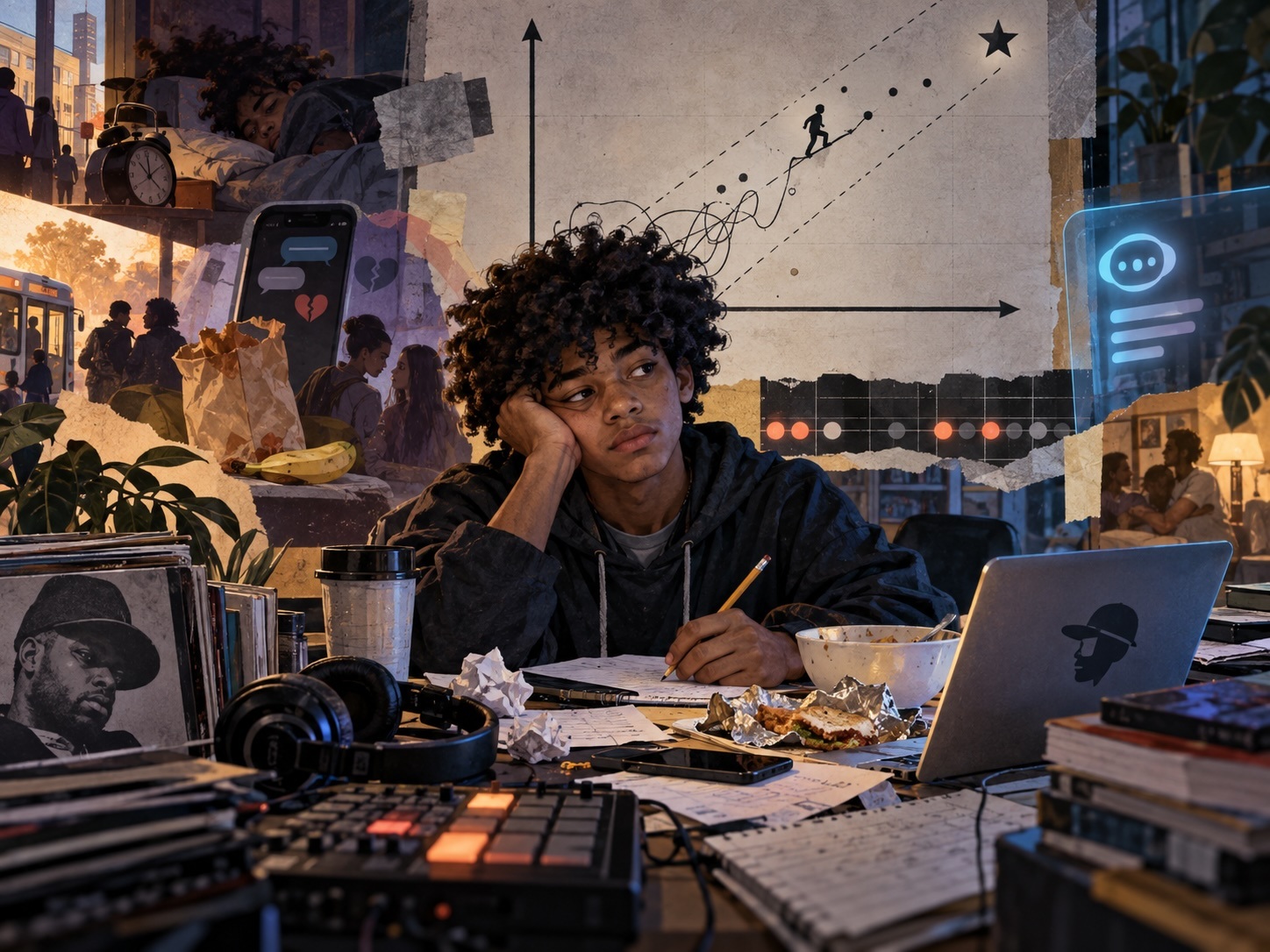
That person arrives with more than a skill level. Maybe they slept badly. Maybe the morning at home was chaotic. Maybe something happened with a friend. Maybe they are hungry. Maybe they have failed at this kind of task enough times that difficulty starts to confirm something they believe about themselves.
Tomorrow could be different.
Developmental science has spent decades showing that young people grow through their experiences with the people and circumstances around them. Yet inside a classroom, it can become tempting to treat the student as a fixed quantity.
Vygotsky’s Zone of Proximal Development gives us a place where challenge exceeds what a learner can do alone while remaining reachable with help. Csikszentmihalyi’s work on flow offers another familiar picture of skill and challenge meeting at the point of deep engagement.
Those models are useful. The diagrams are clean. The kid isn’t.
A student can know enough to do the work and still have little available for it at 2:30 on a Thursday.
I think about this when I listen to J Dilla.
I love Dilla’s music. His drums can feel as though they are slipping away from where they are supposed to land. A snare arrives late. Something else pushes forward. The beat keeps moving around the place where your ear expects to find it.
When I am in the mood, I love that feeling. It makes me listen harder. A beat that initially sounds crooked begins to make sense.
And then there are days when Dilla hurts my head. I do not want to chase the beat. Give me something that lands where I expect it to land. Maybe Sugar Hill, Eric B. or just a disco playlist.
The record does not change. I do. So does the context.
That seems like a problem for the way we talk about productive struggle. We often imagine challenge as something we can calibrate in advance: give this student something at the right level, push a little beyond what they know, offer enough support to keep them moving.
There are days when the same student needs more help than yesterday. There are subjects in which difficulty creates curiosity and others where it starts to feel like proof that they do not belong. Sometimes a teacher should wait before stepping in. Sometimes waiting accomplishes nothing.
This is where AI gets interesting.
Bellwether recently examined productive struggle in relation to AI and made an important point: AI can help students through difficulty, and it can also let them bypass the intellectual work entirely.
A student who asks AI to write the essay has avoided something.
A student who asks for help understanding a confusing term may finally be able to get started.
Those uses are very different, though both made the task easier. Maybe “easier” is too blunt a category.
If students are learning historical reasoning, dense vocabulary might get in the way of the work we care about. If they are learning to build an argument, organizing ideas may be part of the work or the obstacle keeping them from doing it.
AI forces us to be more specific: What do we want the young person to struggle with?
Good teachers already make these calls all day long. They notice when frustration turns into withdrawal. Sometimes they give a hint. Sometimes they let the student keep working.
Dilla did something similar with music. He could move a drum just far enough to make you search for the beat without losing it altogether. He knew where to introduce friction and where to leave something steady.
[Related: Beyond the panic — Turning youth “AI anxiety” into strategic digital literacy]
And still, I cannot listen to him every day and nobody forces me to for the sake of productive struggle. The same music that pulls me closer one day can make me turn it off the next. Young people bring at least that much variability into a classroom.
So before we protect productive struggle from AI, we should be more careful about what we are protecting. Maybe AI is not threatening productive struggle as much as it is threatening our ability to be vague about it.
Sometimes struggle opens something up. Sometimes it just hurts your head.
***
Pass the mic: Where hip-hop meets human development. Each month, Daniel Warren, Ph.D., will bring scholars and rappers into dialogue to spark new ways of seeing youth, culture and change. Previous pieces in series:
Manifest Destiny’s Child | You might also like: The problem with learning styles
Keeping it real | Structure, control and leaving room
Look inside: What MCA taught us about gratitude, growth and growing up
Shifting the game: Kuhn, hip-hop and the future of youth work
When positive youth development meets the Native Tongues
Biggie through Bronfenbrenner’s Eyes
Daniel Warren is director of youth development and education at Fluent Research. He holds a B.S. in psychology from Northeastern University and a Ph.D. in human development and child study from Tufts University.