
K-12 civics education, for me, was an important yet not terribly inspiring experience. In the past ten years, though, civics education has come a long way. This summer — with its 250th observances of America’s founding — has provided its own civics moment. Across the country, the semiquincentennial was marked by a wave of civic activations, public events and engagement efforts designed to commemorate the moment.
These efforts may generate visibility and momentary participation, but they do little to build the sustained civic engagement our country needs for a strong, inclusive democracy.
As 50 million voting-eligible young people (18-29) consider the ballot box this fall — many for the first time — this is an opportunity to double down locally on youth agency and civic imagination. Presidential libraries, congressional causes and court-sponsored remembrances certainly have a role to play. But democracy is built much closer to home, and there’s something uniquely powerful about students directly naming and building the future they envision for their communities.

The path forward for a fractured country is forging durable, problem-solving bonds, neighbor to neighbor, educator to educator, student to student.
Whether every young person has that opportunity depends a great deal on policy.
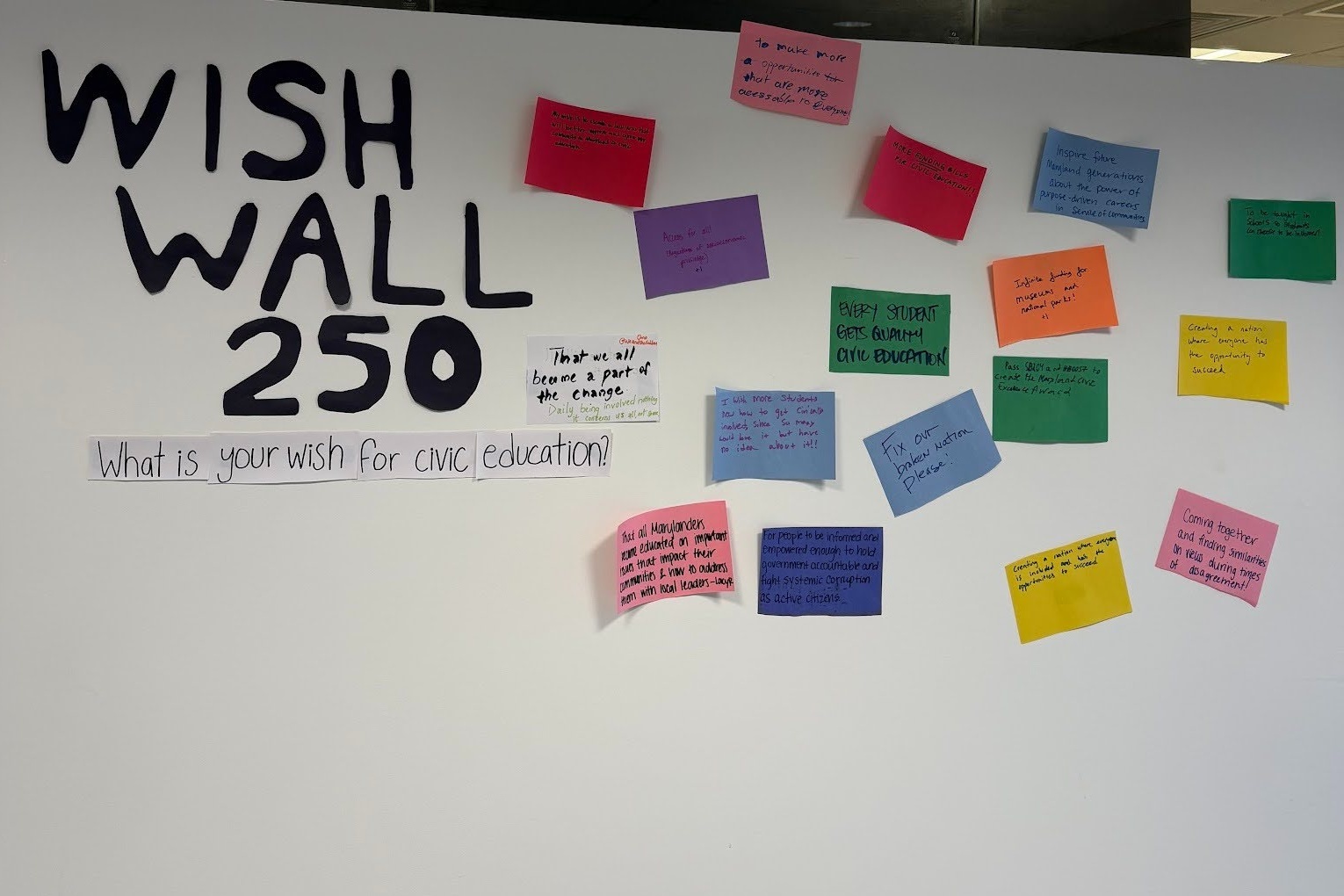
In April 2026, I had the joy of delivering a concluding civic charge to close out Maryland’s statewide summit on civics education policy and practice. At the event, young people created a “Wish Wall 250,” describing their hopes for civics education in their state. Comments included increased funding, universal access to civics education in schools and better preparation to tackle the critical issues that matter to youth and their communities. Notably, some of the students who articulated their aspirations for civics went a step further; they also testified before the Maryland General Assembly, advocating for the passage of a statewide civics education bill.
[Related: Q&A — As America turns 250, SPIRIT SERIES teaches democracy through theater]
That youth-led advocacy became part of a broader, four-year effort to advance Maryland’s civic seal legislation. In the spring, Maryland passed a civic seal bill designed to expand student access to civics education across the state. That policy win reflects the advocacy and collective impact of Maryland’s Civic Education Coalition, a network of students, educators, experts, scholars and community members working to strengthen civic learning.
Maryland’s civics education ecosystem is especially notable for its internal diversity and impact. The coalition played a key role in aligning stakeholders, supporting youth engagement and building the case for a statewide approach to civics education. In particular, the active participation of its Youth Advisory Council helped ensure that student perspectives remained central throughout the process, while higher education partners and cross-regional engagement helped build the statehouse influence needed to move the bill across the finish line this year. That coalition design, moreover, contains lessons for coalitions and local champions of civics education across the country —
Youth leadership paired with cross-sector collaboration can translate shared priorities into policy action.

Courtesy of Andrew Wilkes
Andrew Wilkes
Maryland’s progress is part of a larger national shift in civic learning. Experiential, student-led civics is happening all over the country. Whether it’s students championing faster emergency response times in Kentucky, ensuring that school lunch includes halal options in New York City, or learning how to build consensus and span viewpoint differences among their peers, the path to thriving, multiracial democracy starts in our classrooms and comes out into our communities. This work isn’t partisan. It’s focused on community-level problem solving. In my capacity as Generation Citizen’s chief voice and policy officer, I have the joy of collaborating with nonprofits, students, educators and pro-democracy organizations to help welcome young leaders into our civic life. That work includes virtual discussions, in-person workshops and small group activities, lobby days at statehouses, and supporting nonpartisan high school voter registration.
Here’s what connects these strands: ensuring that all of America’s students have access to hands-on, community-based civic learning and participation.
Yes, America’s origin story deserves close, careful review. But the weight of our attention should be forward-facing and place-based. At the ground level, America’s 250th provides us with an opportunity: amplifying the imagination of young people as co-architects of the communities, coalitions and cross-generational partnerships that they design and that they value most. Maryland’s 2026 passage of a civic seal bill, joining 18 other states that have done so, provides one example of how states can meaningfully carry forward the momentum of this milestone moment. When states and districts invest in comprehensive, experiential civics, America’s rising generation of leaders benefits — and so do the rest of us. Now is the time to make that investment and to build the communities and country that we have long deserved but not yet fully realized.
***
Andrew Wilkes, Ph.D., is Generation Citizen’s chief voice and policy officer. His work is focused on building coalitions, commitment and resources that advance universal student access to comprehensive, project-based civics education.