
 When the three of us met for breakfast in March, we didn’t know where it would lead. But we knew it would have something to do with Scott’s passion to get more young people involved earlier and more deeply in making the changes they would like to see in the world. The insight he shared was profound. Months earlier, he had begun tracking the number of times adults in Youth Service America’s vast network asked him what they could do to get youth to trust them.
Curious, he began to flip the question to ask: Do you trust them?
The genuine pauses that followed each time he posed this query led Scott to create a simple set of reflection questions for youth and adults to answer confidentially. He tallied the responses and returned them, grouped by youth and adults. The trust gap appeared every time.
By the time we paid the check, the project had a name — TrustYouth — and a two-pronged plan.
- Scott would continue to invite folks from his vast youth service network to engage — using the reflection questions, but later, simply responding to the question: Do adults trust young people?
- Karen and Merita, as managing partners of the Alliance for Youth Thriving, would reach out to Alliance partners whose affiliates or networks work with young people who are often overlooked for leadership roles — because they don’t look, sound or act like the people already at the table — to gauge their interest in exploring safe ways to pose an even thornier question: Do adults trust all young people equally?

The youth-adult trust gap
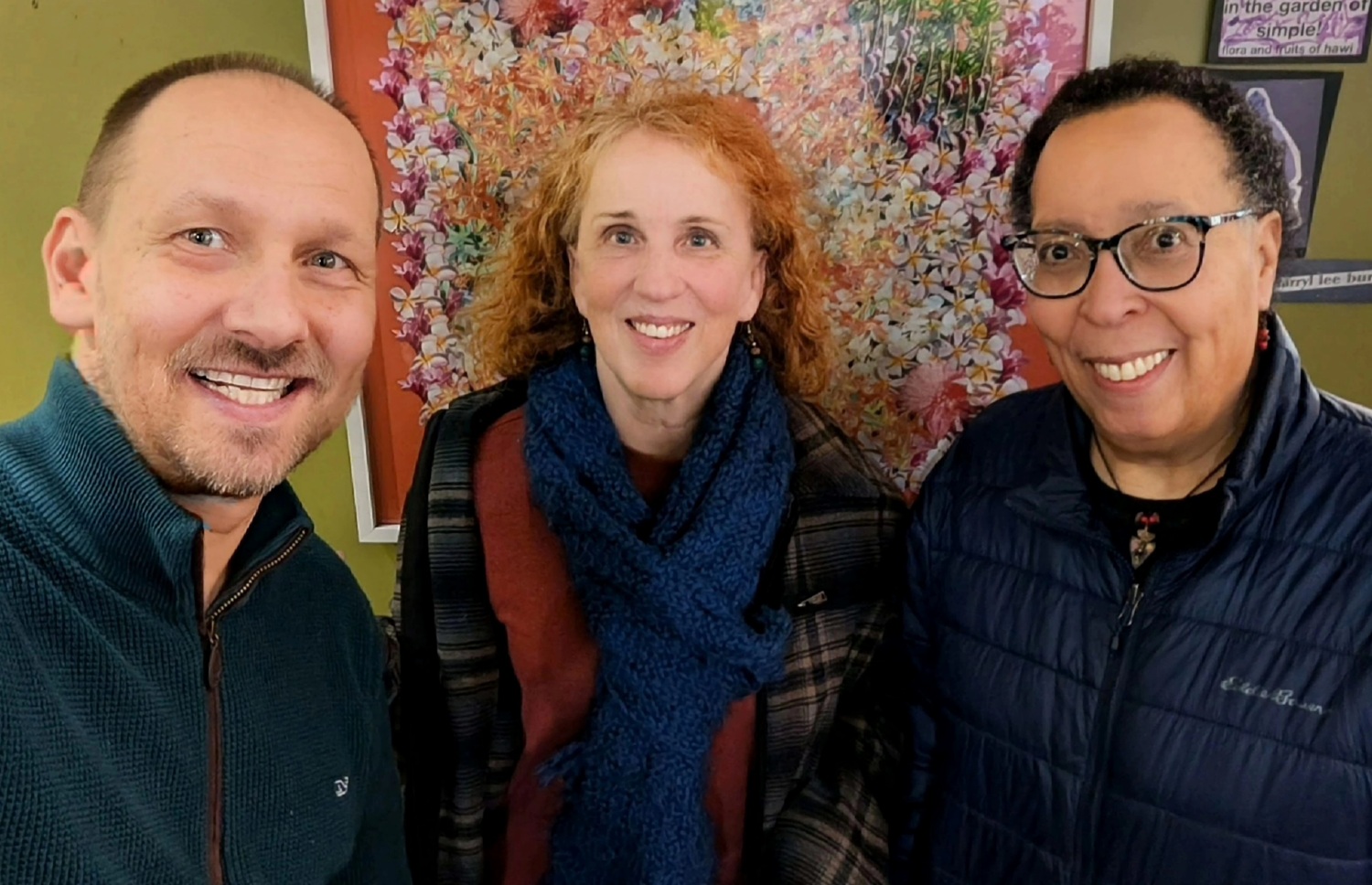
Scott Ganske
Scott, Merita and Karen at Busboys & Poets in March.
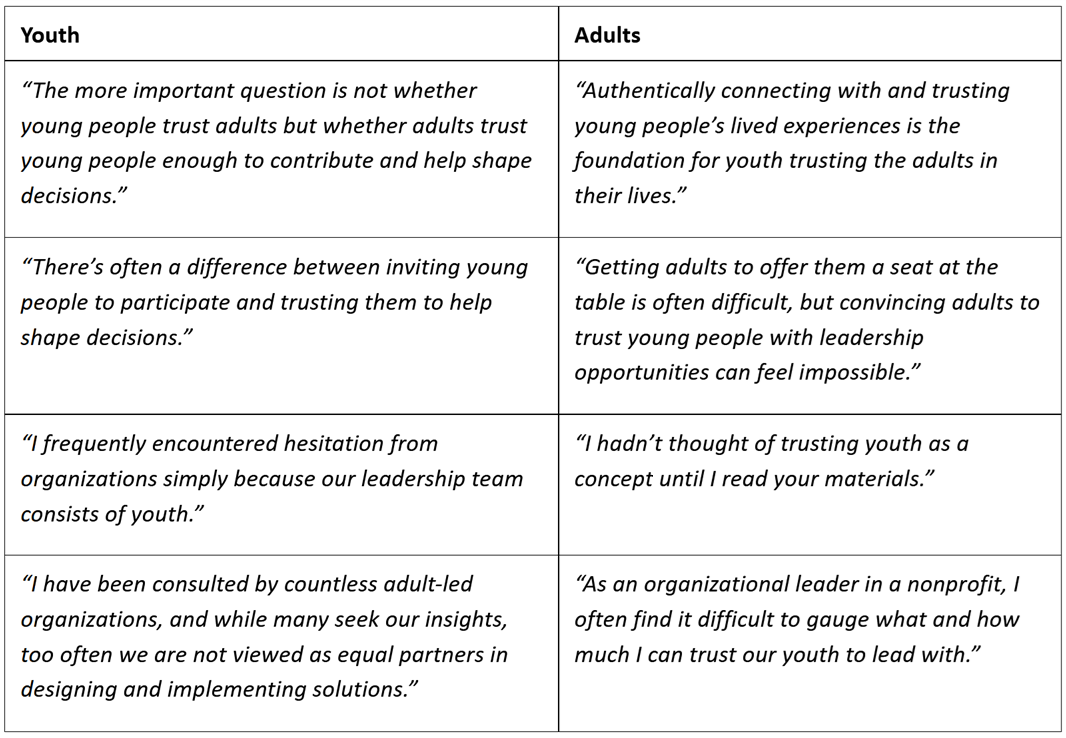
In under two days, Scott’s simple sign-up invitation netted more than 300 responses from youth and adults across the United States and around the world. Middle school students, high school students, college students, educators, nonprofit leaders, school district administrators, community leaders and researchers all chose to help explore what TrustYouth can become.
The small sample of quotes below confirms the gap: Young people aren’t asking for more opportunities to participate.
They want to be recognized for their abilities and trusted with meaningful responsibility.
Adults, on the other hand, are conflicted. They generally agree with the idea that preparing our future leaders requires relinquishing responsibility today. But many genuinely struggle with when, where and how to do this given that, in the end, they are often held accountable for youth’s actions. And they operate within systems and cultures that underestimate adolescents’ potential to do good and overestimate their ability to do damage to themselves or others, intentionally or unintentionally.
The “some youth more than others” trust gap
The disappointment felt by youth who are actively working to make a difference despite being sidelined by adults doesn’t match the despair felt by youth who have been told not to try because they aren’t smart enough, straight enough, white enough, well-behaved enough or economically stable enough.
These young people often find themselves struggling to get information about decisions that affect their lives or to be included in rooms where decisions are made.
Five Alliance for Youth Thriving National Partners — Camp Fire, The Corps Network, Forum for Community Solutions at the Aspen Institute, the Institute for Educational Leadership and Special Olympics Unified Champion Schools — along with Youth Service America, agree that TrustYouth, to have its fullest impact, will have to involve these young people and the adults who work with them every step of the way. Together, they will use the next few months to bring these two big questions into their networks.
Activating trust from imagination to impact
If our early invitations to engage with TrustYouth have taught us anything, it’s this: People aren’t joining TrustYouth because they believe we already have all the answers. They’re joining because they believe it’s past time to really examine the question.
[Related: Young people aren’t giving up — they’re losing trust]
Why do so many young people feel they are only invited to contribute to projects rather than initiate them? Why are so many adults hesitant to support youth’s desire to design and implement solutions? Why are some young people actually discouraged from independently gathering information on decisions that impact their daily lives? How can adults and youth do more to demonstrate the power of inclusion from idea to implementation and improvement? How do we make the invisible rules of trust — how, when, where, for whom and with whom — more visible, inclusive and effective?
We have started weaving some of these “I” words into our TrustYouth graphic to help all of us dig deeper to understand what it takes to fully trust and be trusted.
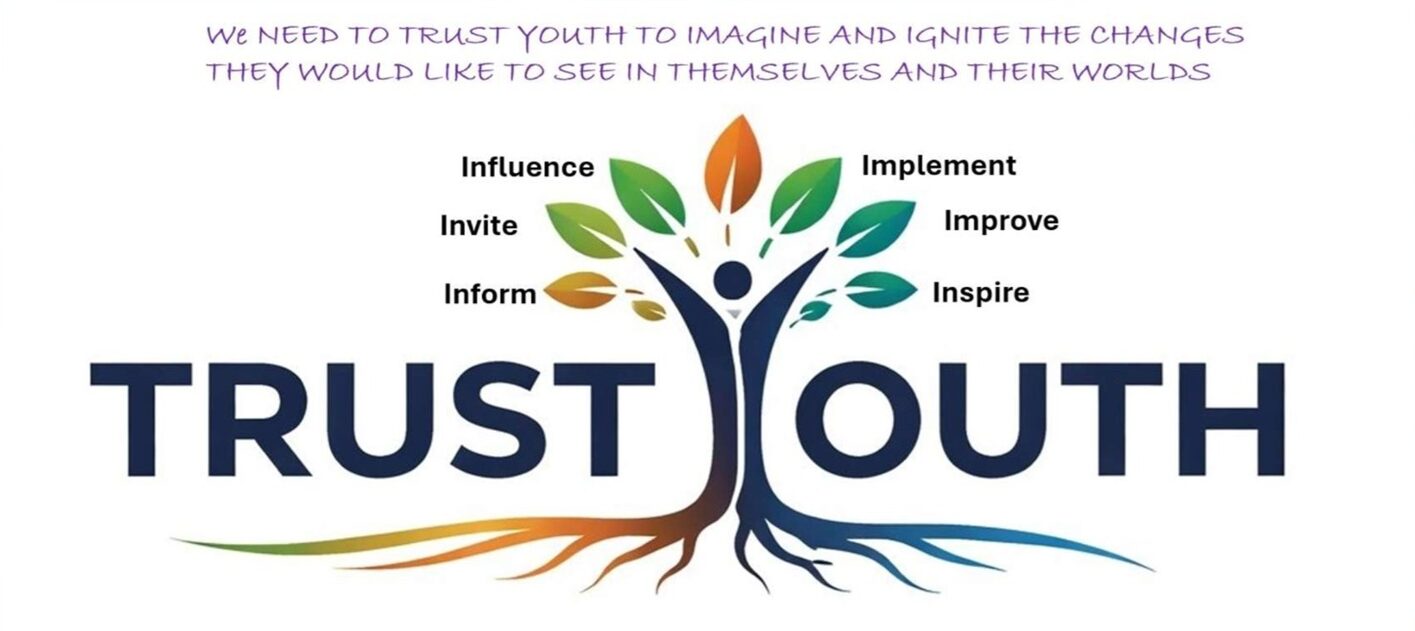
None of these actions happens by accident. They happen when adults — as well as peers — intentionally create opportunities for young people to contribute, influence decisions and lead.
TrustYouth isn’t a fine-tuned program or initiative. It’s an invitation to help shape what comes next.
Learn more, explore the reflection questions or join the growing community at www.trustyouth.org.
***
Karen Pittman and Merita Irby serve as managing partners of the Alliance for Youth Thriving as well as editor-in-chief and editor, respectively, of Youth Today. Scott Ganske is vice president of education at Youth Service America, where the TrustYouth inquiry began. He also serves as youth and field engagement manager for Youth Today.