
In child welfare, electricity is not considered optional. Neither are food, safe temperatures, working utilities or a home environment capable of meeting a child’s medical and developmental needs.
When an investigator enters a family’s home, the absence of those necessities can become evidence of neglect. But when a natural disaster and an inadequate institutional response deprive thousands of families of the same necessities, responsibility becomes harder to assign — and the children living through it become easier to overlook.

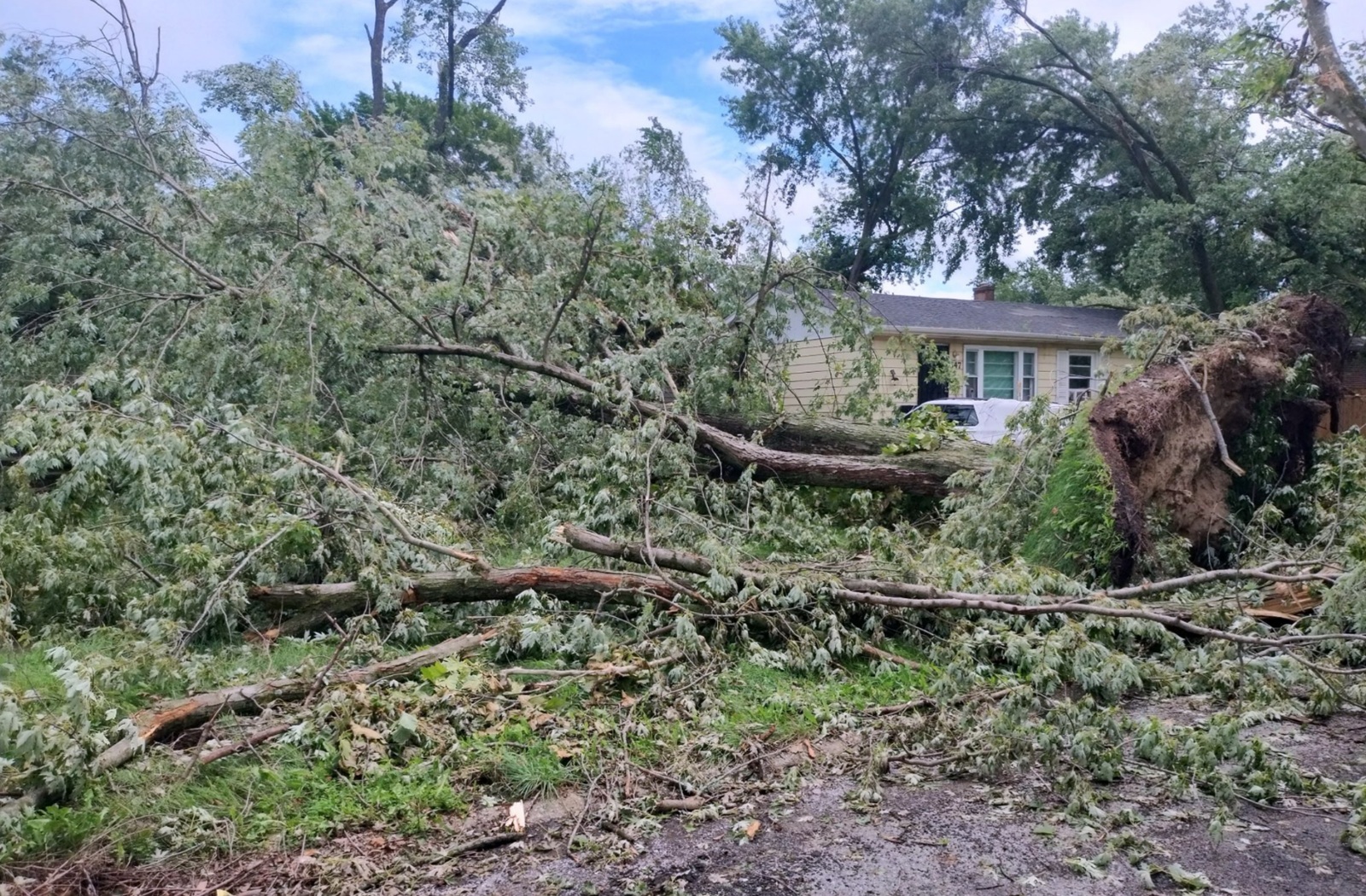
That contradiction unfolded across Northwest Indiana after severe storms caused the largest outage in the history of NIPSCO, the regional utility. At the peak, more than 300,000 customers lost power. Families spent days without refrigeration, air conditioning or reliable food access.
Children lost not only electricity in their homes but also access to schools that ordinarily provide meals, technology, trusted adults, predictable routines and connections to health and social services.
Indiana was confronting two disasters. Catastrophic flooding in central Indiana produced nationally visible images of submerged homes and boat rescues. Northwest Indiana’s crisis was less visually dramatic but prolonged: thousands of families remained inside dark, overheated homes while spoiled food, missed work, disrupted medical care and closed schools compounded the original storm damage.
The question was not only when the lights would return. It was whose deprivation would be treated as a crisis-related emergency — and whose would be treated as a private family problem.
By the evening of Aug. 21 — 10 days after the outage began — NIPSCO reported 38,459 customers still without power and 336,041 restored (retrieved from the live tracker on Aug. 21, 2026). Gary and Portage remained scheduled for substantial restoration two weeks after the storm. For more than a week, Northwest Indiana’s crisis remained largely a local story while residents and social media creators repeatedly asked why tens of thousands of people living without a basic necessity had not become national news. As those posts spread, national outlets and prominent creators amplified the crisis. Food critic Keith Lee partnered with the Salvation Army to distribute relief supplies in Gary, and Indiana Pacers star Tyrese Haliburton matched his donation. Online visibility produced attention and material assistance that families had already spent days awaiting. NPR later confirmed the pattern, reporting that thousands of Northwest Indiana residents remained without power nearly two weeks after the storm — and that local advocates were calling out how Black communities are too often expected to weather crises that would draw urgency elsewhere.
The available data do not establish that utility crews restored power more slowly because of residents’ race or income. But inequity cannot be measured only by the order in which power lines are repaired. In Gary, 76.2% of residents are Black, 33.1% live in poverty, and 28.5% are under age 18. Families with fewer financial resources are less able to pay for hotels, replace refrigerators full of food, miss work, travel to cooling centers or purchase generators. They are also less likely to be able to quickly replace the instruction, meals, technology, health and social supports, and safe environments that disappeared when schools closed. Even if every community waited the same number of days, the burden of that wait — and the ability to recover from it — was never equal.
When hardship is called neglect

Courtesy of Channing L. Collins
Channing L. Collins
Federal law establishes a broad minimum standard. Under the Child Abuse Prevention and Treatment Act, child abuse and neglect includes an act or failure to act by a parent or caretaker that causes serious harm or presents an imminent risk of serious harm. Federal child-welfare guidance describes neglect as failing to provide essential needs such as food, shelter or medical care. This guidance expressly states that poverty does not equal neglect. However, the federal Children’s Bureau has itself acknowledged that poverty and neglect are too often conflated, leading to unnecessary child-welfare involvement and family separation.
That conflation is apparent in Indiana’s child welfare data. Neglect accounted for more than four out of five substantiated maltreatment cases in the state in 2024. Black children are more than twice as likely to live in poverty as white children. Black children represented approximately 12% of Indiana’s child population but 17.5% of substantiated maltreatment victims and approximately 19% of children remaining in foster care at the end of the fiscal year. Poverty is likely the underlying cause behind these statistics. But my research on media portrayals of African American women accused of filicide (child death) documented how framing influences public understanding. Black families often become nationally visible through crime or individual blame but melt into invisibility when the story is institutional neglect and failure.
Hurricane Katrina should have permanently changed how the country defines disaster response. Federal reviews found that critical parts of the national response plan were executed late, ineffectively or not at all; command failures delayed relief; and FEMA became overwhelmed during the response. The harm did not end with landfall. Public-health investigations documented deaths indirectly related to Katrina, including deaths associated with generator use, cleanup hazards and medical conditions worsened by the storm. Years later, federal investigators still found significant unmet mental-health needs among children affected by Katrina.
Northwest Indiana is not Katrina, and the magnitude is not comparable.
The lesson is that delayed federal action can deepen disasters, and children continue carrying its consequences after public attention moves on.
What Indiana’s responses revealed
There was no grand conspiracy to put Black and poor families and communities last. Nor was there recognition that they should be prioritized. Without this commitment to ensure those farthest from opportunity are prioritized, the delays and hiccups associated with disaster response exacerbated already precarious living situations, causing challenges that will likely linger after the electricity is restored:
- Gov. Mike Braun declared a statewide emergency and activated the Indiana National Guard. The president approved a federal Emergency Declaration on Aug. 15, allowing FEMA to support state and local response. Braun requested a Major Disaster Declaration on Aug. 20 so individual households could receive federal assistance, but that request remained pending.
- The state offered eligible households up to $5,000 in disaster assistance and allowed SNAP recipients to request replacement food benefits.
- Gary opened locations for meals, charging and oxygen refills. Other communities quickly mounted similar responses.
- Gary schools, however, remained closed through Aug. 21. Similar patterns of using community facilities to open cooling, charging and feeding centers but not opening schools were found in other affected communities.
- Indiana residents filed a proposed class-action lawsuit alleging that NIPSCO failed to maintain vegetation around power lines. NIPSCO disputes the allegations. The lawsuit nevertheless reflects a demand for accountability for families that absorbed the consequences of prolonged infrastructure failure.
Schools will eventually reopen. Children will begin to return. But will the East Chicago mother who reported that the outage made it harder to protect her daughter from seizures be cited if her daughter has more absences? Will the Crown Point families who lost food and income be charged with neglect because school policy states that repeatedly arriving without lunch or lunch money may signal reportable abuse or neglect?
Cities cannot rebuild regional power grids or finance disaster recovery alone. Local relief cannot replace coordinated state and federal emergency and long-term responses for lower-income families for whom multiple risks remain after the lights return. And the question remains:
When the lights go out, whose children matter?
And who is held responsible for leaving them in the dark?
***
Channing L. Collins, Ph.D., is founder and lead architect of The Collins Institute for Child and Family Systems, a child welfare policy scholar and a Northwest Indiana resident.