
“Styles upon styles upon styles is what I have.”
— Beastie Boys
“People believe they have learning styles, and they try to think in their preferred style, but doing so doesn’t help them think.”
— Daniel Willingham

 My music app thinks it knows me. Most days it does.
I went on a streak of listening to 1970s and early 1980s New York rap a month ago. Must have listened to Funky 4+1’s “That’s the Joint” fifty times over the course of a week, and my algorithm noticed.
At first, that feels good. The algorithm gets me. It recognized my taste and responded to feed me some more tasty stuff with similar flavors. But after a while, the recommendations can feel less like discovery and more like confinement. It keeps giving me the same music, when what I liked was bigger than the songs themselves.
Maybe I wasn’t only drawn to “old-school NY rap.” Maybe I was drawn to the party atmosphere, the call-and-response, the group vocals, the dance-floor pulse, the funk and disco underneath it. A smarter algorithm might hear those deeper qualities and move outward: go-go, house, electro, club rap or later records that sampled and reimagined that early energy (e.g., the Beastie Boys’ Paul’s Boutique).
The problem is not that the algorithm knows I like Funky 4+1. The problem is that it may not know why.
That, in my opinion, is also the problem with learning styles.
For years, there has been a strongly held popular belief that people (especially young people) have a specific way they learn best: visual, auditory, kinesthetic or some other style. Throughout my frequent conversations with teachers, I hear this distinction frequently about the students they teach and an inevitable declaration about their own learning style. The idea comes from a good place. It sounds respectful. It tells young people, especially those who have struggled in school, “You are not bad at learning. You just learn differently.”
While it stems from a generous and well-meaning instinct, the popular focus on fixed learning styles can be more restrictive than helpful.
Educators and youth workers should notice a difference. But Daniel Willingham, a cognitive psychologist at the University of Virginia, is one of the leading researchers challenging the claim behind learning styles that students learn better when instruction is matched to a fixed personal style.
[Related: Q&A — As America turns 250, SPIRIT SERIES teaches democracy through theater]
Willingham reinforces the point that students are not all the same. He echoes the feeling that preferences are real and powerful. But he is also saying that preference is not destiny. The best way to teach something depends less on a learner’s label and more on the content, the task, prior knowledge, attention, practice and what the student is asked to think about.
A map may help with geography because geography is spatial. Hearing pronunciation matters when learning a language. Physical practice matters in dance or sports. But none of that should compel us to believe that a person is permanently one kind of learner. It only proves that good teaching matches the strategy to the material.
Learning styles become dangerous when they start to operate like a shallow algorithm.
A student says: “I like seeing things that I am learning about.”
The system responds: “You are a visual learner! We will give you visuals.”
The student concludes: “I am a visual learner.”
The system narrows further: “Then we will avoid methods that do not match your style.”
Then the student begins to wield the label too: “Yes, I will also avoid methods that do not match my style.”
This is where the label becomes more than a description. It becomes a form of agency. The young person now has language to explain discomfort, defend preference and opt out of unfamiliar learning situations. That may feel empowering at first, but over time it can shrink the learner’s range. Reading feels foreign. Lecture feels impossible. Discussion feels inefficient. Writing feels like punishment. Practice feels boring.
What began as recognition becomes restriction.
The better response is not to ignore preference. Preference matters. If a young person says they like visuals, we should listen. But then we should ask what is underneath that preference. Do they need structure? Examples? Pattern? A model before they try?
Those are different needs. They call for different supports. Calling all of them “visual learning” may be as crude as calling Funky 4+1 only “old-school rap.” It is accurate enough to feel useful and crude enough to become harmful.
[Related: Why unconstrained kids need unconstrained ecosystems]
Although such simple labels are lovely in their own way, youth work should be more expansive than that. When a young person tells us what feels comfortable, we can treat that as a doorway, not a diagnosis. We can begin where they are, but we should not leave them there.
The goal is not learning style. The goal is learning range. It is dynamic.
A good youth-serving professional, like a good DJ, widens the mix. They invite young people to talk, read, move, build, listen, perform, revise, reflect and try again. They honor and celebrate what youth prefer while helping them discover what else they can do.
People are not visual learners, auditory learners or kinesthetic learners. They are learners.
Our job is not to build a smaller playlist around their preferences. It is to hear the deeper pattern, widen the mix and help them discover capacities they did not know they had.
And if we didn’t know that before — well, now we do.
***
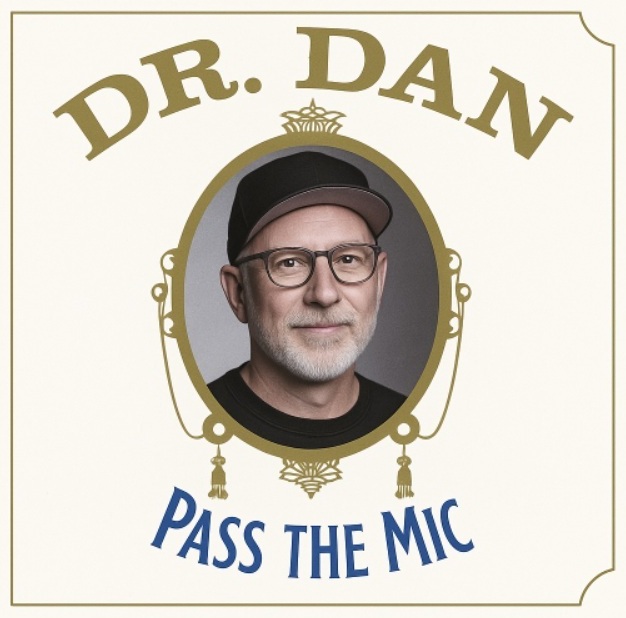
Pass the mic: Where hip-hop meets human development. Each month, Daniel Warren, Ph.D., will bring scholars and rappers into dialogue to spark new ways of seeing youth, culture and change. Previous pieces in series:
Structure, control and leaving room
Look inside: What MCA taught us about gratitude, growth and growing up
Shifting the game: Kuhn, hip-hop and the future of youth work
When positive youth development meets the Native Tongues
Biggie through Bronfenbrenner’s Eyes
Daniel Warren is director of youth development and education at Fluent Research. He holds a B.S. in psychology from Northeastern University and a Ph.D. in human development and child study from Tufts University.