
When people talk about improving 3-to-6 p.m. opportunities for young people, the conversation usually starts or ends with questions about funding. How do we raise more money to start or expand programs to reach more youth?
Those are important questions. But over the past year, working alongside local governments, schools, nonprofit organizations, coaches and neighborhood leaders across Orlando, I’ve found myself asking a different one:
How do we better coordinate the resources we already have?
That question has reshaped how I think about youth development — and about leadership itself.

I developed my leadership and entrepreneurial skills through sports, culminating in a career as a professional baseball player. I started Pure Momentum to help student athletes unlock their full potential on and off the field and gain exposure in their areas of interest. I knew the importance of collaborating with parents, coaches, schools, municipal recreation departments, mentoring and afterschool programs, and local governments.
Like many nonprofit leaders, I once assumed that if a community had a clear need and a strong solution, partnerships would naturally follow. Experience taught me otherwise. Lasting impact depends less on creating something new than on building the relationships that allow existing organizations to work together.
Some of the most meaningful progress I’ve witnessed didn’t come from launching a new initiative. It came from helping organizations recognize how their strengths complemented one another. A city department might provide facilities, a nonprofit might bring programming, local leaders might contribute community relationships, and volunteers might offer the time and energy that hold everything together. None of those pieces alone solves the problem. Together, they create opportunities that would be difficult for any one organization to provide. Here are four lessons I learned.
(1) Organizations work at different speeds for good reasons. This lesson came from working alongside municipal partners.
Nonprofits often move quickly because they’re driven by immediate needs. Public agencies, on the other hand, operate within systems designed to ensure accountability, transparency and responsible stewardship of public resources. At first, those processes felt frustrating. Funding cycles followed annual budgets. Facility agreements required multiple reviews. Insurance standards differed from one location to another. Background screenings, procurement policies and risk management procedures all influenced how quickly a project could move forward.
Early on, I viewed many of those requirements as obstacles. Over time, I realized they weren’t there to slow progress. They existed to protect young people, safeguard public resources and ensure consistency for everyone involved.
That realization changed my approach.
Instead of asking, “Why is this taking so long?”
I began asking, “How can we align our work with the system that’s already in place?”
It was a subtle shift, but it changed the quality of every conversation that followed. Meetings became less about overcoming resistance and more about understanding priorities. Partnerships became easier because we spent less time pushing against the process and more time working within it.
(2) Collaboration isn’t simply about getting organizations into the same room. It’s about helping people understand one another.
Coaches, educators, city staff, funders and neighborhood leaders all define success differently. Each brings unique responsibilities, timelines and pressures. A coach may focus on mentorship and teamwork. An educator may be thinking about academic outcomes. City staff have public accountability. Funders often need measurable results. Neighborhood leaders see needs that may never appear in a report or proposal.
Real collaboration begins when those different perspectives are acknowledged rather than overlooked. Some of our most productive conversations happened after we stopped trying to convince one another and started listening instead. Once people understood what mattered to each partner, finding common ground became much easier.
Pure Momentum Group
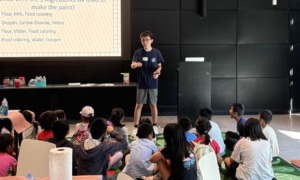
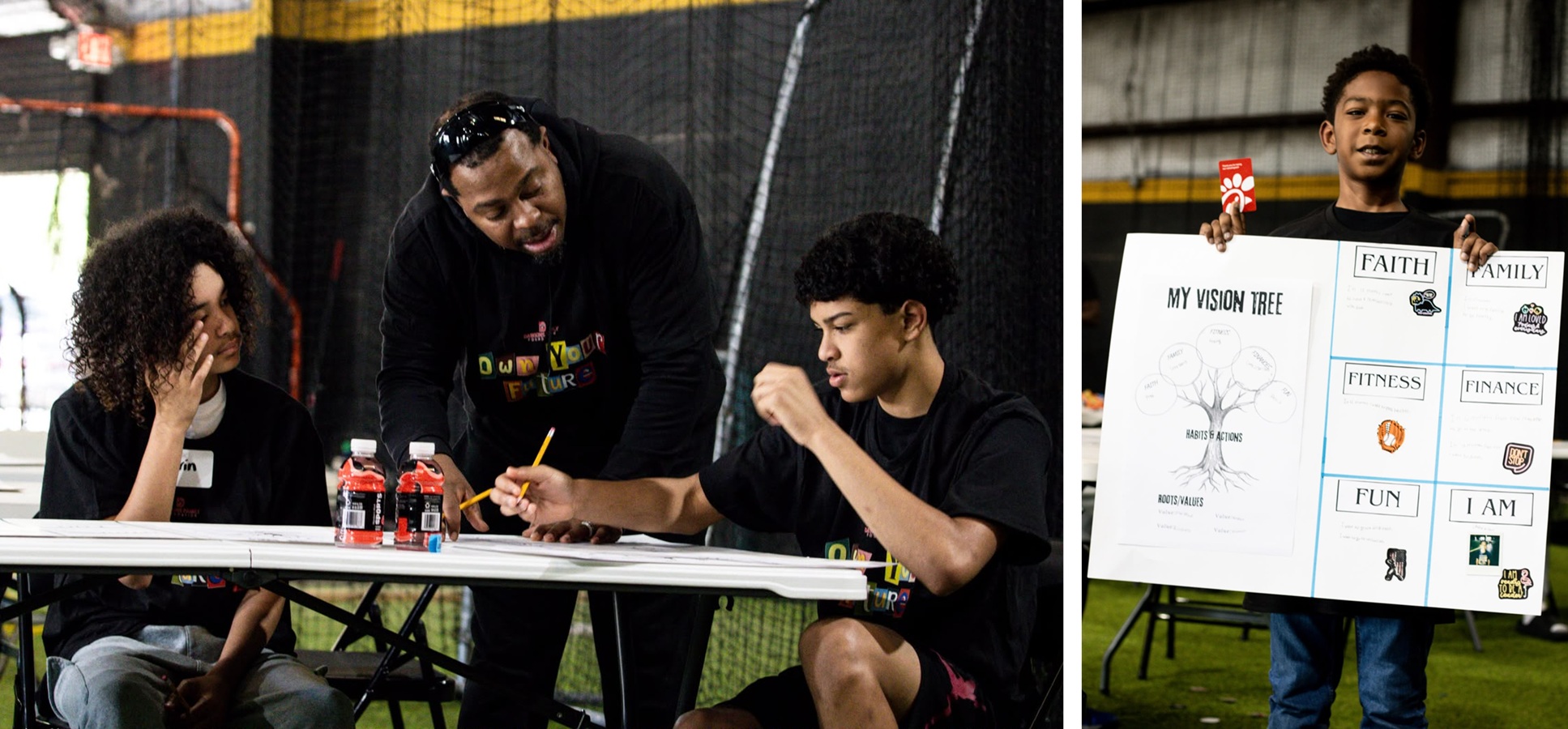
Left: A mentor helps two boys working on project at Pure Momentum Group event. Right: A boy shows off the poster he made at the event.
(3) Leadership sometimes requires slowing down.
I used to associate leadership with momentum — moving projects forward, making decisions and creating progress. Community partnerships taught me that leadership sometimes means slowing down.
Programs we hoped would launch within weeks often required months of preparation. A single phone call led to another meeting. Meetings resulted in revisions. Revisions uncovered details that ultimately made the project stronger.
[Related: Addressing the opportunity cost of youth programs]
At the time, those moments felt like delays. Looking back, they were investments. They strengthened relationships, clarified expectations and built confidence among everyone involved. The process wasn’t preventing progress; it was making progress sustainable.
(4) Listening to the people inside the systems saves time.
Courtesy of JonPaul Reed
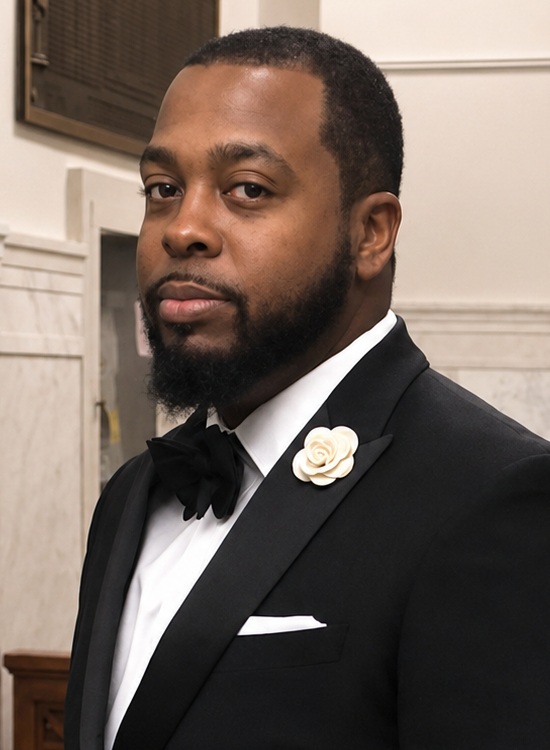
JonPaul Reed
This was perhaps the most valuable lesson learned. The people inside the systems knew which department reviewed specific requests, how budget timelines affected decisions and what documentation would be needed before anyone asked for it. Their guidance saved months of unnecessary work.
More importantly, they reminded me that relationships are not simply a byproduct of community development — they are part of its infrastructure.
The strongest partnerships I’ve seen weren’t built because organizations had the largest budgets or the most resources.
They succeeded because people trusted one another enough to solve problems together.
That kind of trust can’t be rushed. It develops through consistency, follow-through and a willingness to keep showing up even when progress feels slow.
Collaborating with the City of Orlando Parks and Recreation Division while simultaneously expanding our community partnerships reinforced the differences between public agencies and nonprofit community programs. Navigating between supporting the growth of the Orlando Inner City Little League while participating in broader discussions about Orange County Public-Private Partnership (P3) projects required patience, coordination and an understanding of how different departments make decisions.
Funding, staffing and quality programming will always matter, but trust, coordination and relationships are equally important. Lasting partnerships begin with a simple truth: We have to understand the systems before we try to change them.
***
JonPaul Reed is founder and executive director of Pure Momentum Group, where he leads initiatives focused on youth development, education, athletics and community engagement. His work centers on building partnerships among local governments, nonprofit organizations, schools and community leaders to expand opportunities for young people across Central Florida. He is also author of “The 3 to 6 PM Blueprint: Building Successful Kids and Thriving Communities.”