

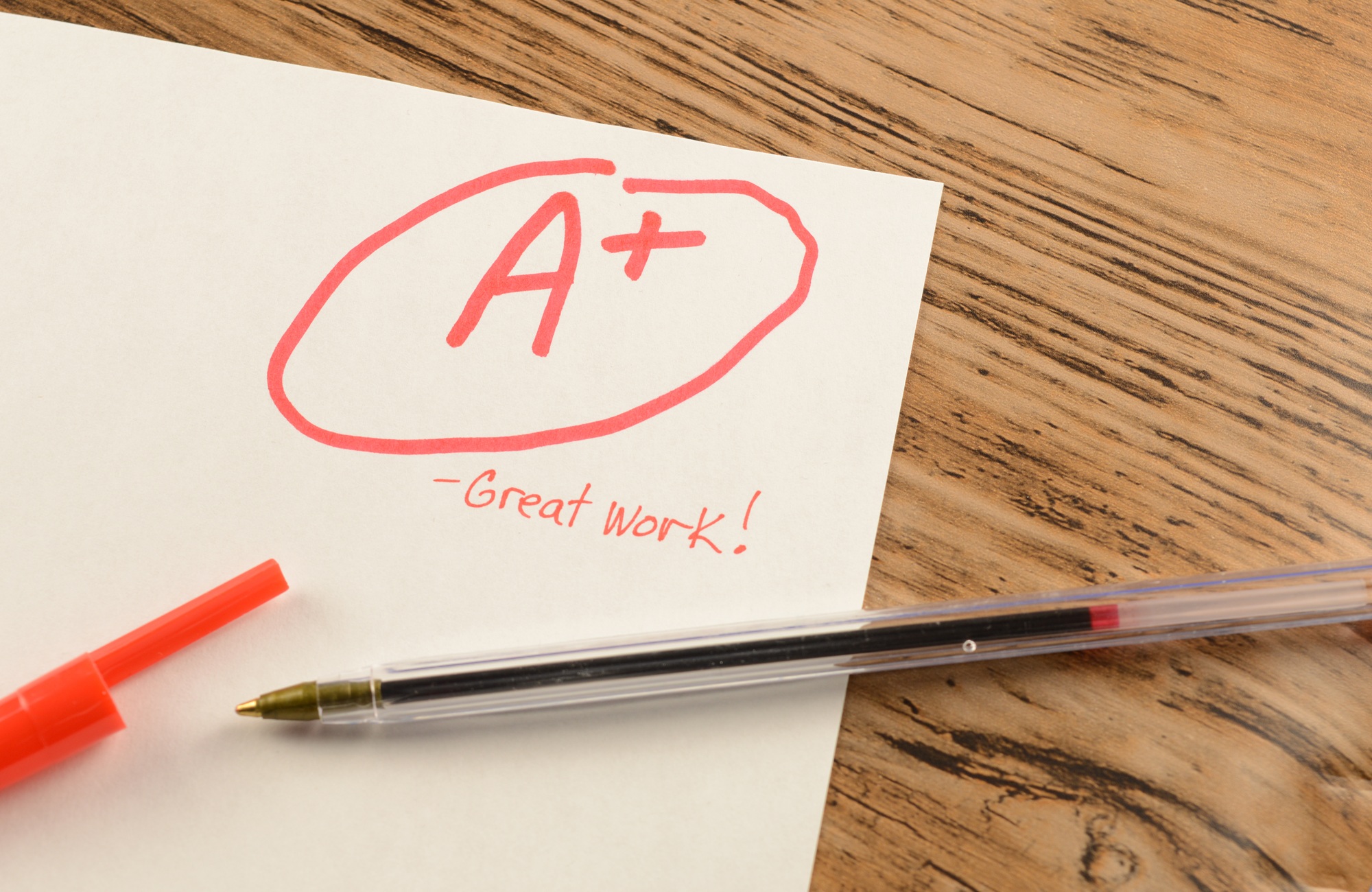
Over the past few decades, high school grade point averages (GPAs) have, on average, only been going in one direction: up. As it turns out, rising GPAs aren’t necessarily the result of more competent students.
In fact, student performance has remained relatively stagnant for some time, even though GPAs continue to climb.
Why is this happening? … And why does this matter?

Why are grades getting inflated?
Multiple factors have led to widespread grade inflation. Naturally, there is pressure on educators from families to ensure students are getting high scores. Many high schoolers feel trapped in a “pressure cooker” environment, with grades being a source of constant comparison and competition between peers. Having a good GPA can open opportunities for higher education and career opportunities. Colleges continue to use high school transcripts to determine if students meet the standards for entry. When deciding who gets in and who doesn’t, the difference can lie in just a few points. Similarly, many scholarships are heavily reliant on grades to determine if students should earn financial benefits, making the pressure to have high scores all the more intense.
Apparently, this pressure on teachers is felt around the world. Yusuf Kiziltas’ research found that Turkish educators raise scores to motivate students to actually attend their classes and placate parental pressures placed on children. Altruistic as this may seem, it can actually take away students’ drive to work hard because they know their scores will be satisfactory regardless of how much effort they put in.
At my high school, I’ve witnessed many teachers express distress over the school district’s desire to prioritize high scores over actual learning.
One teacher in particular explained to us that he often feels pressured by administrators to keep students’ grades at a passable threshold even if they hardly ever show up to school. Educators want their students to succeed not just on paper, but in practice. Sadly, external pressures make it hard for them to provide unbiased feedback.
Consequences of grade inflation
Grades are here to stay. Parents’ impressions of how their students are doing rely on grades. “Grade Inflation: Why It Matters and How to Stop It,” a 2024 research synthesis by Adam Tyner at the Fordham Institute, describes how heavily parents and students rely on grades even though evidence of their inflation is widespread.
The most reliable studies compare course grades with scores on end-of-course (EOC) exams. For example, only 21% of students who consistently get “A’s” in school actually land in the top score bracket for EOC exams. A pre-pandemic Fordham report that used data from North Carolina showed that more than one-third of students receiving B grades in Algebra I failed to achieve proficiency on the end-of-course exam and, as Tyner notes, post-pandemic studies from North Carolina and Washington State have shown further upticks in grade inflation.
This is problematic, because it gives families the impression that their kids don’t need supplemental help, which just puts students further and further behind where they need to be.
Solutions and new directions

Courtesy of Deepika Miryala
Deepika Miryala
The problem with grade inflation is that once it starts, it’s difficult to curb. However, if we make careful changes in the education system regarding how grades are assigned and interpreted, these scores can regain their integrity in academia. A Teaching Showcase of the Association of Atlantic Universities (a Canadian consortium) offered practical suggestions:
- Have clear expectations for assignments. This allows for more accurate scores while also making the process more transparent to mitigate student and parent complaints. Rubrics, for example, are a highly effective method of communicating expectations that make grading fair and straightforward.
- Create formal criteria for grading, thus reducing ambiguity in scoring policies.
- Report grades in context. One way to do this is to list a student’s grade (without inflationary practices) on their transcript alongside class averages, modes, grade distribution, etc.
- Provide narrative feedback that actually puts student performance into words rather than numbers.
- Create clear boundaries between teachers, parents and school authorities to prevent unnecessary pressure from influencing teachers’ grading habits.
Students need to be considered as whole learners, not a series of isolated assessments.
Looking at student work portfolios that contain a diverse array of assignments, projects and evaluations is the best way to determine if a child is succeeding. We likely will never eliminate grades from education, and in many ways, these tests provide a baseline display of student comprehension. But we can recognize that learners are more than a few letter grades or test scores. By implementing structural changes in how students are evaluated, we can find compromises that benefit everyone involved.
***
Deepika Miryala graduated from Clear Falls High School in May 2026 and will attend Rice University in Houston this fall, where she plans to study neuroscience and social policy analysis with a minor in entrepreneurship. She hopes to earn her doctorate one day and teach at the university level. In her free time, she enjoys cooking for her family, hanging out with friends and playing viola and tennis.