
 The Harvard Youth Poll has been taking the temperature of young Americans since 2000. The most recent edition, released in April 2026, carries the starkest diagnosis yet: “a loss of perceived agency — a growing belief that what they do no longer shapes what happens next.” Half of young Americans now say people like them have no real say in government. Only 13% believe the country is headed in the right direction.
These are political findings. But they point toward something deeper. Read through the lens of equity-centered thriving, they tell a story about the systematic erosion of the conditions young people need to grow, contribute and live fully human lives.
Equity-centered thriving holds that robust thriving has three dynamically linked dimensions — each individual and collective.
Well-being is the floor: physical, emotional and economic safety and fulfillment.
Groundedness is the root: identity, belonging, meaning, purpose, cultural rootedness and civic connection.
Agency is the engine: not mere self-efficacy, but the sociopolitical capacity to understand and act on the conditions shaping one’s life.
These three are not separate outcomes. They interact dynamically — when one erodes, the others destabilize. The poll data, read across editions, document exactly that cascade.

The floor is not holding
More than four in ten young Americans say they are barely getting by financially. In the most recent edition, 45% say they are struggling or getting by with little security — and for young people without a college degree, that figure rises to 57%. Mental health compounds the picture: 59% of young people who report no sense of community feel depressed or hopeless for multiple days at a stretch — nearly double the rate among those with community ties. One in three say the pandemic’s effects on their friendships have never healed.
[Related: We keep asking young people to trust us. But how much do we really trust them?]
These are not misfortunes distributed randomly. Black and Hispanic youth report financial hardship at significantly higher rates than white peers. Young people without a degree face compounding disadvantage across nearly every indicator.
The floor is not merely cracked — for many young people it was never solid to begin with.
The engine is stalling
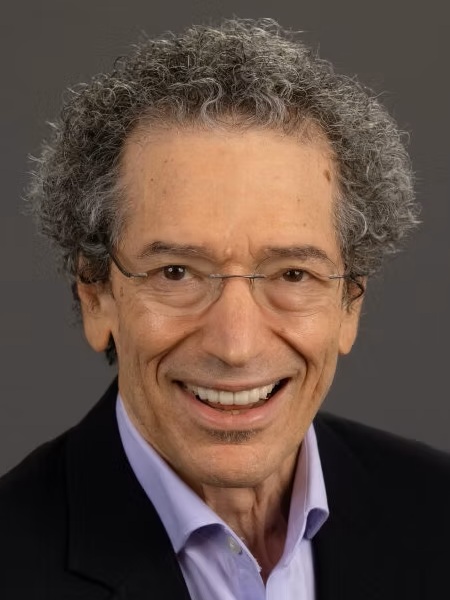
Courtesy of David Osher
David Osher, RCC
Agency, in the equity-centered thriving framework, is not optimism or grit. It is the grounded capacity to act on the world — to understand what shapes your circumstances and work to transform them.
In 2022, 42% of young Americans said their vote doesn’t make a difference, and 56% agreed that politics can no longer meet the country’s challenges. By spring 2026, the poll’s own authors named the trend directly: The defining shift since 2018 is “a loss of perceived agency.” Half of young people now say people like them have no real say in how government runs. Trust in the federal government sits at 15%.
But the data also complicate a simple story of disengagement. Young people remain willing to participate. What is collapsing is not the impulse but the belief that participation delivers results. Poll director John Della Volpe put it plainly:
Trust is fraying “not because they are disengaged, but because they feel unheard and unprotected.”
The engine has not died. It is stalling because the terrain it runs on — responsive institutions, meaningful participation, economic systems where effort maps onto outcome — is failing under their feet. New threats compound the loss: By a three-to-one margin, young Americans expect AI to take opportunities away rather than create them, and 41% believe it will make work less meaningful.
The root is loosening
Groundedness — the experience of being connected, rooted, known and part of something larger — is what holds the other two together under pressure. Only 17% of young Americans report being deeply connected to at least one community. One in five feels no strong sense of belonging anywhere. Young people without community ties are nearly three times less likely to consider themselves politically engaged, confirming the direct link between groundedness and agency.
[Related: What kind of environments help young people become fully human?]
Social trust is also fraying. Many young people avoid political conversation fearing judgment. They doubt that people with opposing views want what is good for the country. Most still feel safe in their immediate communities — local tethers may hold even as larger systems lose coherence. But that local-macro split is itself a warning:
When young people can trust only what is closest to them, the broader structures meant to hold things together have already failed.
What the data demand
Read across editions and through a developmental lens, the poll tracks a coherent pattern: The floor, the engine and the root are weakening together, unevenly distributed and concentrated among those who were already least supported.
This is not a mental health crisis separable from economics. Not a civic disengagement problem separable from institutional failure. Not an individual resilience deficit separable from the environments young people inhabit. The conditions for thriving — safety, belonging, developmental relationships, meaningful challenge, cultural responsiveness, genuine voice — are not aspirations. They are the substance of the work.
The question the data force is whether the adults and institutions surrounding young people are prepared to name what is actually happening — and to build, with young people, something that holds.
***
David Osher has been an organizer, professor, dean of an experimental college and schools of human services, researcher, and a TA provider and organizational consultant. His work focuses on building humanizing conditions and capacities for individual and collective thriving and equity.