
“Most people don’t even notice me. And if they do, I feel like they’re just looking at me like a security camera does. There’s really only two people in my life that see me. These are the people that seem to get me.”
— Fray (their chosen pseudonym), age 17

In an era dominated by high-definition displays, social media metrics and hyper-curated online personas, young people may be more visible than ever — yet many still feel unseen.
Fray’s experience highlights a troubling paradox of modern adolescence. To feel observed like a “security camera” is to be monitored without being known, recorded without being valued. Passive observation offers no warmth, but authentic visibility creates connection.
During adolescence, feeling recognized is a core developmental need.
When young people feel known for their authentic selves by caring adults and peers, their sense of agency, belonging and emotional well-being can expand.
By contrast, persistent emotional invisibility can contribute to withdrawal, anxiety or behavioral distress.
In youth development settings — including out-of-school programs, faith-based youth groups and classroom advisory settings — facilitators often ask young people how they feel. Abstract questions such as, “How is everyone doing?” rarely cut through the defenses teenagers may carry.
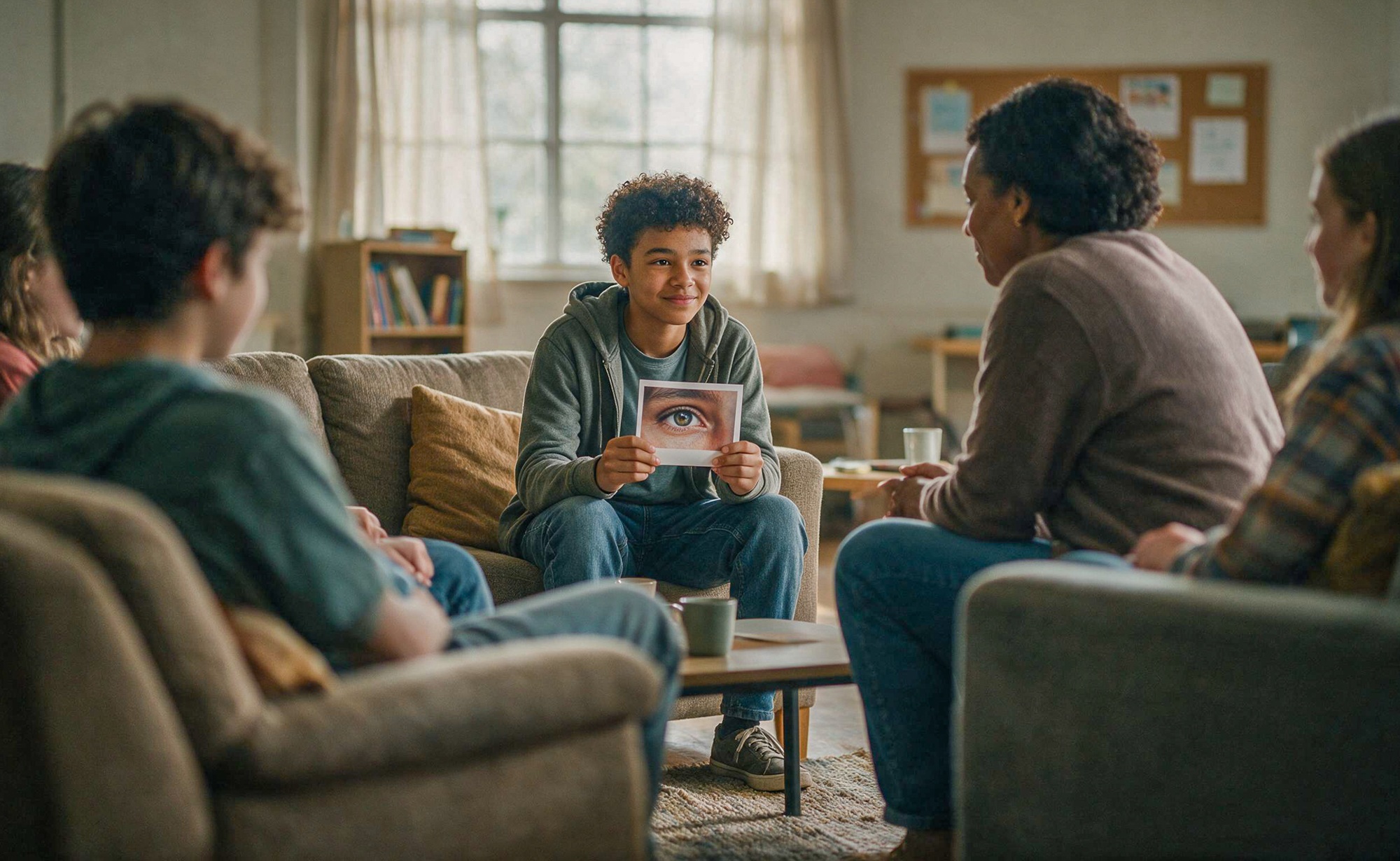
To bridge this gap, facilitators need concrete, tactile entry points that lower the barrier to emotional vulnerability. The activity “Be Seen” uses simple visual prompts to help youth explore how they experience recognition and isolation in daily life.
The activity: Be Seen
Supplies needed: Printed images of eyes in varied artistic or photographic styles. Choose images that appear joyful, weary, guarded, wide-eyed, distant, vibrant or hidden.
Facilitator script and instructions:
- Place the images in the center of the group circle.
- Say: “Each of these eyes shows a different way someone might feel seen or unseen in life. Take a moment to look at them closely. Which eye best matches how you feel right now?” Allow silence while participants review the images. Invite each participant to select or point to an image that resonates with them.
- Once everyone has selected an image, invite participants to respond to this prompt: “How is the eye you chose related to what is going on in your life today?”
Grounding the debrief
The strength of this exercise lies in the debrief. After participants connect their emotions to a visual metaphor, transition to deeper group dialogue with these processing questions:
What does it mean to be seen? Encourage the group to move beyond physical sight and consider emotional and relational validation.
What would you like to be seen for? This can help youth identify their values, talents or unseen struggles.
Are the right people seeing you? Explain. This prompts youth to consider peer networks, family dynamics and adult support systems.
What happens to people who are not seen enough in life? This question encourages empathy while exploring the effects of isolation and systemic marginalization.
When do you not want to be seen? This normalizes the need for privacy, self-protection and quiet rest.
Seeing youth with intention

Courtesy of Jim Still-Pepper
Jim Still-Pepper
Being seen is an active, restorative process. Meaningful support begins long before advice, interventions or skill-building. It starts when young people know someone notices them, listens without rushing to fix them and cares enough to understand their experience.
Research and youth development frameworks, including work by Search Institute, underscore the role of relationships, meaning and spirituality in healthy development. Many young people want not only to be understood, but also to explore questions of purpose, identity and hope. Before adults can effectively guide or teach, they must intentionally see, hear and value the young people in their care.
Facilitator tips:
- Create psychological safety: Never require participants to explain why they selected an image. A young person may simply hold or point to an image in silence, and that choice should be honored.
- Watch for warning signs: Conversations about feeling unseen can surface trauma, neglect or serious depression. Keep your program’s mental health resources and referral protocols readily available.
- Follow up individually: If a young person says that “nobody sees them,” plan to check in privately after the session. A brief conversation such as, “I heard what you said in group today, and I want you to know I see you,” can help a young person feel supported.
By giving young people language and space to consider their own visibility, facilitators can help them build stronger peer connections and recognize their intrinsic worth. Who are the Frays in your work who need to be seen?
***
Jim Still-Pepper, M.A., is director of The Learning Lab for Quality Moments. He is a youth minister, counselor, trainer and consultant with nearly four decades of experience supporting young people, families and the professionals who serve them. His work focuses on youth mental health, relationship-centered practice and practical strategies that help adults create environments where young people can thrive.