
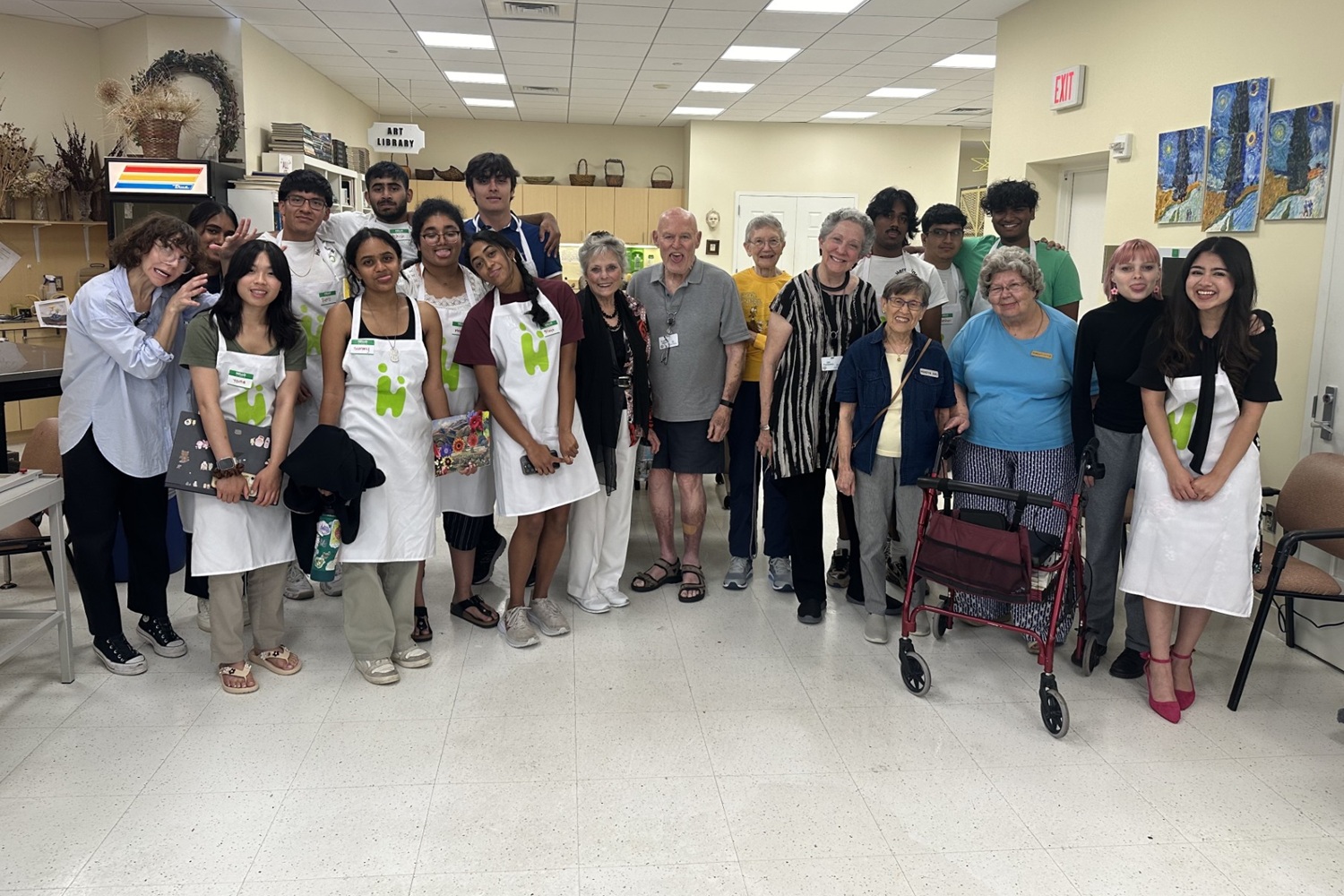
In programs that help young people grow, we spend a lot of time discussing the Five Cs: Competence, Confidence, Character, Connection and Caring. This framework, developed by Richard Lerner, is often expanded to include the sixth C: Contribution, which research links to a young person’s developing sense of purpose.
But as we guide and encourage young people to contribute to the world, are we limiting their opportunities by holding a narrow view of what contribution can look like?
While individuals in their preteens, teens and young adulthood often gravitate toward community service related to education or immediate community needs, intergenerational volunteering provides a natural and powerful pathway to developing all six Cs.
I founded Herralink, a program that matches volunteers with older adults, with a vision that our youth can and should be empowered to share their skills and passions rather than just fulfill transactional service hours. We partner students with residents based on shared interests, and we match skills and expertise so that years of life experience can have tangible effects. To support this process, individuals complete an online sign-up form to identify their skills. Staff members then oversee the matching and scheduling for all programs while simultaneously ensuring program safety. Because of this careful pairing, volunteers use their unique abilities to lead group activities — like making art, playing board games and more — or to engage in one-on-one connections.
Herralink
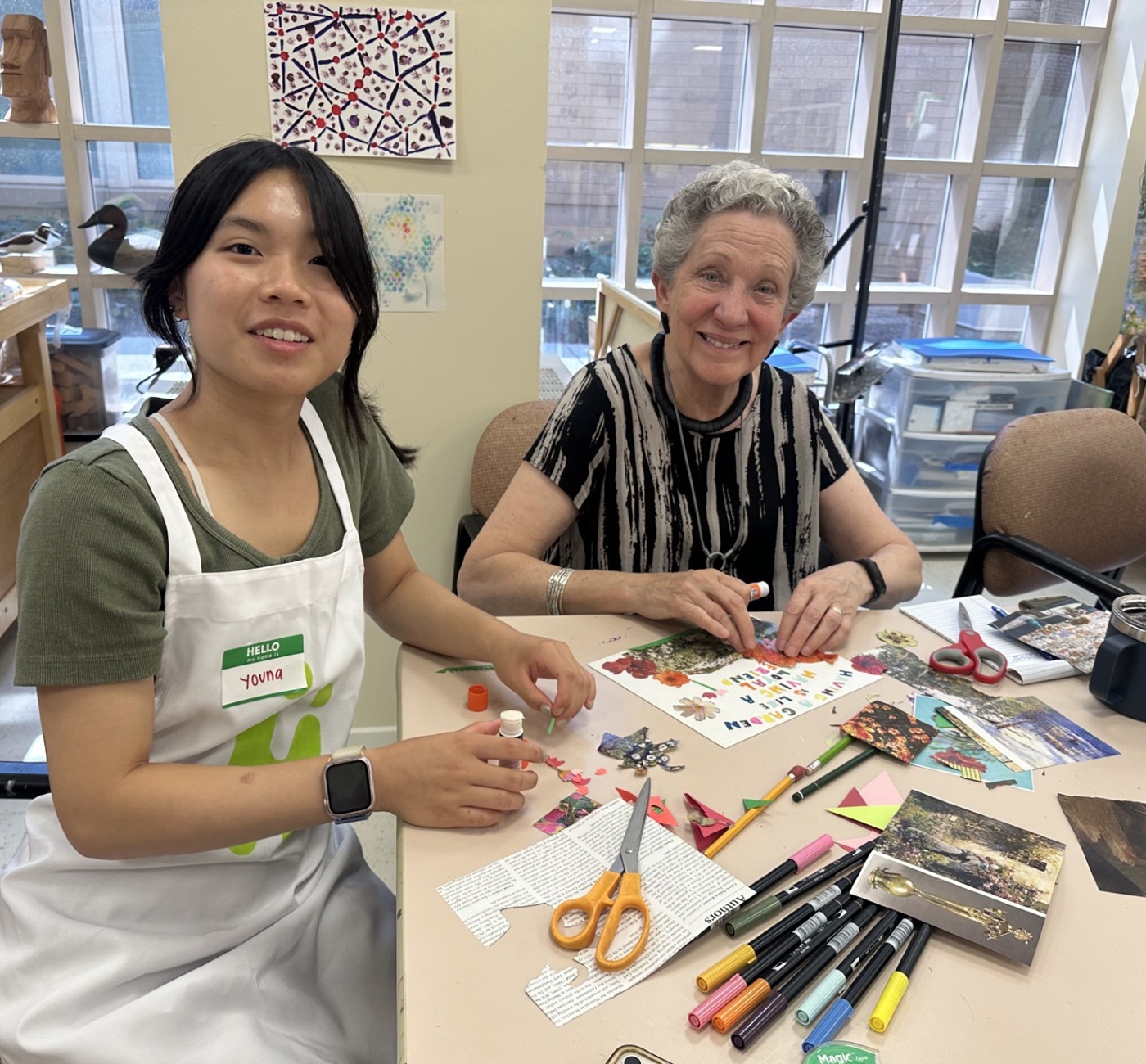
A young Herralink volunteer works with an older program participant on arts and crafts.
So, what does this look like for the volunteer? Herralink connects students with older adults through two aspects: group volunteering opportunities for activities as well as a one-on-one friendly visitor program. Whether a student signs up to meet community service requirements or to just give back, youth from high schools and colleges can participate through school partnerships or individual enrollment. Because students visit regularly, the volunteers become familiar faces to the seniors, forming lasting bonds over shared hobbies and personal conversations rather than feeling like random, rotating guests. This workflow is exactly how our active volunteers are able to build meaningful relationships with seniors.
For bedridden or isolated seniors, the one-on-one companionship offered through the friendly visitor program is especially vital. This consistent quality time provides a unique performance opportunity for youth to practice active listening, empathy and conversational leadership in a real-world setting.
While many volunteers have participated in one-on-one sessions, last year, 19 students in particular embodied the greater purpose of Herralink by going the extra mile. They dedicated their weekends traveling to nursing homes and visiting residents who often have few to no visitors. Every weekend, these students spent time with their new friends, with one volunteer barely missing a session over the course of an entire year. These weekly visits truly impact both generations.
It allows older adults to have companionship that matters, and creates a pressure-free environment for youth to build genuine connections.
One such volunteer, Mahika, exemplifies how deep these bonds can go. She and a resident named Erica quickly developed an interdependent, supportive relationship founded on trust and kindness. Their weekly visits prove that these pairings are more than just checking the box on community service — they act as a supportive safety net that demonstrates what a passion for serving others can truly accomplish.
[Related: Trust, time and training — Unlocking the potential of learning ECOsystems]
Since Herralink’s launch in 2023, the program has experienced considerable growth by turning a standalone initiative into a formalized standard of care. To support this level of expansion, Herralink was acquired in 2024 by Goodwin Living, a faith-based, nonprofit senior living and healthcare organization. As part of this transition, I joined their team as a program manager, allowing Herralink to become the organization’s volunteer program. This institutional backing provided the infrastructure needed to scale.
Today, we serve 15 senior living campuses across Northern Virginia and New York. By integrating our model into their active networks, our volunteer force has experienced steady, year-over-year growth. After building a base of 700 volunteers within the first two years and surpassing 900 in 2025, a total of 1,100 students have registered with our program across 100 different high schools and colleges. Since our launch, this momentum has led to relationships with over 2,000 seniors.
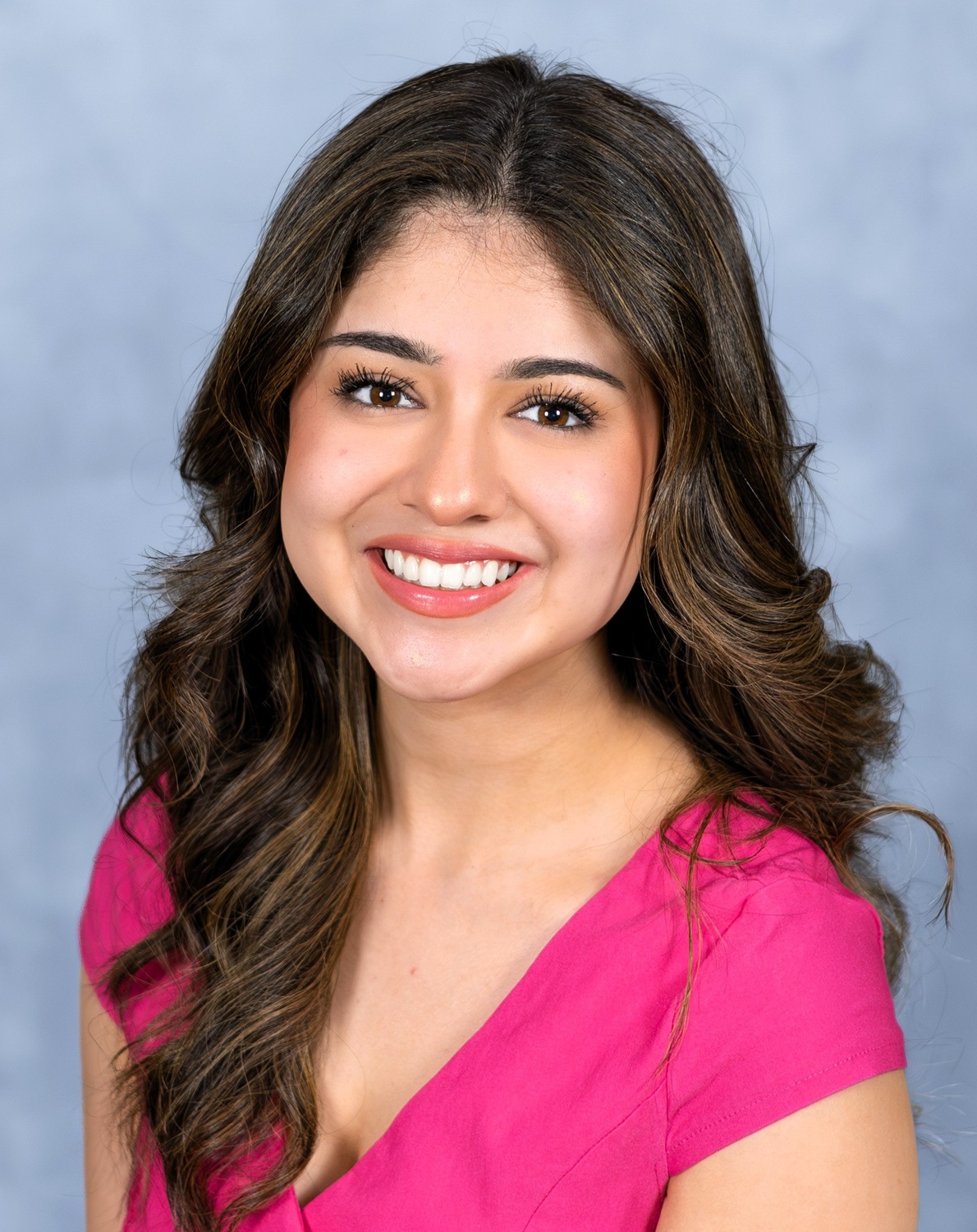
Courtesy of Isabella Solano
Isabella Solano
Our focus on intimate interactions like small group activities or one-on-one visits rather than massive groups is intentional. Herralink’s model was built on deep, direct visits and small-group activities.
By prioritizing depth over mass efficiency, we ensure students can dedicate the consistent, quality time needed to build genuine relationships.
The benefits of Herralink go both ways, offering deep impact and value to both seniors and volunteers. As one older adult who benefited from the program noted, “It’s like having the family here that I don’t have all the time. And having them come in once a week, it really boosts my morale.”
Studies from Generations United show that intergenerational relationships build empathy and character for our youth. For Herralink volunteer Twisha, the program provided a realization that every person has a story worth hearing, and taught her that active listening is a gift in itself. By listening to a senior’s life story during her weekly visits, she acquired a newfound respect for history and personal resilience.
This type of purposeful connection can even shape a young person’s future. “What started as a struggle to meet service hours became a career path,” said Youna Dhanormchitphong, a student at Centreville High School in Virginia. “Herralink gave me the platform to bridge the generational gap, turning a high school obligation into a leadership role and a lifelong passion for senior care.”
We need to realize that programs for our youth and senior care organizations should not operate separately.
If you want to incorporate intergenerational connections into your work, I encourage you to:
- Replicate the skills-as-service model in your own community by asking young people about their unique skills and building volunteer roles around those strengths.
- Actively build relationships with local senior care providers, communities and day centers to identify potential opportunities for your youth and their older adults to mutually support one another.
- Reinforce ongoing, consistent connection rather than one-time events to ensure genuine and reciprocal mentorships are built.
- Keep Herralink in mind as a tool to help understand the passion of your youth and get them involved; interested students can get started here.
Together, we can change the service narrative, helping others see intergenerational service as a mutual mentorship that fosters both community support and strong youth character.
To learn more about the program, visit Herralink.com.
***
Isabella Solano is the founder and program manager of Herralink, a nonprofit organization that connects high school students with retirement home residents. A 2022 graduate of Centreville High School in Fairfax County, Virginia, she founded the initiative in 2023 at age 19 prior to its May 2024 acquisition by Goodwin Living.