
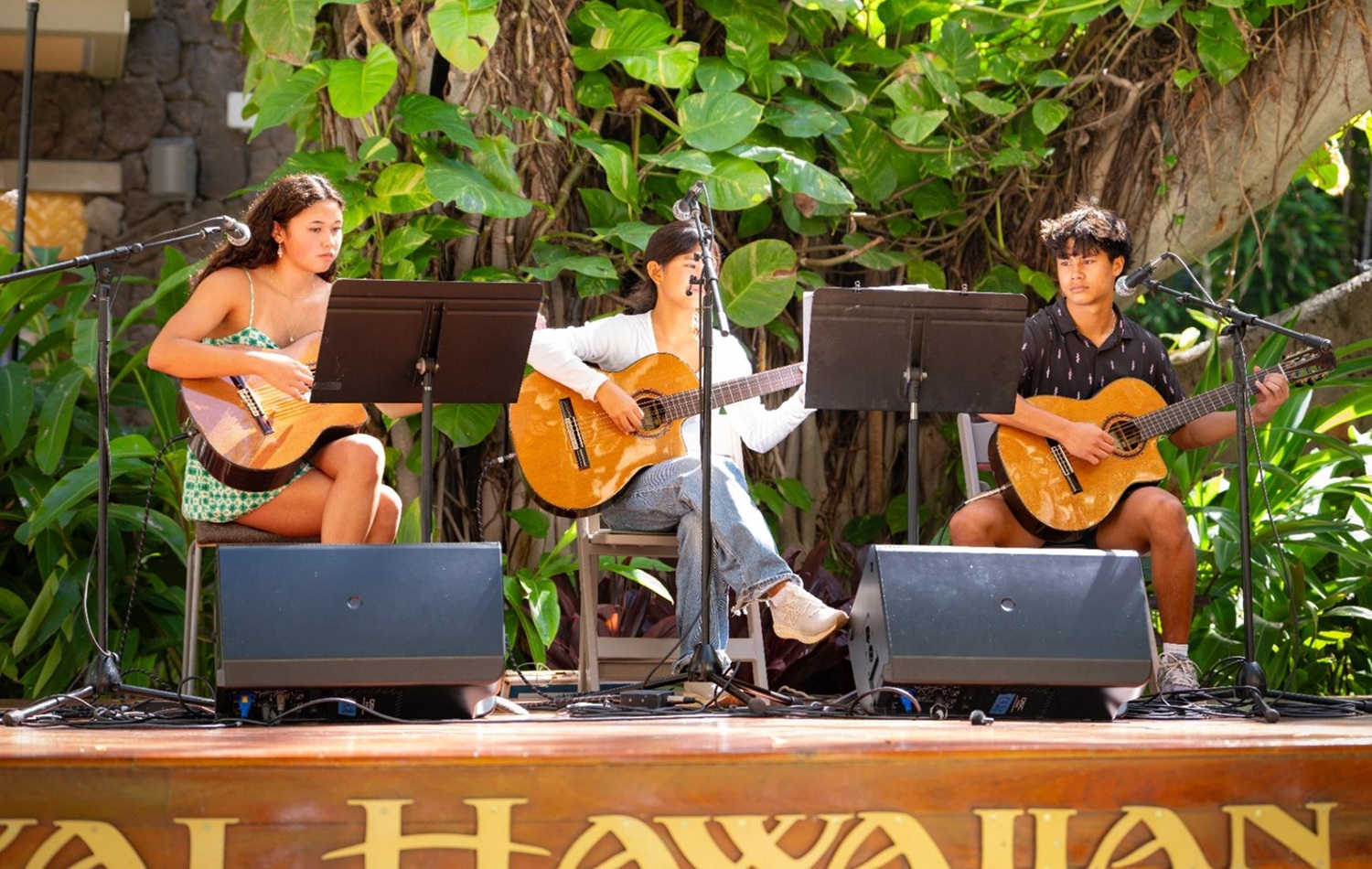
Maxwell Shei is an accomplished pianist and music producer. But the thing he is most proud of is what he and his friend Sebastian Dang have done to create Open Keys, a youth-led nonprofit in O’ahu, Hawaii. Open Keys was built on a simple belief:
Everyone deserves a stage — regardless of skill level or background — and opportunity to experience the transformative power of performance.
As a musician who experienced the power of performing in high school and who went to Oberlin College because it had a music conservatory only to find that there were no performance opportunities for “non-connies,” I am in awe of what these two young men — one a brilliant musician, the other a brilliant business manager — have built.

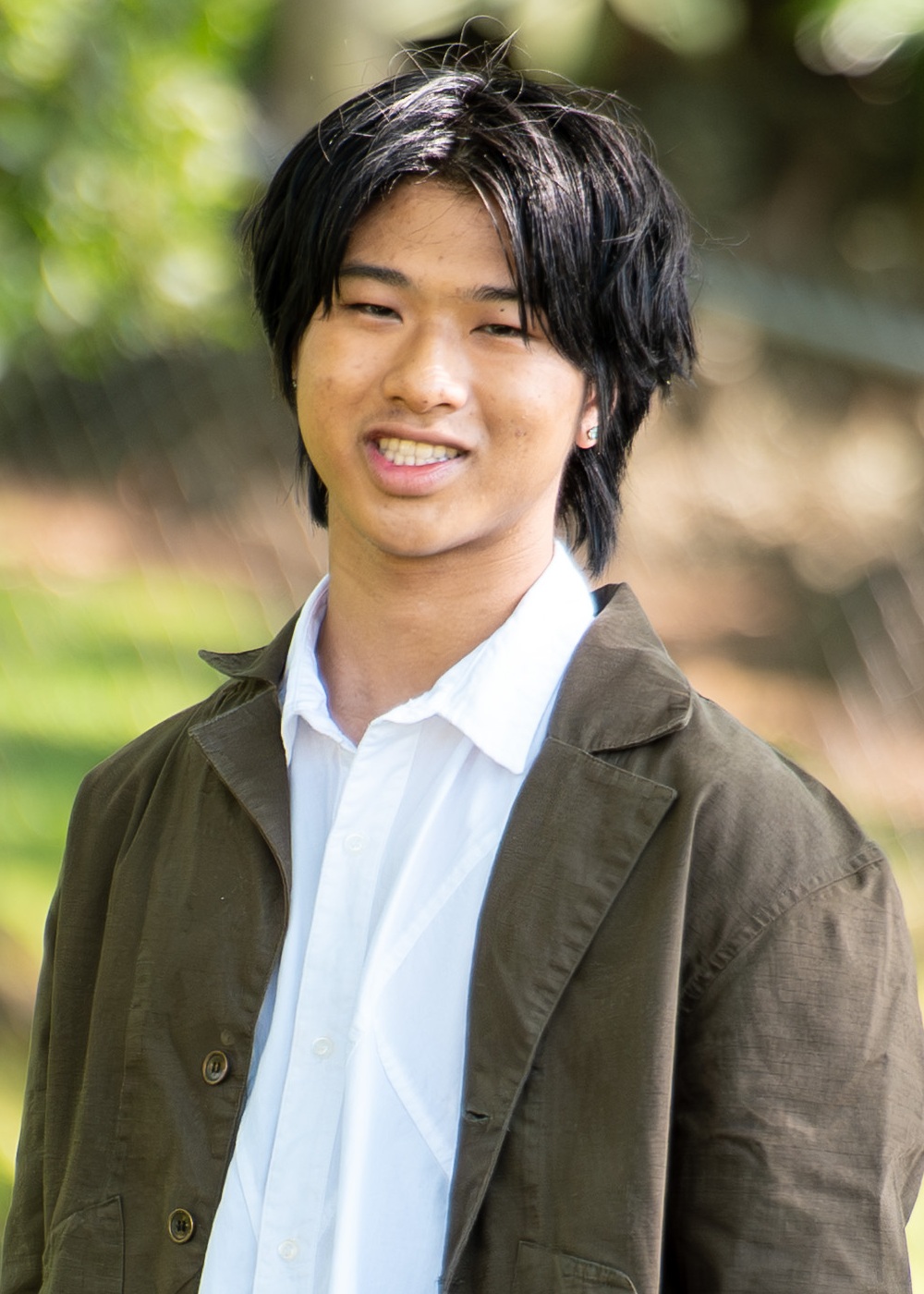
Courtesy of Maxwell Shei
Maxwell Shei
Q: Tell us about your relationship to music and performance growing up.
Maxwell Shei: From my personal experience as a youth musician and student, I’ve learned that the right opportunity at the right time can completely change your life. As a pianist with over 11 years of experience and hours of practice honing my skills and learning new pieces, I have always wanted to perform and showcase my talents for my community. However, I simply had to settle for performing at my teachers’ one or two performances a year, at small halls with low attendance. I have always enjoyed performing, even if I get really nervous. Seeing the entire audience watch me while I am sitting in silence, waiting and listening to myself alone is a once-in-a-lifetime experience. A great performance yields great memories and great photos. (Check out recent highlight reels at the bottom of this page.) But being able to simply get the opportunity to showcase your talent is invaluable and cannot be overstated. For me, those opportunities centered around music.
Q: You have described yourself as a musician “in the middle”? Explain.
I am an avid pianist and musician, but I was never a stand-out talent who won competitions. I didn’t get performances left and right, nor was there any way for me to get them. Most musicians are like me: good enough to perform but with nowhere to play. There are many organizations dedicated to introducing children to music and organizations to teach them and support their journeys. But for those in the middle? There is virtually no support at all, and this gap is rarely recognized.
Q: What you are describing is true for any youth interest — art, sports, debate, robotics — where passion fuels practice and mastery but does not always lead to performance perfection. Why do you think this is?
This reflects a broader issue in youth development spaces. While many programs deliberately emphasize skill-building, fewer provide opportunities for young people to apply those skills in meaningful ways. I like to compare it to the college financial aid challenge for middle-class families. It is the most populous group of applicants in terms of financial aid, yet they are in the worst position. They cannot afford to pay college tuition in full and are also not poor enough to receive sufficient aid to significantly reduce the high costs. And yet, nobody talks about it. Because it does not affect the elite or struggling, it simply gets ignored. For organizations working in youth development or education, or even music teachers, this problem is something worth looking into.
Q: Did you share your concerns about the lack of performance opportunities with your teachers, other adults and other young performers? What were their responses?
A few months before we founded Open Keys, I spent a ton of time practicing and refining one of my favorite classical piano pieces, Frédéric Chopin’s Barcarolle Op. 60. At that point, my love for music was at an all-time high, and I asked my teacher when the next performance would be. Luckily for me, there were a handful of performances coming up. But to be frank, the venues were decent at best and the atmosphere there did not allow me to perform at my best. I felt as if this was the case for every performance.
I brought this up first with my teacher, who is a very busy person. The general message I got was that performances are hard to book, venues are hard to find, communication is nearly impossible, and there’s simply not enough time in the day. Then I asked my fellow peers and musicians. Outside of those in orchestra or band, almost every single one of them said they would like to perform more but simply don’t have the opportunity. I pitched these ideas to other teachers and studios, and they all loved the idea and were grateful for what we were trying to achieve. But they didn’t have solutions.
Q: So what did you decide to do? And how and when did Sebastian get involved?
I was only 16 at the time when we shared all these ideas and founded Open Keys, but with my first-hand experience I knew I was well-equipped to tackle this issue and change the system. One night, I was on a call with Sebastian, one of my first friends ever since I came to Punahou School in 7th grade. I proposed starting an organization to fix this issue, and he agreed to help. Most people would consider asking Sebastian to run a music nonprofit to be absurd. He is undoubtedly one of the hardest working and talented people I know, but he is not a musician. He had never played an instrument. But I knew that our chemistry would take Open Keys further than working with any other musician. Sebastian is a businessman at heart. With us working together on Open Keys, we were constantly able to ascend and reach new heights every waking moment, to this day.
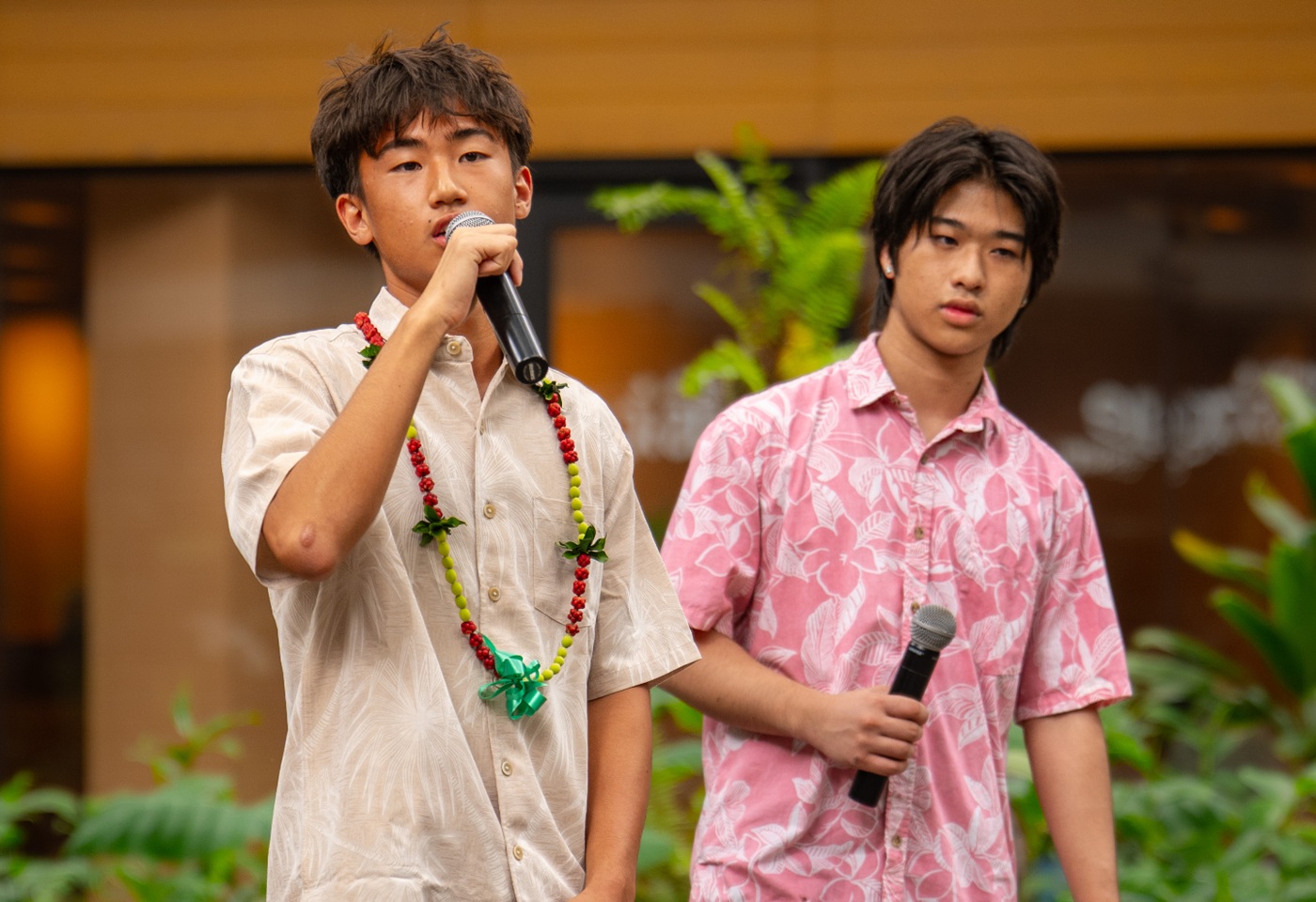
Open Keys
Open Keys cofounders, Maxwell Shei and Sebastian Dang, speak in front of a crowd at an event.
Q: Now fast forward to the present: Open Keys. Your mission statement is so impressive that I’ve included a clip from your website.
Sebastian Dang and I started Open Keys — a nonprofit organization whose mission is to provide performance opportunities to musicians — in September 2025. In just four months after our first performance, we raised over $1,500 in donations alone and provided performance opportunities to over 140 student performers.
Open Keys, as noted, manages absolutely everything whether it be logistics such as venue management, performer management and insurance or venue fees. We make it easy for new performers to be successful. Not only are we featured in local media outlets and newspapers, but Open Keys is also connected with several venues and is known by and in contact with almost every music studio in Hawaii. Some studios even depend on us for performance opportunities, highlighting the importance of our organization.
But the last component of our mission statement is what we’re most passionate about:
If you want to perform, we’ll find a venue for you.
Q: This sounds amazing. Have there been any challenges?
Outreach and communication. In terms of being immensely connected to the music industry in Hawaii, Open Keys has spent large chunks of time cold outreaching venues and music studios. And despite the effort, we are still consistently rejected. Specifically, online outreach is not as straightforward or helpful as it may seem — at least for Open Keys. The number of times we’ve been told “no,” or genuinely never heard back, is countless, and while it is quite discouraging due to our unwavering belief in the mission of Open Keys, it is understandable, as many are occupied by life.
[Related: The revolutionary speed of trust-based changemaking]
Consequently, our connections and reputation are not solely the result of hundreds of cold outreach emails and calls, but also daily life. Everyday interactions at school or routine life become not only socializing opportunities but also additional networking opportunities. A tightly knit community and environment, such as Hawaii, provides an abundance of opportunities to find direct contact with performers, venues or studios. We’ve tethered ourselves to dozens of contacts, such as performers, by choosing to ask a simple question to a friend, such as, “Do you know any musicians by any chance?” So, while email outreach may spark growth for some organizations, youth-led initiatives such as Open Keys often grow fastest through relationship-based outreach, especially in strongly connected communities. Organizations in similarly tight-knit communities such as O’ahu should weigh relationship-based outreach heavily, especially in early growth stages.
Q: What are you most proud of?
Open Keys not only aims to address the lack of performance opportunities but also the underlying issue: the fact that the lack of performance opportunities is not even considered a problem in the music industry is a problem in itself. We are truly passionate about seeing others achieve what they could only dream of. Throughout our numerous performances, we have hosted a variety of bands and soloists.
Seeing the smiles on their faces, the joy that lights up the room, is something that cannot be replicated.
Sebastian and I are proudest of the fact that we can make a change within our community and are contributing members of society.
Q: What’s your final message?
The importance of youth performance opportunities and, in general, public-facing pathways should not be restricted by unfair gateways. Anyone can play a role in addressing this issue. Raising awareness is the first strong step. Simply sharing this cause with teachers, peers and community members can create a domino effect that expands greatly. Organizations should not only teach but also actively find ways for youth to utilize those skills to the fullest in ways that matter, whether it be through performance or other means.
Because everyone deserves to experience an exhilarating feeling at least once.