
 “Everyone is born into a relational field,” says Megan Bang in episode 5 of the Deeper Learning & Equity podcast series. Bang, a learning scientist whose work examines culture, socio-ecological relations and the design of more just learning environments, reminds us that this relational field already exists before a young person enters a classroom or institution. It includes relationships with land, water, culture, ancestors, future generations and the more-than-human world.
Zaretta Hammond, an educator whose primary work has been linking instruction, equity and literacy, makes a related point: “Culture is just schema.” Culture is not decoration or content to be added. It is how learners organize information in their minds.
Together, Bang and Hammond insist that we move away from asking about individual readiness. The question is not only whether youth are resilient, motivated or hopeful. The deeper question is whether the relational, cultural, cognitive and ecological conditions around them are strong enough to support their thriving.
[Related: Young people aren’t giving up — they’re losing trust]
In my last column, I shared a recent poll that found a “loss of perceived agency” among young people, noting that “half now say people like them have no real say in government.” I linked this erosion in political agency to a deeper erosion of the conditions that support equity-centered thriving: Agency is the engine. But well-being is the floor. And groundedness — identity, belonging, meaning and purpose — is the root.
Bang and Hammond’s rich exchange helps us understand how to rebuild these conditions.

The relational field is larger than we think
 Bang, who is Ojibwe/Anishinaabe, First Nations and of Italian descent, argues that every young person is born into a relational field that includes families, peers, educators, communities, ancestors, future generations, land, water and place itself. “Human beings don’t exist without our relationships to the natural world,” she says.
If we treat well-being as an individual trait, youth are made responsible for conditions they did not create and cannot repair alone. Bang puts the problem plainly: When we locate well-being inside the child, “we place the onus of that on an individual in ways that actually is never accurate.”
Youth are not simply failing to be hopeful. They are responding to relational systems that feel unreliable: economic systems that do not offer security, civic systems that do not listen, communities that are frayed, and an endangered planet. Bang asks us to widen the field: Thriving depends on relationships with place, history, community and the more-than-human world.
Youth need to know they are part of something larger — and that the larger world can be cared for, repaired and remade.
Culture is not the icing — it’s the cake ingredients
Hammond, an African American educator, helps us see the same principle inside learning. Culture is not a way to make lessons more appealing. It is how learners organize information — the cognitive infrastructure through which all new learning must pass.
Bang makes a related claim. Institutions too often treat dominant ways of knowing as universal. But youth already move across multiple knowledge systems and know that different kinds of knowledge count in different places. The question is whether adults will recognize that capacity as a strength.
[Related: What kind of environments help young people become fully human?]
This is where groundedness becomes more than belonging. To be grounded is not simply to feel included. It is to know that one’s language, family knowledge, community, place and ways of reasoning matter — to be connected to the past and responsible to the future with others. When we ignore those connections, groundedness erodes. When we honor them, youth draw on deeper sources of strength.
Belonging isn’t just acceptance — it’s an invitation to engage in productive struggle
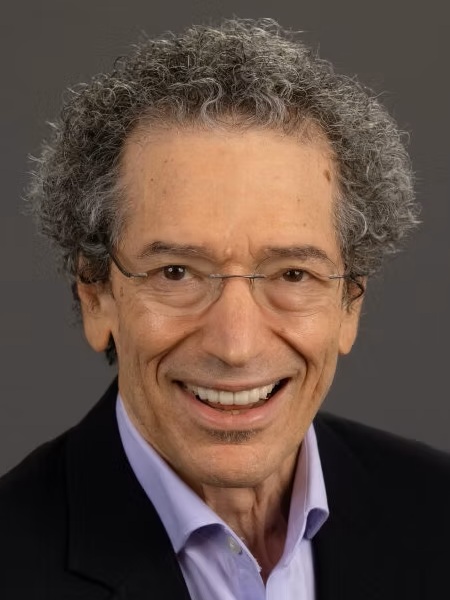
Courtesy of David Osher
David Osher, RCC
Hammond challenges us to move beyond a warm but incomplete version of belonging. Youth need to feel accepted, but they also need to belong to a community of learners — what Hammond calls cognitive apprenticeship: initiation into the craft of learning itself.
In any such setting, youth need adults who help them enter confusion without panic, use errors as information and take on productive struggle. That requires intellectual safety, not just psychological safety. A setting may feel socially welcoming yet still be intellectually unsafe if speed, right answers or compliance define what it means to be capable.
Agency is not simply voice or self-confidence. It is the growing capacity to understand and act on the conditions shaping one’s life. Hammond warns that adults sometimes undermine it by over scaffolding — removing the cognitive friction that learning requires. Youth become powerful learners when adults gradually release responsibility, not when adults pre-digest the work.
What the conditions demand
If youth are losing trust, the answer is not to exhort them to be more resilient.
It is to build environments worthy of trust.
That means learning environments where culture is cognitive infrastructure, errors are information and youth are apprenticed into the craft of learning — and schools and youth organizations recognize families and communities as part of the learning field, not outside influences to be managed.
It also means trusting youth capacities. Bang reminds us that children have ethical questions from the youngest ages. Hammond reminds us that youth become metacognitive and strategic learners when adults invite them into that work.
Our discussions in episode 5 help us see how to rebuild well-being, groundedness and agency — through relational, cultural, cognitive and ecological conditions that hold youth as they learn to hold the world.
***
The Thriving Youth Knowledge Exchange: Deeper Learning and Equity podcast series explores how to build the conditions for youth thriving more intentionally, in more places, for more young people. Previous pieces in the series can be read here:
Five shifts that would change everything
What John King’s teachers were actually doing
An invitation to learn, reflect and act together for equity-centered thriving
David Osher has been an organizer, professor, dean of an experimental college and schools of human services, researcher, and a TA provider and organizational consultant. His work focused on building humanizing conditions and capacities for and individual and collective thriving and equity.