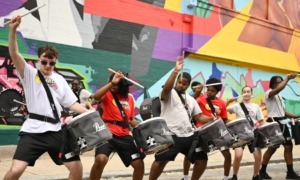


The landscape for LGBTQ+ people is significantly better now than it was when the Stonewall riots sparked the modern movement for LGBTQ+ equality. That said, there are serious threats to the community, especially for queer youth. While more than 90% of LGBTQ+ teens report feeling proud of being part of the LGBTQ+ community, the majority feel increased anxiety and fear about the future amid the legislative attacks and increasingly hostile rhetoric aimed at trans youth.
2SLGBTQ+ (Two-Spirit, Lesbian, Gay, Bisexual, Transgender, and Queer) Pride is more important than ever, as is allyship. If you care about the well-being of queer youth, this Pride Month is a perfect opportunity to think about what you are doing to actively support and affirm them, and what more you can do to create opportunities for these youth to thrive.
This piece is brought to you by a coalition of out-of-school time (OST) organizations and professionals who are committed to serving queer youth and advocating for change in the industry. We came together to share our top strategies after years of experience doing the work in youth organizations across the country.
Are you doing this work or getting started?
We’re stronger together — join the group by emailing programming@campfire.org.

Let’s jump into some specifics, starting with what you can do as an individual.
- Believe youth when they tell you who they are and protect that info carefully. If youth aren’t out to their family, there is a reason. They trusted you with sensitive information, and now you can protect it! Ask youth who can and can’t know about their disclosed sexuality or gender. Use the pronouns and name they ask you to use for each context. Share your pronouns, which invites others to share as well.
- Display welcoming symbols. It can mean the world to see a Pride Flag pin on a lanyard or a “You Are Welcome Here” at your program site. There’s an immediate sense of relief. One Camp Fire young person shared this about seeing a Pride Flag at summer camp: “When I saw that, it made me really excited. And I felt safer with the adults, because sometimes you never know how adults will react to things. But the adults are doing that. So it makes you feel much better.”
- Learn more about queer history. The 2SLGBTQ+ community has been especially under attack lately. But our story is one of resilience and resistance. Learn our struggles but also learn our triumphs. Learn about the ever-growing identities that share the Queer umbrella, including Intersex and Two-Spirit folks. Celebrate Pride in your programs!
- Share your identity and use inclusive language. If you are queer yourself, youth need your presence more than ever. You are an inspiration to keep going, a role model they can aspire to, and a trusted ally. When possible, share your identity appropriately with youth. Regardless of your identity, use inclusive language. Swap out “boys and girls” with your favorite alternative (We love a good “y’all”).
- Advocate for young people and policy changes that benefit youth at your organization. Change starts with one person. Notice and address harmful comments from peers or staff. Bring up what changes you want to see organizationally, share the data and keep pushing, even when change is slower than you’d like.
Next, consider taking these actions as an organization:
- Define your values and act accordingly — even if folks push back. Take some time to revisit your organization’s values. It’s likely that including 2SLGBTQ+ youth aligns well with your mission, values and vision for your work. Make that connection explicit, and when folks push back on inclusive changes, stay grounded in those values.
- Provide private changing spaces, restroom options and bunking by gender identity. You might be constrained by existing buildings or school policies. It is still vital to have a plan for youth who need a private space or gender-affirming option. Define that plan and share how to request or where to find these options with families and youth.
- Train staff on this population specifically. While the workforce is queerer than ever, don’t assume everyone knows how to serve this population well. Partner with your local 2SLGBTQ+ center — they may be able to come to your organization and provide training!
- Codify your policies and practices, including confidentiality. Write down what you do. Include a policy that protects sensitive information about youth identities. When possible and safe, make your policies public for youth and families to see. By writing things down, your good work can continue even as staff turnover.
A more intentional commitment to queer youth can transform your organization for the better — for everyone! The members of our working group have seen it firsthand.
“Girl Scouts Western Washington is deeply committed to creating inclusive, welcoming spaces where any young person who identifies with the girl experience can feel seen, supported and celebrated. From programming around advocating for issues that are important to Girl Scouts to learning hands-on construction skills needed to build changing stations at our camps, Girl Scouts are not only welcomed into inclusive spaces where they belong — they’re also learning how their own actions can make the world a more inclusive place for their peers,” says Andrea Anderson, CEO, Girl Scouts of Western Washington.
[Related: What my trans daughters are teaching me about leadership]
Thank you to everyone who contributed to this piece:
• Andrea Anderson and Katie Johnston, Girl Scouts of Western Washington
• Shawna Rosenzweig, Camp Fire National Headquarters
• Deborah Levine, CenterLink
• Tia Quinn, BOOST Collaborative
• Chad Nico Hiu, YMCA of Greater San Francisco
• Jake Sullivan, Linked Mentoring
Shawna Rosenzweig, CEO of Camp Fire National Headquarters shares, “At Camp Fire, we’ve learned that inclusion work is organizational improvement work. When we created private changing spaces for transgender and nonbinary youth, we reduced bullying and increased comfort for everyone in the program. That’s the curb cut effect in action. When you design for the margins, you build something better for the middle too. The organizations that understand this aren’t just more affirming. They’re more effective and they’re safer for every young person who walks through the door.”
Are you in? We hope you said “Yes!” Consider one commitment you could make to queer youth this Pride season and upcoming year of programming. Share your commitment, and this article, publicly and on social media to amplify all the ways we can help young people right now. And Happy Pride!
***
Ellen Kahn is senior vice president of equality programs at the Human Rights Campaign, overseeing a portfolio of programs and projects aimed at improving the everyday lives of LGBTQ+ people, including Welcoming Schools, Research and Public Education, Parents for Transgender Equality, and the Workplace Equality Program. In her more than 20 years at HRC, Ellen has shaped innovative system-change work in child welfare, education and healthcare, and she is nationally recognized as an expert on LGBTQ+ youth and families.
HK Gilbert is the director of program services for Camp Fire National Headquarters. In their role, HK leads resource support and training initiatives for 42 affiliates nationwide, enhancing program effectiveness and professional development. With 14 years of OST and camp experience, their passion is equipping youth development professionals with evidence-based tools to create authentic environments where all young people can thrive.