
Across the country, young people are not just raising their voices — they are solving problems in their communities. C&S, in partnership with the Andrew Carnegie Foundation, is welcoming the newest class of fellows for the Carnegie Young Leaders for Civic Preparedness program.
Seventy-one youth-led teams from 46 states were selected to transform local challenges into concrete solutions in schools, neighborhoods, campuses and communities nationwide.
As part of the program, these young leaders, ages 14-24, will receive grants of up to $7,500, along with access to coaching, a national network of civic leaders and the resources necessary to launch bold local initiatives and partner with peers and mentors committed to a stronger democracy.

Unlike programs that focus on a specific cause or leadership development, Carnegie Young Leaders starts with the young people themselves. Fellows define the issue they want to address, design a response rooted in their knowledge of their communities and lead the work as a team, supported by funding, coaching, mentorship, training and a national peer network.
Carnegie Young Leaders is built on a simple belief: Young people do not need to wait to become leaders. They are already identifying what is broken, bringing teams together and building practical solutions right now. Every one of these teams started by seeing a problem up close and deciding to do something about it. We recognize them as problem-solvers today and provide the support, mentorship and national community needed to turn local insight into real solutions that strengthen their communities.
[Related: Civic skills for 20 million young people — A Q&A with Rajiv Vinnakota]
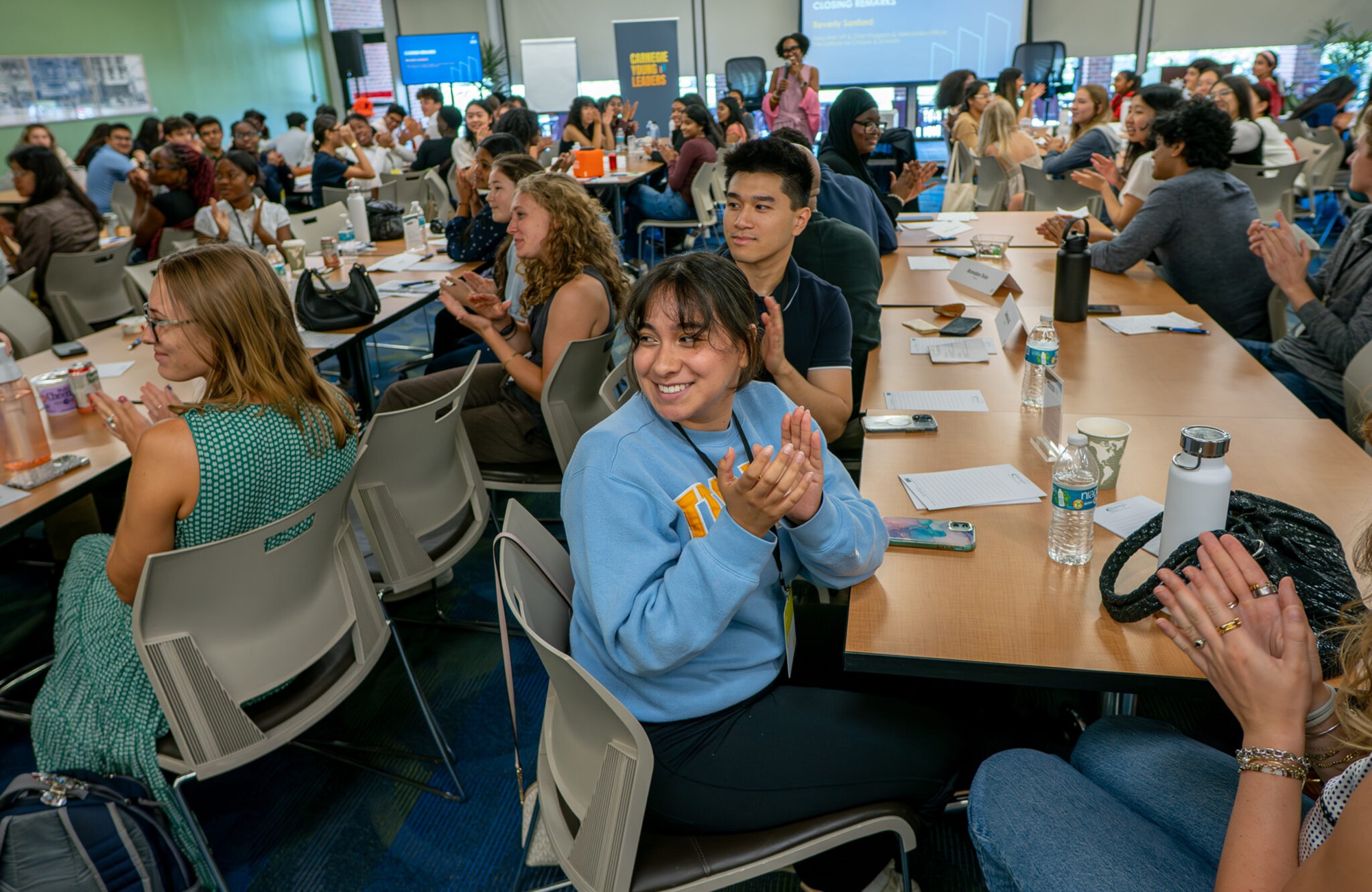
This week, the 71 team leads are convening in New Brunswick, New Jersey, for the Carnegie Young Leaders kickoff, where they are launching a year of collaboration, skill-building and community-centered problem-solving. The fellowship is designed to help young people move from idea to impact with the wraparound support many youth programs sometimes struggle to provide.
Institute for Citizens & Scholars
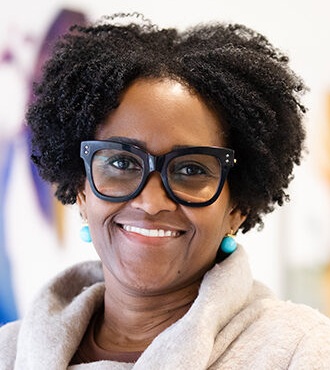
Audra Watson
This second-year cohort builds on a strong inaugural class. In 2025, fellows addressed urgent issues such as food insecurity, disaster recovery, civic engagement, environmental sustainability and mental health.
Some of those efforts delivered immediate, visible impact. In Anchorage, Alaska, Emily Brubaker and her BioGlitter Initiative team successfully campaigned to replace plastic glitter in classrooms with biodegradable alternatives. The project moved from petitions and teacher outreach to an Anchorage School Board resolution that now affects up to 43,000 students.
In Miami, Florida, the Fridge of Plenty Miami team, led by Demi Trimm, provided food to 313 families in 2025, distributed 150 Thanksgiving meal bags and partnered with major grocers, four nonprofits and five high schools to strengthen food access across Miami-Dade County.
[Related: The missing voices in climate decision-making — Youth]
The new class continues that momentum with ambitious, practical, community-rooted projects. These include:
- Corals to Committees (O’ahu, HI): Connecting science and policy through field research, outreach and virtual storytelling that make environmental science more accessible and bring community voices into conversations with legislators.
- IRIS (Pittsburgh, PA): Building and field-testing a low-cost wearable AI device to help residents with visual impairments navigate Pittsburgh’s terrain more easily.
- LungIQ (Indianapolis, IN): Addressing low lung cancer screening rates through an interactive platform that helps high-risk residents understand their risk, navigate barriers and act.
- Utah Nuclear Health Initiative (Park City, UT): Using theater, public awareness and practical support to advocate for Utah Downwinders and reduce uranium exposure in high-risk communities.
- O.R.E.S. (Powell, OH): Responding to rising household energy burdens with a community-based model that distributes tools and resources to help low-income and rural families reduce electricity costs.
With funding provided by the Andrew Carnegie Foundation, Henry Luce Foundation, Hewlett Foundation and Crown Family Philanthropies, these teams underscore a defining feature of Carnegie Young Leaders: Young people from urban, suburban and rural communities are stepping up to solve problems together. Carnegie Young Leaders is one part of C&S’s broader goal to help spark 20 million civic problem-solvers by 2029. We’re investing in the next generation not just as future participants in democracy, but as active contributors deciding what comes next.
Meet the full list of 2026 recipients and learn about their projects.
***
Audra Watson is chief of youth civic programs at C&S – the Institute for Citizens & Scholars. Throughout their programs, C&S helps young people practice three essential civic skills: having productive conversations, using credible information and collaborating to create solutions.