

A pioneering social entrepreneur, Rajiv Vinnakota has served as president of the Institute for Citizens & Scholars since 2019, leading its mission to cultivate the talent, ideas and networks that develop lifelong, effective citizens.
 Vinnakota has dedicated his life to creating initiatives that help American citizens from all walks of life to become productive and engaged members of society. Early in his career, he co-founded the SEED Foundation, the nation’s first network of public, college-preparatory boarding schools for underserved children. Before joining the Institute for Citizens & Scholars, Vinnakota served as executive vice-president of the Aspen Institute. In this role, he launched and led the new Youth & Engagement Programs division devoted to youth leadership development, civic engagement and opportunity.
The Institute — using the new public shorthand C&S to signal that this work belongs to a much broader community — recently unveiled a $25 million philanthropic commitment to activate a bold plan to spark 20 million 14- to 24-year-old problem solvers by 2029. I spoke with Vinnakota to learn more about how organizations already committed to this cause can get involved.

Q: Engaging 20 million 14- to 24-year-old problem solvers in 3 years is a bold commitment, even with generous funding? How did you come up with this goal?
Rajiv Vinnakota: There will be roughly 40 million Americans between the ages of 14 and 24 over the next three years, so our goal is to motivate a critical mass of that generation to step up as civic problem-solvers.
From all of our surveys, like our Gen Z Civic Vibe Check, and our work with young people, we know young people want practical opportunities to practice these skills. Ninety percent of young people actually want to engage in the community, they want to drive change. And 77% of young people actually want to engage in person in these activities. They want to interact, even with people with whom they don’t agree. I think it comes from this deep, deep need for belonging that’s lacking in so many ways right now.
What they are lacking is entry points. They need to find people who can help them traverse those processes.
[Related: The crisis in Gen Z’s political education]
So, we were intentional in setting a target that is both ambitious and grounded in what we’ve learned from decades of work. We know from our own research and experience that millions of young people already care deeply about issues in their schools, workplaces and communities. The 20 million goal reflects both the scale of that interest and the urgency of this moment.
Q: What is the major operational strategy?
Our strategy is to meet young people where they already learn, live and work. Over the next three years we will:
- Expand our work on college campuses through College Presidents for Civic Preparedness and the Mellon Fellowships
- Invest in community-based youth leadership through Carnegie Young Leaders
- Launch partnerships in workplaces
- And introduce a large-scale national participation platform that connects efforts across the country
We also focus on small, approachable actions that fit naturally into young people’s lives — things like helping someone find credible information, bringing people together for conversations across differences, or working with others to address a local problem.
When those actions are supported and connected at scale, they add up to the kind of broad civic participation that can move the needle nationally.
Q: C&S’s roots are on college campuses. How will you ensure that you are reaching younger teens and non-college-going youth?
Our campus partnerships remain a major part of our work, but we recognize that many young people will never attend a four-year college and many others are still in high school. That’s why we’re developing a large-scale national participation platform launching this summer that will connect young people across schools, workplaces and communities.
We’re also building on our experience in communities. The goal is to meet young people wherever they are, not only on college campuses.
The only way that you get to 20 million is to leverage relationships, coalitions and so on. This is not a one-person band or a one-institution flag. Some of the work we’ll be doing ourselves, but a supermajority is about how we leverage these wonderful things that are already happening.
Q: Your emphasis on building “strong civic cultures where every student can practice essential civic skills” — not just on increasing service hours — will resonate with YT readers. Share more about how your skill-building approaches have been tailored for Gen Z. What have you learned?
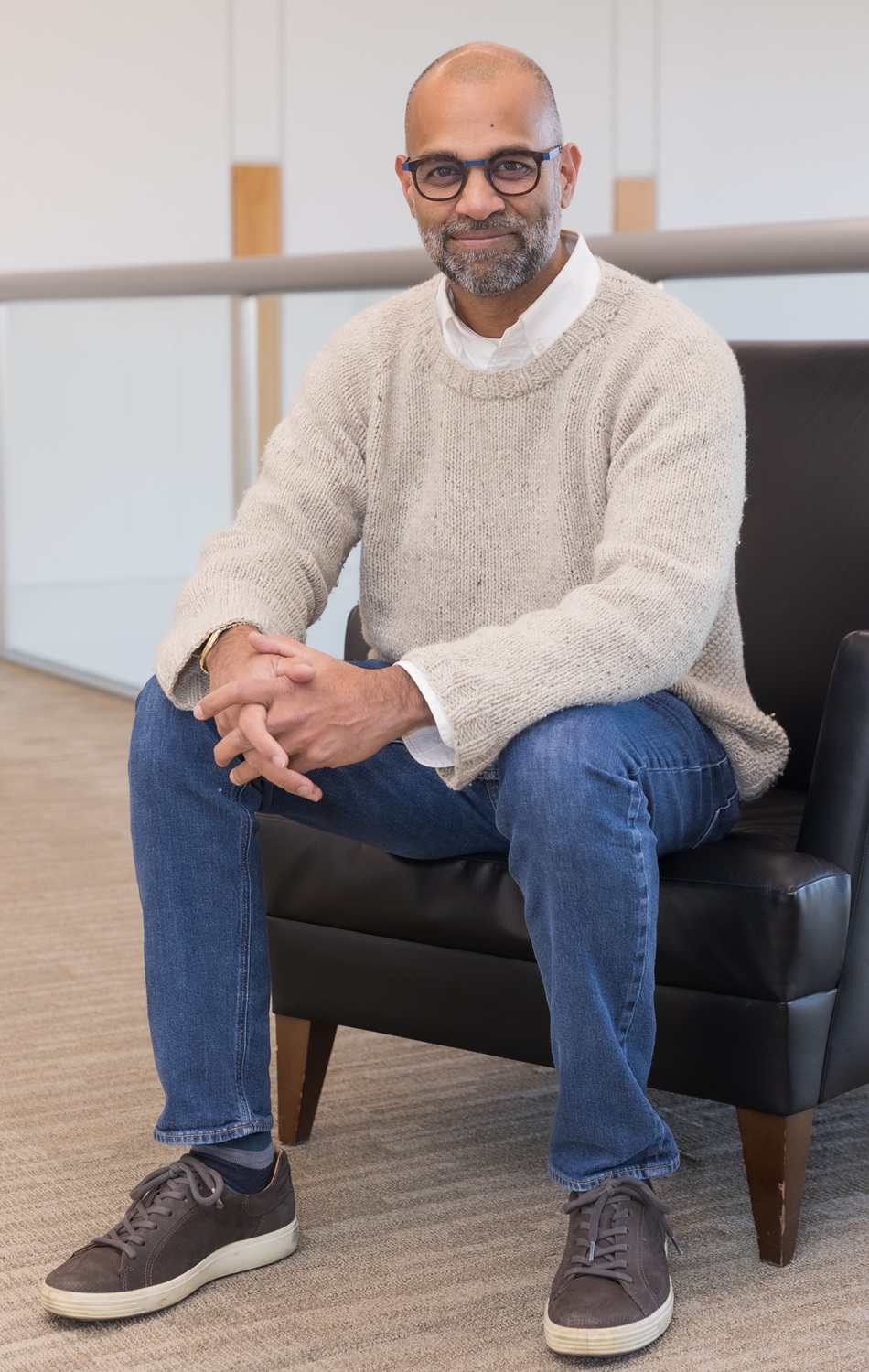
Courtesy of Rajiv Vinnakota
Rajiv Vinnakota
Across all of our work we focus on three essential civic skills:
- Having productive conversations across differences
- Using credible information
- Collaborating to create solutions
We focus on these because they’re foundational. They power everything from community problem-solving to workplace teamwork.
They’re also particularly important in a moment defined by polarization and rapid technological change, where people need to be able to evaluate information, build trust and work with others who see the world differently.
Another key lesson is that programs work best when they are co-designed with young people, not designed for them. Many of the strongest ideas come directly from the young leaders themselves.
Q: Let’s talk about your three target spaces: college campuses, workplaces, and communities. Your connections to college campuses undergird this bold commitment. Will there be strategies to increase visibility on community college campuses, HBCU and HSIs?
Yes, and in many ways we’re already doing that.
Our College Presidents for Civic Preparedness coalition includes more than 125 institutions representing a broad array of institutions, including community colleges, HBCUs, Hispanic-Serving Institutions, Minority-Serving Institutions and major public and private universities.
That broad array of institutions makes our coalition stand out. It also reflects our belief that civic learning should reach all students. The coalition also spans red, blue and purple states and includes colleges in urban, suburban and rural communities across the country.
Q: Say more about the 25 private-sector companies you’ll target. Beyond an interest in youth civic engagement, will the focus be on size, geography, and entry-level workforce characteristics?
Workplaces are one of the newest areas of our work.
The reality is that every young person eventually enters the workforce, and more than half of Americans will never attend a four-year college. If we want to reach an entire generation, workplaces have to be part of the solution.
[Related: The missing voices in climate decision-making — Youth]
The civic skills we focus on — communication across differences, credible information and collaboration — are also core workplace skills that employers consistently say they need.
Our strategy is to work through networks and coalitions, including partnerships with organizations like the U.S. Chamber of Commerce Foundation, to engage companies across industries. We’re developing a partnership with them as a pilot for how these skills can be developed.
Q : The community commitment is the least specific. “C&S will fund and coach thousands of young leaders in all 50 states” does not specify a role for the myriad of organizations in communities where youth spend their time and trust their peers and adults. Will there be a plan to leverage this decentralized local infrastructure?
Community leadership is a major focus of our work through Carnegie Young Leaders, which supports young people who are already stepping up to solve problems in their communities. We kicked off Carnegie Young Leaders last year with 500 fellows who are taking initiative in their neighborhoods having received training in our essential civic skills.
What’s distinctive about this program is that many of these young leaders are not working through traditional nonprofit structures. They’re organizing projects, launching initiatives and building networks on their own.
Our role is to fund, coach and connect thousands of these young leaders across all 50 states, helping them scale their ideas and learn from one another.
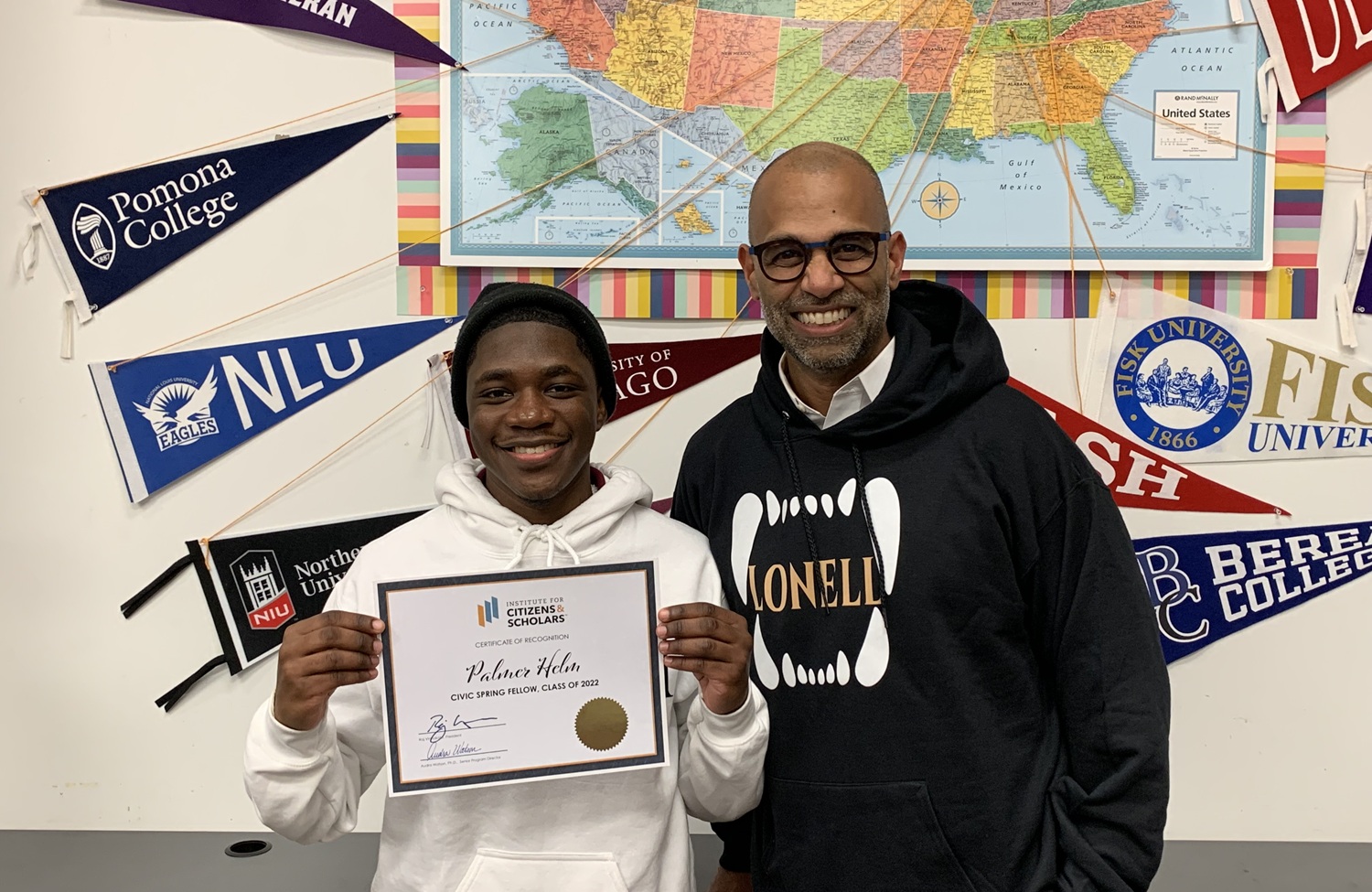
Institute for Citizens & Scholars
Rajiv Vinnakota stands with a Civic Spring fellow after their completion of the program.
Q: Can you say more about the “new national participation platform” to be launched this summer? Is it a platform to register youth participants? To provide technical and financial support to mission-aligned partners?
The platform is being designed to connect and amplify civic participation happening across the country. Rather than starting from scratch, the goal is to stitch together hundreds of organizations and initiatives that are already engaging young people. We need to find out what’s out there to build on. But we have an idea of the two types of functionality we need. The first is to be able to provide examples of the simple types of activities youth can do. We need this functionality to be organic, so that people can add new ideas. The second is to be able to calculate — to capture where and when people are taking action across the country.
By connecting these efforts — while providing tools, recognition and shared opportunities for participation — we can help millions of young people take simple civic actions that add up to meaningful impact at scale.
Q: The $25 million commitment from multiple funders is impressive. What’s driving philanthropic support at this scale?
Our funders recognize that this moment calls for new ways of strengthening civic participation, especially in an era defined by polarization and rapid technological change.
What’s exciting is that this work sits at the intersection of many priorities — education, democracy, youth empowerment and workforce development.
The $25 million commitment reflects a shared belief among philanthropic partners that young people are ready to lead and that investing in their ability to work across differences and solve problems together is one of the most important investments we can make in the country’s future.
***
In her columns, Karen Pittman is exploring the research behind the statement, “When Youth Thrive, We All Thrive.”