
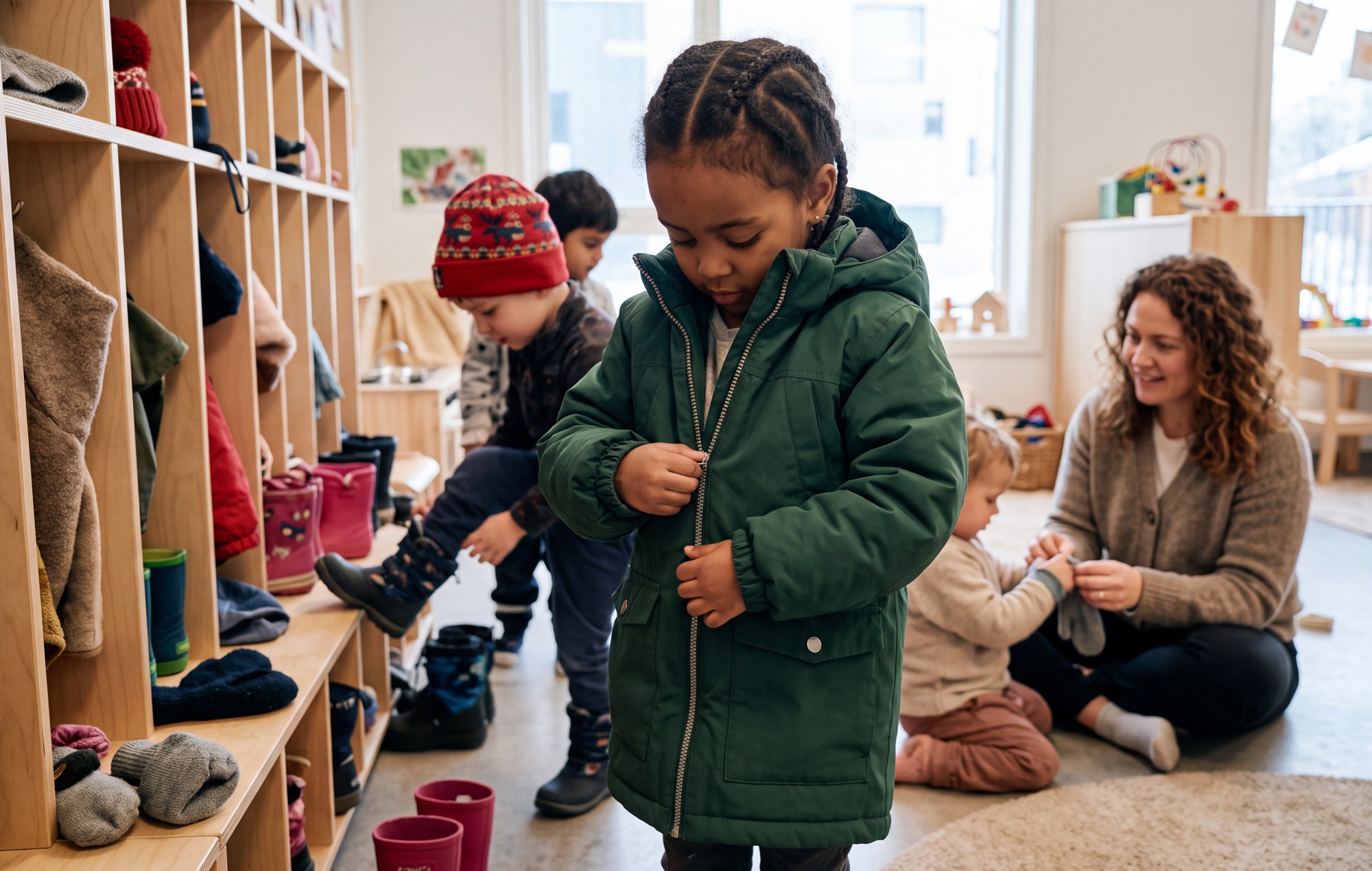
For more than 25 years, national nonprofit Operation Warm has focused on a basic but often overlooked need: Ensuring children have access to brand-new coats, shoes and other essential apparel.

At first glance, that mission may seem straightforward. But after serving millions of children through partnerships with schools and community organizations across thousands of communities, we’ve learned that clothing insecurity is about much more than clothing. It’s about attendance, participation, confidence, belonging and a child’s ability to engage fully in school and life.
In recent years, public conversations around child well-being have appropriately focused on food insecurity, housing instability and mental health. Yet clothing insecurity often remains hidden despite its significant impact on children’s daily experiences.
[Related: To fix student absenteeism, schools must support families first]
In 2025, Operation Warm surveyed more than 1,000 low-income parents across the United States. More than one in three parents reported keeping a child home from school because they could not afford a warm coat when temperatures dropped. Many also reported having to deprioritize properly fitting warm coats due to competing household expenses.
For youth-serving professionals, those findings may not be surprising. Educators, youth workers and school counselors regularly encounter children who are affected by unmet basic needs.
What is often less visible, however, is the role apparel plays in helping children feel ready to learn, participate and connect with their peers.
Why we focus on essential apparel
Operation Warm was founded around a simple observation: Children need more than academic support to thrive. One of those foundational needs is having appropriate clothing that helps them stay warm, healthy and engaged in their daily lives.
For many families, purchasing properly fitting coats, shoes or seasonal apparel presents a significant financial challenge, particularly because children quickly outgrow what they have. While a lack of proper clothing can affect a child’s health and comfort, it can also create barriers to school attendance, extracurricular participation and social connection.
One of our nonprofit partners described the challenge this way:
“Not having personal transportation, most of our students walk to school no matter the weather. Thanks to Operation Warm, they will have the chance to be kids at recess instead of trying to find the sun and shivering outside.”
That observation captures something important.
Essential apparel doesn’t simply help children stay warm. It helps them participate.
Why brand-new matters

Courtesy of Emily Allegrucci
Emily Allegrucci
One question we are often asked is why Operation Warm provides brand-new apparel rather than relying exclusively on donated or gently used items.
The answer comes from years of listening to children, caregivers, educators and community partners.
While any support can make a difference, brand-new items create an experience rooted in dignity.
Receiving a brand-new coat or pair of shoes communicates something powerful to a child: You are valued.
Many young people receiving assistance have spent years wearing hand-me-downs or making do with items that no longer fit. A new item doesn’t just address a practical need. It helps remove stigma and gives children something that belongs entirely to them.
Our partners consistently tell us they see increased confidence, engagement and participation among the children they serve. Those outcomes reinforce what we have learned over the past 25 years: When children’s basic needs are met with dignity, they are better positioned to thrive.
How Operation Warm reaches children at scale
One lesson we learned early is that meeting children’s basic needs requires more than good intentions. It requires a reliable system capable of reaching communities where need exists.
Rather than relying solely on clothing drives or inconsistent donations, Operation Warm developed a model centered on manufacturing and providing high-quality, brand-new essential apparel specifically for children in need. This approach helps ensure consistent quality, sizing and availability while allowing communities to access resources regardless of local donation levels. Over the past 25 years, that model has enabled the organization to serve millions of children through thousands of community partners across North America.
The model also allows Operation Warm to respond to needs across a wide range of communities. Children in urban neighborhoods, rural towns, suburban school districts and tribal communities alike can experience clothing insecurity. While the circumstances may differ, the impact is often the same: children face unnecessary barriers to attendance, participation and belonging. By maintaining a network of partners and providing new apparel at scale, Operation Warm helps ensure support reaches children wherever they live.
The power of partnership
Operation Warm does not distribute apparel directly to families. Instead, the organization works through trusted community partners already serving children every day. These partners include schools, Boys & Girls Clubs, Salvation Army programs, youth-serving nonprofits, community centers and faith-based organizations.
[Related: When the lights go out, whose children matter?]
This partnership model allows resources to reach children through organizations that already understand local needs and have established relationships with families. It also creates opportunities for apparel distributions to become moments of connection rather than simple transactions. Whether incorporated into a back-to-school event, community celebration or family resource program, these experiences help children feel supported by the people and organizations around them.
Expanding our definition of essential
For youth-serving organizations, clothing insecurity may not always be the primary focus of their work, but it can influence nearly every outcome they care about. Addressing that need can help remove barriers while strengthening relationships with children and families. As Operation Warm has listened to children, families and community partners over the years, its definition of “essential apparel” has expanded beyond outerwear to include items such as athletic shoes and sports bras. These additions reflect a broader understanding that children need more than protection from the weather.
They need the essentials that allow them to participate confidently in school, sports and everyday life.
Organizations interested in expanding support for the young people they serve can partner with Operation Warm to bring brand-new essential apparel directly into their communities.
***
Emily Allegrucci is the public relations and media manager at Operation Warm, where she leads storytelling and press outreach for the national nonprofit. A former TV reporter and multimedia journalist, she holds a communications degree from West Chester University of Pennsylvania and a master’s in strategic communication from Columbia University.