
 As conversations around AI and edtech dominate education headlines, a new insight from Communities In Schools (CIS) offers a powerful reality check.
From the spring of 2025 through winter 2026, 175 students, families, alumni and educators contributed their stories to CIS in response to a simple prompt: “Tell us about a time when you (or your child/a student) needed support, inside or outside of school, and what happened.” We asked it that way on purpose — open-ended, free of assumptions — to let the answers shape our national policy agenda, not confirm it.
The result: not one person mentioned technology. Every single response pointed to a human relationship.
A site coordinator who made a call home not to track attendance, but to understand. A teacher who saw beyond behavior to what a student was carrying. Someone who showed up with food, a jacket and encouragement at the exact moment a family needed it most.
Across those voices, one clear takeaway emerged: The relationship wasn’t the support. It was the solution.

Working in more than 3,500 schools nationwide, Communities In Schools connects students with trusted adults, often referred to as site coordinators, who have access to local resources and partners to address local needs. We take this on so school administrators can focus on running the school and teachers can focus on teaching.
At a time when public confidence in education has dropped to just 35% (Gallup, 2025), we should be asking a different question. Not what new tool will fix our schools, but whether we are investing in what we already know works.
The Community Wisdom Project, a national effort led by CIS in partnership with The Starfish Institute, set out to document what students and families have long understood but policy too often overlooks. Student success is not the result of any particular curriculum or program. It comes from relationships — built by trusted individuals who show up and stay.
These stories reveal important patterns.
Students succeed when someone knows their name, understands their circumstances and is willing to act.
A shy student begins to participate because a caring adult takes the time to build trust over weeks and months. A young person struggling with attendance returns to school when someone removes barriers keeping them away. A family who has lost everything steadies itself because someone showed up with some basic supports and the words “I’ve got you.” A student unsure of their future finds direction because someone connected them to opportunities and believed in their potential. And in nearly every story, that help arrived before the crisis became catastrophic and was offered proactively — and always with dignity.
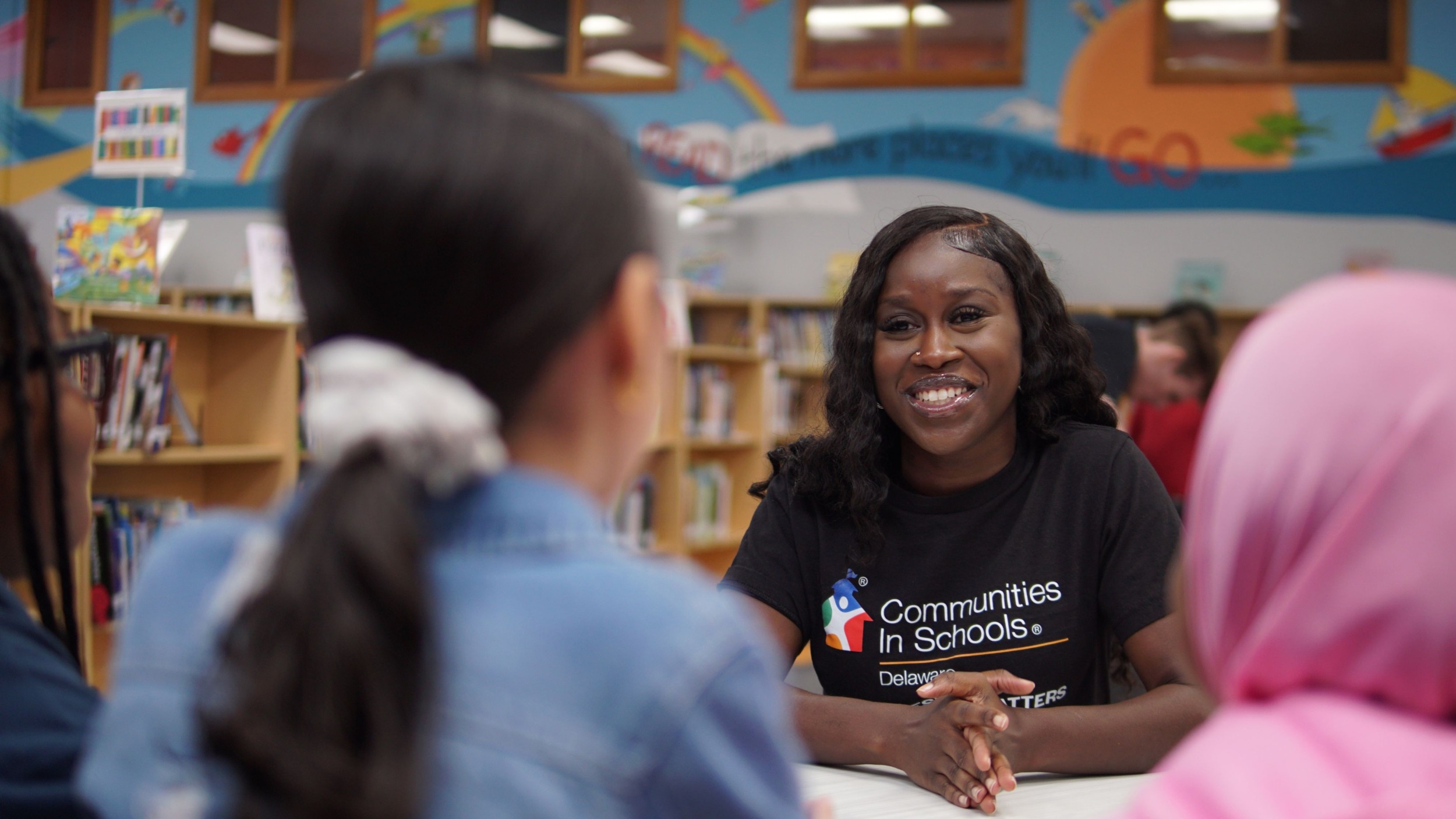
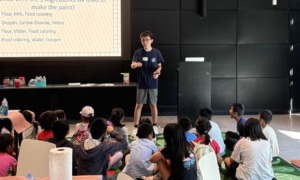
A Communities in Schools (CIS) site coordinator speaks to a group of students while at an elementary school in Delaware.
These patterns align with decades of research showing that CIS’s model of integrated student supports (ISS) improves attendance, increases graduation rates and changes students’ long-term trajectories. Causal evidence now puts that impact in concrete terms: ISS generates more than $75,000 in lifetime earnings per student and returns more than $2 for every federal dollar invested.
And yet, despite this evidence, relationship-based supports are too often treated as discretionary.
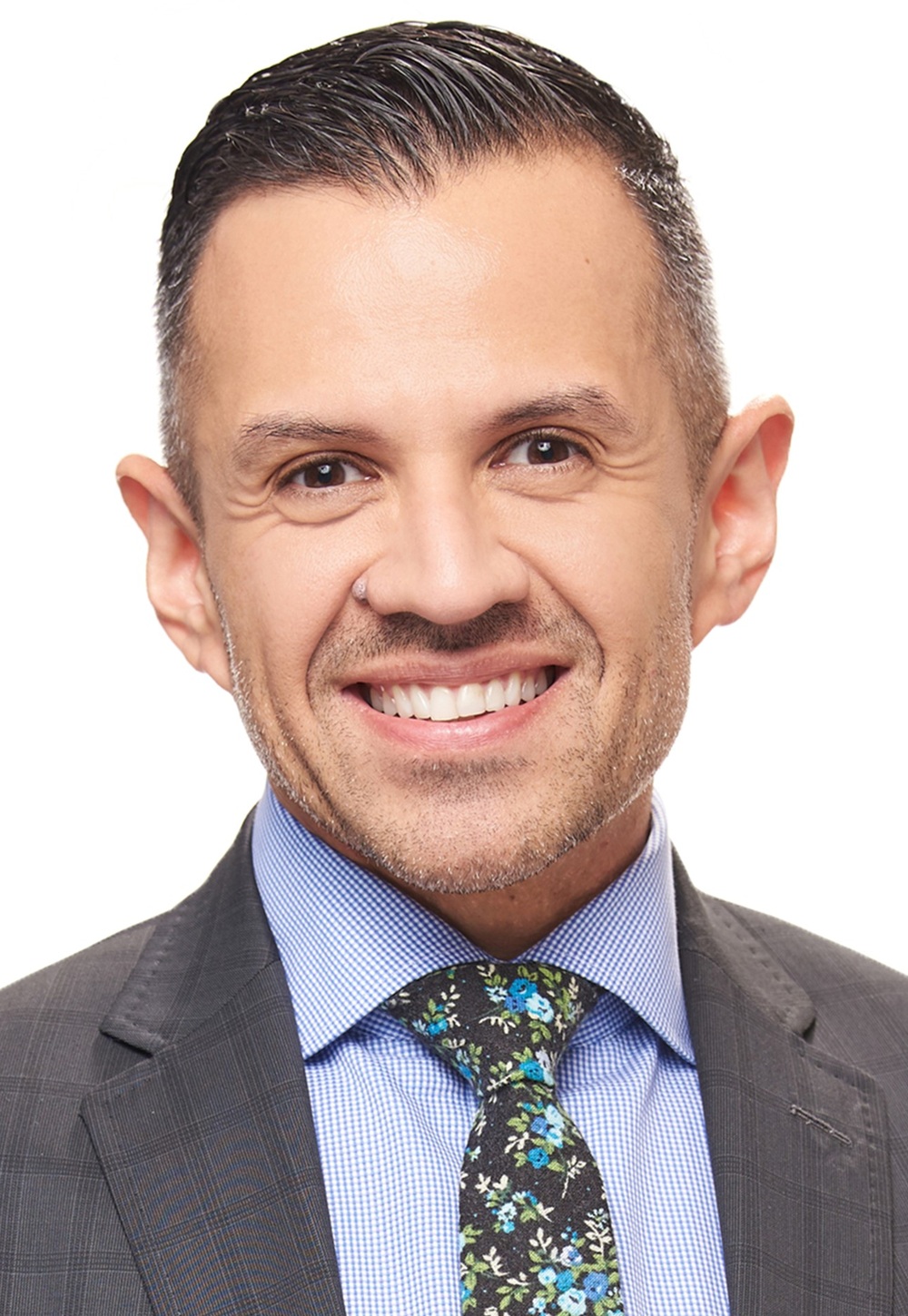
Courtesy of Joaquin Tamayo
Joaquin Tamayo
Artificial intelligence can personalize learning pathways and analyze data at unprecedented speed. But it cannot replace the moment a student feels seen. It cannot build trust with a family navigating crisis. It cannot provide the encouragement and belonging that students need to engage in the first place.
Human presence is the infrastructure. Everything else runs on top of it.
The danger isn’t that AI fails. The danger is that it succeeds at optimizing factory-model education just enough to justify de-prioritizing the thing that actually works: humans supporting other humans.
When we prioritize efficiency over connection, we risk building schools that are technologically advanced but relationally empty.
The Community Wisdom Project offers a different path forward. It calls on us to listen to students and communities and to align policy with what they are telling us. That means investing in people, not just programs. It means embedding integrated student supports into the fabric of every school. And it means recognizing that meeting basic needs like food, safety and belonging is not separate from academic success — it is essential to it.
If we are serious about preparing students for the future, we must start by ensuring they have what they need in the present: a trusted adult, a supportive environment and a system that sees and treats them as whole people.
In nearly 200 stories, students and families have already given us the answer. The question now is whether we are willing to listen.
***
Joaquin Tamayo is a former high school teacher, principal and federal policymaker and currently serves as acting vice president of policy, marketing and communications for Communities In Schools’ National Office. Since 1977, CIS has supported millions of students in achieving their goals in school, succeeding in the workforce and thriving in life.