
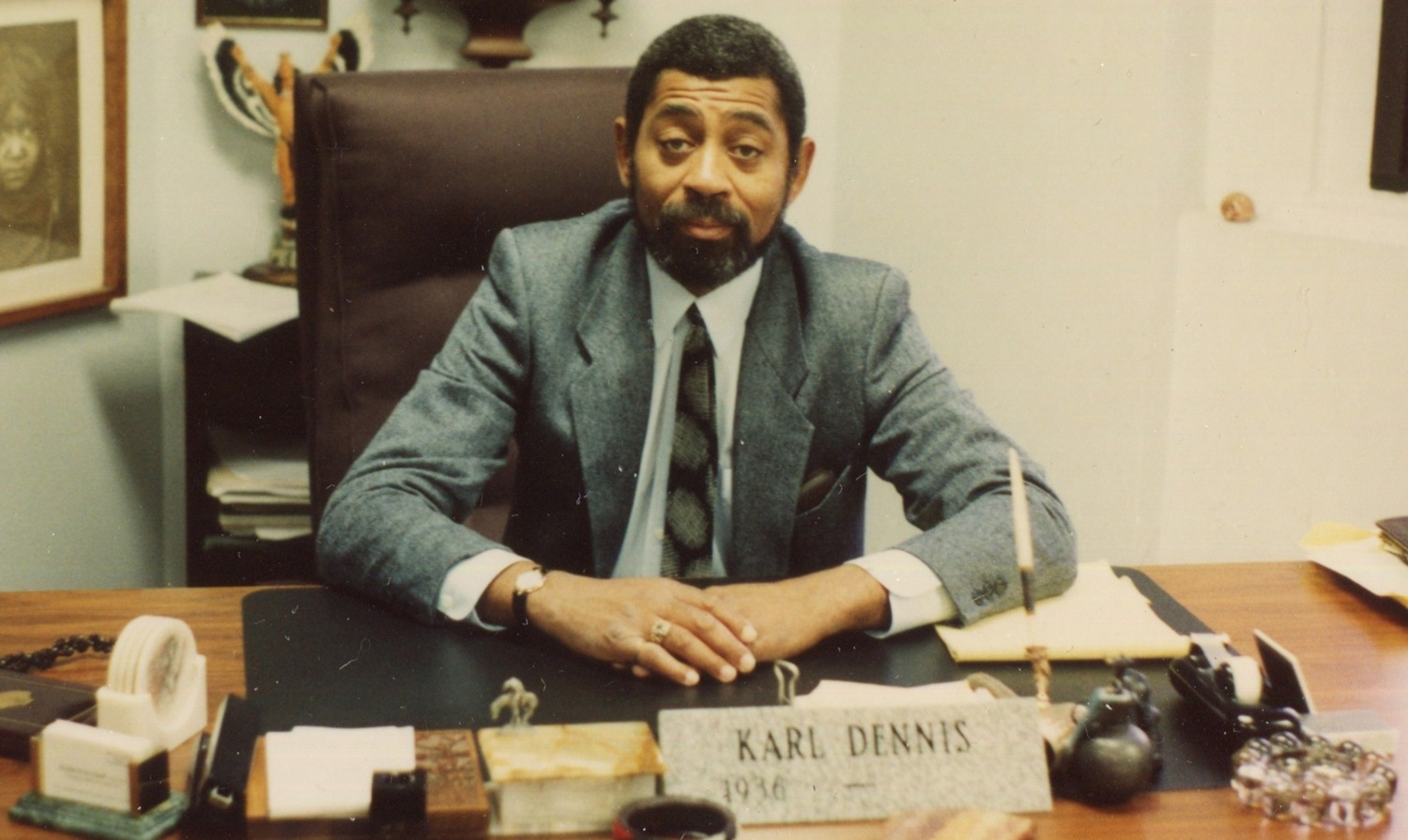
Good youth work is transformative and has a strong grounding in science and evidence-building practice. High quality youth work embodies a set of common principles regarding youth development and implementation practices that cut across systems. Karl Dennis was among the leaders who helped shape what youth work looks like today. Karl died on June 20.
 Karl’s degree was in education, but he did not go into teaching. He came to youth work as a volunteer at a dropout prevention program run by the Chicago Public Schools, which individualized services, leveraged community resources, engaged families and focused on motivation and asset development. Karl helped create Kaleidoscope, an innovative child welfare program created to support and serve young people in their homes and community as opposed to the out of community and out-of-state placements that were routine in the 1970s. (Read more in a 1999 feature on Karl from Reader.)
Karl was a foundational thinker, key architect and persuasive advocate in the development and realization of high-quality wraparound youth- and family-driven support that was unconditional, individualized, strengths-based, and ecological and culturally responsive. Wraparound support gradually developed in the 1970s and 1980s due to the creativity of individuals like Karl and organizations like Kaleidoscope that wanted to provide individualized, comprehensive, community-based care for children and their families. While some form of wraparound is now routinely employed in many youth-serving systems, including child welfare, children’s mental health and juvenile justice, when Karl helped found Kaleidoscope in 1975, such practices were nascent, insufficiently consumer-driven and conditional. Kaleidoscope was among the first organizations to champion what would be the quintessence of effective wraparound care — the secret sauce — care that was youth- and family-driven and unconditional. strengths-based, ecological, individualized, collaborative, team-based, outcome-driven (with youth and families driving the outcomes) and realistic about what adults need to enact unconditional care and support for youth in child welfare, juvenile justice, mental health, education and recreation systems.

Courtesy of David Osher
David Osher, RCC
Karl led Kaleidoscope from its opening in 1975 to 2002. He continued to teach and consult afterwards and played an active role in supporting the rise of family-driven practices and youth-driven approaches. Karl passionately believed in “unconditional care.” He understood how the ability to exclude or eject people constrained creativity. He also understood the need to find people’s strengths. Unconditional care involved supporting children and youth and staying with them no matter how challenging the behavior was. Unconditional care was restorative and capacity building. It included natural consequences, crisis plans and taking steps to prevent challenging behavior from being repeated. Unconditional care meant staying with the youth — even if the problematic behavior repeated — but continuing to modify the environment and supports to promote success. Kaleidoscope did not “cream clients.” Karl served on Kaleidoscope’s admissions committee to ensure that no applicant or referral was rejected and created identity-affirming, emotionally safe environments for young people to live and grow.
Karl foreshadowed and translated into practice the implications of the science of learning and development for equity-centered thriving and the science of how to make what works work in practice. Kaleidoscope embraced individuality and diversity and was culturally responsive. It provided youth with multiple opportunities to succeed at home and in the community; leveraged youth and family agency to integrate support systems and plan and evaluate them; and supported staff so that they could create and sustain positive developmental relationships and environments filled with safety and belonging. Karl and Kaleidoscope walked the talk of youth equity, youth drivenness and unconditional care — approaches that are essential to transformative work in all youth-serving and youth-facing systems.
Karl thought and acted ecologically. He (and Kaleidoscope) leveraged youth and their families’ ecosystems and cultural resources to provide the web of supports and opportunities. Karl also understood that each person and each context was unique and that settings, programs and even systems had to adapt to the youth and family rather than the opposite. Just as Karl never wrote off a young person, he never wrote off families even though most or perhaps all Kaleidoscope youth had experienced trauma, and agencies claimed the parents were hard to find and would not comply. He believed in family ties and understood that family included aunts, uncles, grandparents, even close friends, neighbors, and the whole tribe. Because Karl viewed families as valuable resources — and Kaleidoscope worked hard to find them — when they found them they treated them with respect and worked to earn trust, believing that wraparound should be family-driven. Karl critiqued traditional “pathology-oriented” methods of treatment and a program-driven approach to services that made the client fit the program rather than developing programming to fit the client. He believed “that people who provide social services should never give up on clients.”
Karl understood and addressed the importance of trust, relational approaches and relational support for adults as well as youth. He understood that trust and relational support was necessary to support and sustain adult capacity to care unconditionally and creatively. Karl and the Kaleidoscope team viewed themselves as a family, and he took steps to demonstrate his loving care for them while never working away from his extraordinarily high standards.
Karl understood the toxic impacts of language on people, worker-youth/family alliance, and organizational behavior. Karl insisted that his staff never applied the pejorative clinical language of “dysfunction” to families; rather, he saw systems that did not provide appropriate support to families and youth as dysfunctional. Youth and families were not “cases” and they should not be “managed” — points that he learned by listening to families and youth. He also understood how the change in language about wraparound that moved from “unconditional” care to “persistent” care contributed to doing “wraparound lite” — a watering down with profound impact on equity and outcomes.
Good and transformative youth work is essential to young people realizing the potentiality that the science of learning and development indicates is possible. Doing that work involves more than talking about good principles, it involves implementing these principles robustly and walking our talk in the face of contingencies that can lead us to water down what we do whether due to lack of resources, low expectations, or political fear. There is a consistent tendency in organizations to regress to being system-, agency-, provider-, and resource-driven driven and to make the client fit the program. Karl countered this in his work with youth, in his leadership, and as an advocate for unconditional care and providing youth workers with the relational and ecological supports that enable them to succeed. We must do the same.
For an additional tribute to Karl, read the National Wraparound Institute’s Blog.
***
David Osher has been an organizer, professor, dean of an experimental college and schools of human services, researcher, and a TA provider and organizational consultant. His work focused on building humanizing conditions and capacities for individual and collective thriving and equity.