

When a California high school student was asked to think about job interviews, he reached for the most obvious comparison in his world.
“Interviewing is not as tough as talking to your high school crush,” Mason S. told his career coach. “It is much less difficult by a significant margin.”
The line got a laugh. But it also opened the door to a more serious conversation about vulnerability, confidence and what it means to put yourself forward in an unfamiliar setting.

That kind of moment is easy to miss in conventional career readiness programs, where students are often told what employers expect but given fewer chances to connect those expectations to their own lives.
In Career Launchpad — a workforce readiness program developed in 2022 by our colleague Nicholas Wyman, president of the Institute for Workplace Skills and Innovation America — those moments are central to the model.
Working with high school juniors and seniors preparing to enter the workforce, the program combines career coaching, resume and portfolio development, workplace site visits, financial literacy activities and practical lessons in professional communication.
The premise is straightforward: Young people learn career skills more deeply when they can practice them, question them, test them and see how they apply beyond the classroom.
The program was built from the ground up with participant inclusivity and individualization in mind. Through active adaptation of both curriculum delivery and content, Career Launchpad meets the needs of students presenting on a wide spectrum of skill levels. This approach supports neurodiverse success regardless of formal diagnosis.
[Related: Workforce readiness should start before college]
The average participant is still an adolescent but also close enough to adulthood to benefit from approaches more often associated with adult learning. A purely school-based model can underestimate how much young people already know from their own lives. A purely adult-learning model can overestimate their confidence, independence and readiness to navigate unfamiliar professional settings. Career Launchpad sits deliberately between the two.

Courtesy of Deborah Williamson
Deborah Williamson
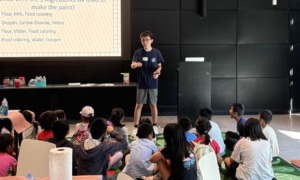
Rather than relying on lectures about workplace expectations, coaches use discussion, small-group work, problem-solving tasks, workplace exposure and applied activities. The aim is not simply to tell students how work operates but to help them see themselves as people capable of entering, navigating and contributing to a workplace.
At the Petersen Automotive Museum, students looked beyond the cars on display to consider the range of jobs required to run a major cultural institution. They discussed visible roles, such as exhibit work, as well as less obvious ones, including maintenance, operations and facilities management.
Seeing the hidden labor behind a museum helped make career pathways more concrete.
The program also uses online games to help students practice focus, planning and delayed gratification. In one financial literacy activity, students played a passive farming simulation game, making investment decisions and watching the results unfold over time.
The activity was deliberately light-touch, but it served a serious purpose. Students had to make decisions, wait for results and consider how small choices can compound over time. This served as a useful lesson for financial planning, career development and self-regulation.
Other activities are more directly tied to job seeking. In one workshop, students became “resume scientists,” analyzing deliberately flawed sample resumes and deciding whether fictional applicants deserved an interview.
The exercise generated humor, but it also prompted students to think like employers.
What makes a resume credible? Which mistakes are damaging?
When does an applicant deserve a second chance?
One-on-one coaching reinforced the same lesson. During a resume-building session, Xavier G. gradually took greater ownership of the document, suggesting revisions and recognizing that fluency in both English and Spanish belonged on his resume. A discussion about whether dog-walking counted as legitimate work experience became a conversation about transferable skills, responsibility and how young people learn to value their own experience.
We see parallels in this purpose to a study published in 2015 by Barton Hirsch evaluating work readiness in teens. The results from mock interviews highlighted a great area of need: Participants had no idea how to market themselves as entry-level candidates without formal experience. After utilizing a framework designed by Hirsch, students were able to connect the dots between their past life experiences, prior skills and how they come together to add value to the workplace. This ability to reflect and spot work-transferable moments and strengths runs deeply throughout our curriculum, all while making the learning more relatable and important to our students.

Courtesy of Jack Pennoyer
Jack Pennoyer
These may seem like small moments. But they point to a larger developmental shift. Students were learning not only how to prepare a resume, answer interview questions or communicate with employers. They were learning to interpret their own experience as evidence of capability.
[Related: Why America must invest in apprenticeships — now]
That is where adolescent development and adult learning theory converge. Young people still need guidance, scaffolding and encouragement. But they also need opportunities to exercise agency, draw on prior experience, solve problems and see their learning as relevant to adult life.
Career preparation is often framed as a checklist: resume, interview practice, workplace expectations, communication skills. Those elements are necessary, but they are not sufficient.
Young people also need to understand why those skills matter, how they connect to their own lives and how to transfer them into unfamiliar settings.
Career Launchpad’s use of coaching, workplace visits, discussion and applied practice suggests that career readiness is not simply a set of skills to be delivered. It is a developmental process. This methodological combination creates powerful conversations about the building blocks and definitions of success and finds parallels in the University of Chicago Consortium on Chicago School Research’s body of work. In “Foundations for Young Adult Success: A Developmental Framework,” three key factors to success were identified: “Having the Agency to make active choices about one’s life path, possessing the Competencies to adapt to the demands of different contexts, and incorporating different aspects of oneself into an Integrated Identity.”
Our Career Launchpad students often seemed refreshed by the idea that success could be evaluated outside of financial income and could alternatively be derived through their own values, direction and confident sense of self.
The program’s most important lesson may be that young people do not become work-ready because adults tell them what professionalism looks like. They become work-ready when they are given meaningful chances to try it, question it, connect it to their own lives and begin to see themselves as capable of doing it.
***
Deborah Williamson is vice president of the Institute for Workplace Skills and Innovation America. Beginning her career at the Kentucky Court of Justice, Williamson earned her doctorate in sociology, specializing in crime and deviance. She has overseen impactful youth-serving projects in conjunction with the Urban Institute and collaborates on projects with the California Department of Rehabilitation.
Jack Pennoyer is program manager and career pathways mentor at the Institute for Workplace Skills and Innovation America. Drawing upon more than a decade of nonprofit experience in special education and supported employment, he embraces all kinds of minds and weaves a strengths-based focus into his love for connecting with others.