

It’s spring — the season of college and early career decisions, graduations and commencement speeches full of optimism. Young people and their families across America are dreaming of bright futures. But beyond the auditoriums, a harsh reality lies ahead.
We are in the middle of the worst labor market for young adults since the depths of the pandemic.
About one in seven young people ages 18–24 is not in school or working, which has long-term consequences for their earning potential. The picture isn’t much brighter for college graduates. The unemployment rate for college graduates ages 22–27 climbed to 5.6% at the end of 2025 — well above the overall national rate of 4.2%.
The problem isn’t just the economy. We’re not setting young people on paths that will lead to careers that they will love and succeed in. This spring, while students open acceptance letters, we also need to open a conversation about what a successful start can look like.
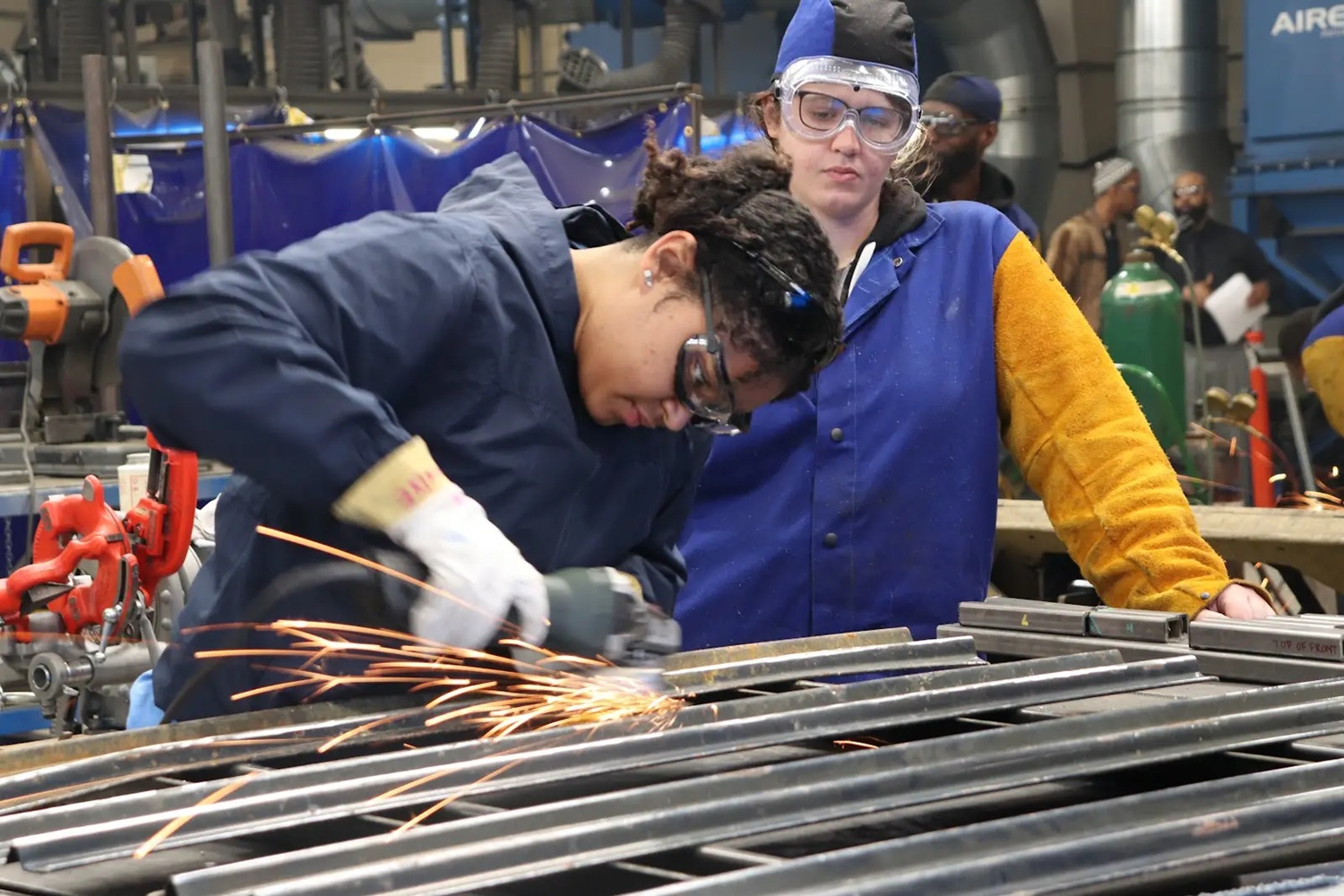
Fortunately, we do not have to search hard for another option. Apprenticeships are a proven, underused ladder to workforce success. They combine paid, on-the-job training with classroom instruction — giving young people valuable experience and exposure to career options while providing employers with a trained talent pipeline. Apprentices earn a paycheck from day one, making these programs fundamentally different from unpaid internships or traditional schooling.
Youth apprenticeships that start in high school are specifically designed so that students can earn their diplomas, pursue higher education or skilled credits, begin paid work and either continue in the program or pivot to parallel career pathways. They give young people training, money and a head start in a perilous job market.
The data are compelling. Registered Apprenticeship Programs (RAPs) have an average 93% employment retention rate after completion. Employers who invest in apprenticeships see a median return of $1.44 for every $1 invested — and two out of three recoup their full investment. Of the 10 most common RAP occupations, six are projected to grow faster than the average job field by 2033.
The number of active registered apprentices has also risen from approximately 456,860 in 2020 to 555,288 in 2025 — a 21% increase over the past 5 years. Apprenticeships expanded beyond traditional trades in 2025, with nearly 20,000 apprentices now active in healthcare, 5,500 in IT and technology and 15,000 in education, culinary arts and financial services.
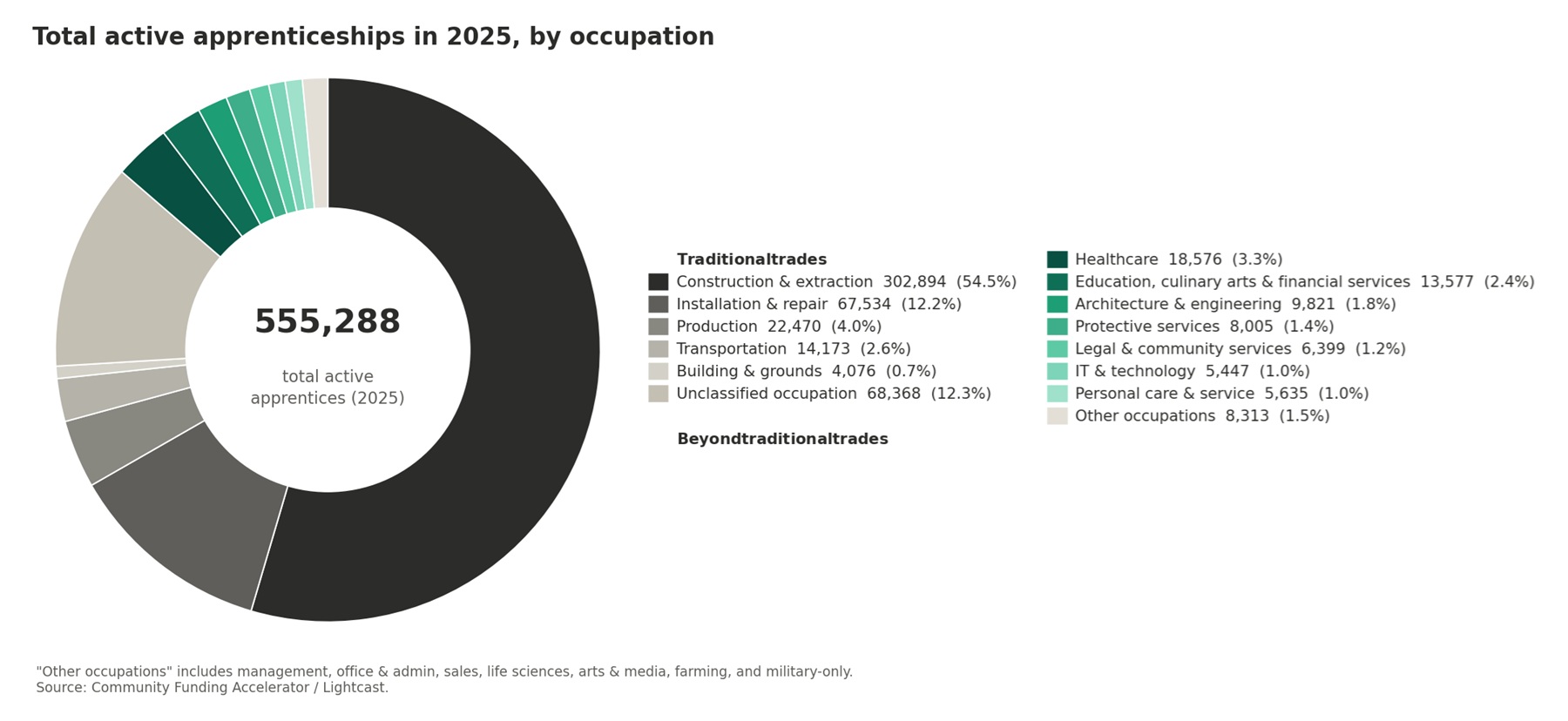
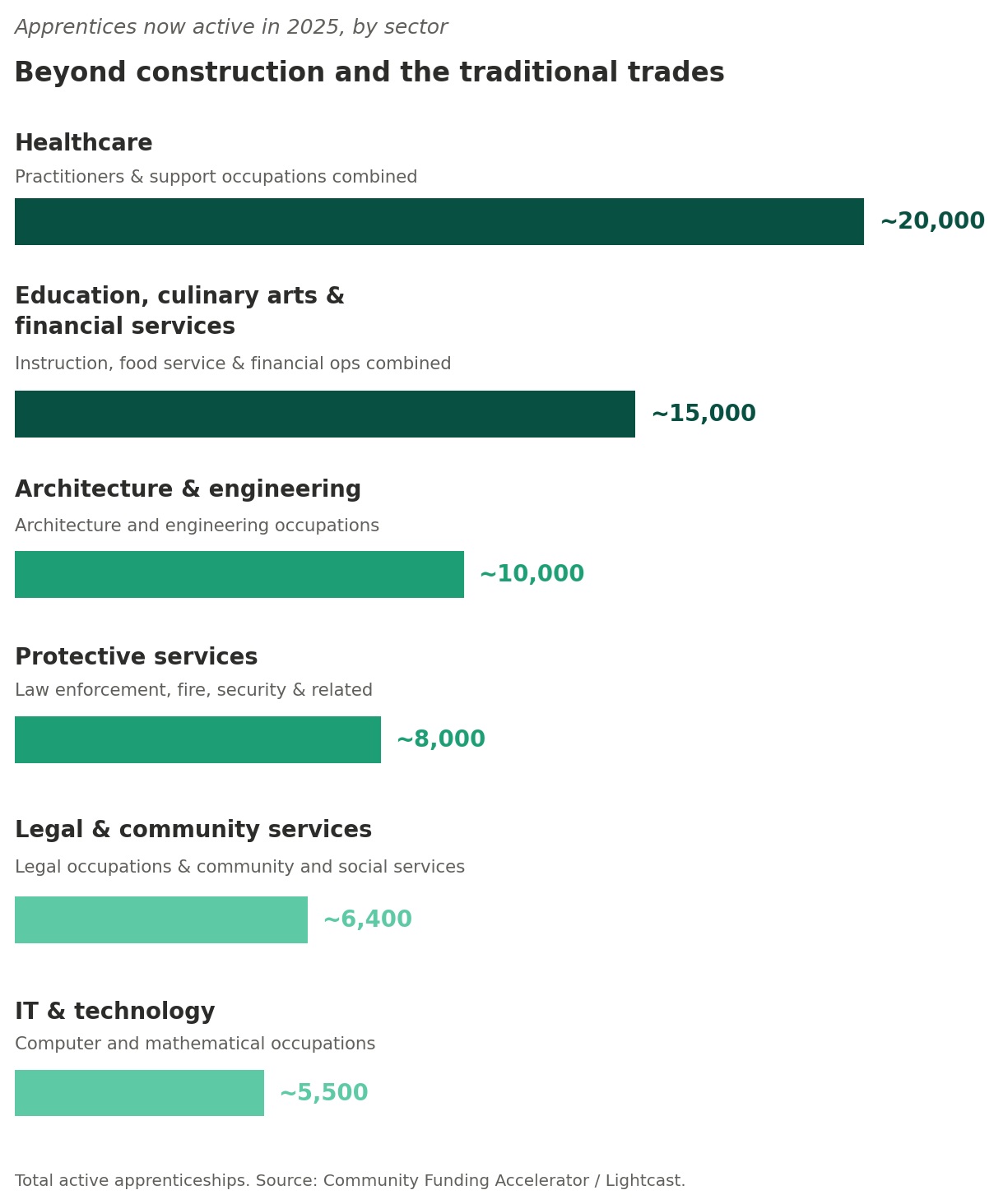 If apprenticeships are going to fulfill their promise as an equitable career pathway, we must scale them so that more young people can enter and grow in the labor market. Right now, apprenticeships remain concentrated in a handful of sectors: construction, installation and maintenance. Among high-school-based apprenticeships, 63% are in building and construction trades. Expansion and scaling mean entering growing industries such as healthcare, technology and service. These intentional expansions require investment, coordination and community-level support.
We are beginning to see this happen. Two states illustrate the promise of apprenticeship programs.
North Carolina
North Carolina’s ApprenticeshipNC, which is operated through the NC Community College System, reported record growth in 2024–2025. Active apprentices reached 10,255, with particularly strong growth in construction (+95% year-over-year). But the program’s funding, which covers 65% of ApprenticeshipNC’s operations, expires in June 2026. Without new investment, active apprentices could drop from over 10,000 to just 4,000 by 2034 — leading to fewer opportunities for students and fewer skilled professionals in critical industries.
This is why organizations like the Community Funding Accelerator (CFA) are stepping up to strengthen these vital programs. CFA partners with communities to win and use public funding to improve education and employment opportunities. For example, CFA is working with a Cooperative Innovative High School in Charlotte to build a nursing apprenticeship model from scratch that benefits the community. Using local labor market data, we are identifying healthcare occupations with the strongest projected demand to better align investments with pressing local needs.
Tennessee

Courtesy of Jussara Negromonte
Jussara Negromonte
Recognizing that Tennessee already has a strong foundation of successful models to learn from and scale, we assessed existing value chains and programs to build on regional best practices. Tennessee has also made apprenticeship a genuine priority. Gov. Bill Lee’s fiscal year 2026 budget invested more than $97 million in workforce development, including $25 million in grants to build work-based learning and apprenticeship programs through partnerships between high schools, employers and Tennessee Colleges of Applied Technology.
CFA partnered with Apprenticeship TN in Tennessee to support their 2025 application for the Department of Labor’s State Apprenticeship Grant, securing $5 million to expand registered apprenticeships and pre-apprenticeships statewide.
More recently, we partnered with a charter high school in Nashville that developed a strong nursing apprenticeship model with engaged employers and a curriculum that offers clear on- and off-ramps for students to pursue registered apprenticeships or transition into related pathways. We are supporting the school to integrate this model into the broader career technical education system and identify funding to scale it. By engaging with a local hospital and other partners, we are making sure that apprenticeship is fully embedded within the school’s broader career pathways.
Together, these examples show what’s possible and what’s at stake.
Every young person needs a career pathway — one that leads to a good job with room for career growth. Apprenticeships offer exactly that.
Now we need to fund and scale these pathways so more young people can take advantage of them. We urge policymakers to sustain and increase federal and state funding for Registered Apprenticeship Programs, including shoring up programs like ApprenticeshipNC that face imminent funding cliffs.
We set our young people up for lifelong success by expanding their opportunities, not restricting them. Strengthening our apprenticeship programs is one crucial way to do so.
***
Jussara Negromonte is an associate director at Delivery Associates where she manages the Community Funding Accelerator. As a public policy expert, she has leveraged more than $6 million to build new education and workforce pathways in rural communities across the U.S.
Editor’s note: A previous version of this article noted the following: The number of active registered apprentices has also risen from approximately 359,000 in 2015 to about 678,000 in 2025 — an 88% increase over a decade.