
As a library teacher at The Children’s Village, I’ve worked with many young people who struggle to get past the first page of a book. We serve youth involved in the child welfare and criminal justice systems, many of whom arrive having missed significant school time, experienced housing instability or family disruption and fallen years behind academically.
These challenges are often intensified by trauma, a lack of consistent adult support and chronic absenteeism. The latter is especially troublesome for system-impacted youth: In a given school year, half of New York City foster care youth are chronically absent. With little adult oversight, excessive screen time becomes more likely, further limiting their attention span.
But there is a way forward. National initiatives like The Campaign for Grade-Level Reading have increasingly emphasized that literacy development must extend beyond classrooms and into relationship-centered community spaces. That’s why libraries — especially ones centered on physical books and staffed by supportive adults — must be part of the solution, particularly for young people lacking structure.
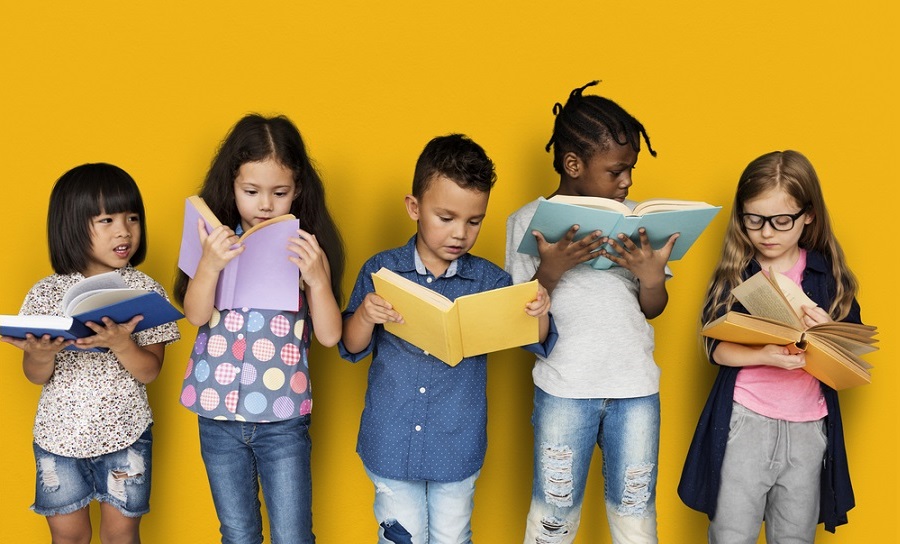
When young people hold physical books, turn pages and listen to stories read aloud, immersing themselves in a space surrounded by stories, literacy and art, their attention strengthens. Reading becomes less about completing a task and more about entering an experience.
The goal is to help young people slow down, immerse themselves in stories and rebuild the capacity to focus.
As conversations about declining attention spans continue, the solution is not to compete with technology’s speed or ignore its benefits but to create more opportunities for children to engage with physical materials and learn without screens.
At The Children’s Village’s Open-Door Library, we create a space where reading feels accessible and personal rather than punitive. This is not a traditional “borrow-and-go” library. It is a welcoming environment designed to feel more like a living room than a classroom. Young people can choose books at their own pace, read in comfortable chairs, draw and write poetry.
Our strategies are intentionally flexible because many of our students do not respond to rigid academic structures. Some begin with graphic novels before moving to chapter books. Others listen to stories while drawing. Staff and volunteers regularly read aloud to students — including teenagers — helping them practice focusing while reconnecting with the experience of being read to.

Courtesy of Aida Hasanpapaj
Aida Hasanpapaj
Poetry and creative writing workshops also give children space to process complex emotions, express themselves and tell their own stories. Many of our young people also connect deeply to young adult fiction. Children who have endured instability and family crises can relate to narratives about outcasts and unlikely heroes, from “Harry Potter” to “The Hunger Games.” What’s more, we encourage free writing, which allows them to organize thoughts, explore identity and communicate experiences that can otherwise be difficult to articulate.
Just as important, we often check for understanding. We check comprehension through conversation rather than formal testing, asking students to reflect on the chapter’s themes and ideas. These methods reinforce comprehension, strengthen memory and build vocabulary.
Consistency matters just as much as instruction. Many of the young people we serve are used to adults leaving. We ask volunteers to show up week after week because relationships matter as much as literacy itself. When young people know an adult will keep returning, they begin to engage more deeply with books and learning overall.
When children are reluctant to visit the library, the library comes to them. Staff bring books into young people’s cottages, sit with them in shared spaces and encourage reading. Persistence matters.
Many young people need repeated reassurance that someone will continue showing up for them.
We see the impact in alumni like Adam. He read widely and recommended books to peers. Today, he studies cybersecurity in college. His trajectory reflects what we see often: Young people who read have higher grades, require less academic intervention and are more likely to graduate.
[Related: The missing dimension of positive youth development — What it requires of adults]
Literacy is foundational to everything else. Strong reading skills help young people follow instructions, communicate clearly, think critically and participate confidently in school. For system-impacted youth, reading can also be restorative. Stories help young people process trauma, feel less isolated and imagine futures brighter than the circumstances they came from.
On our campus, this work is grounded in the belief that every child deserves the support and stability they need to learn, grow and succeed. Beyond improving reading skills, the Open-Door Library is where children learn to focus, find inspiration and express their ideas and dreams for their futures. These lessons apply both to system-impacted youth and to all young people navigating an increasingly distracted world.
With dedicated spaces, relationships and resources, attention can be rebuilt. When it is, so can everything else.
***
Aida Hasanpapaj is the associate director of academic and library services at the Open-Door Library within The Children’s Village.