

Imagine reaching a milestone birthday — your 18th or 21st — and feeling the floor drop from beneath your feet. Every year thousands of young people exit the foster care system on these birthdays, expected to navigate adulthood on their own as access to child welfare services and support disappears.
As someone with lived experience in foster care, Liz Barker — a co-author of this piece — experienced this reality firsthand. Liz entered foster care as a teenager and cycled through a range of living situations: group homes, hospitals, juvenile detention centers and shelters. At one point, she moved seven times in a single year. Watching peers get jobs, go to parties, and learn to drive — all out of reach — left her feeling invisible.

Courtesy of Liz Barker
Liz Barker
“I longed for human connection,” she says. “Someone to talk to, to share hopes and dreams with.”
The process known as “aging out” is based on the assumption that independence is the ultimate goal for young people exiting foster care. The child welfare system is mandated to prepare newly emancipated young people to leave with a checklist of documents — birth certificate, Social Security card, medical records and perhaps a bus pass or housing referral. But what’s missing is the relational support needed to navigate the complicated landscape of young adulthood.
[Related: Children need more dignity in the foster care system]
After exiting foster care at age 18, Liz faced homelessness, domestic violence, food insecurity and a mental health crisis. While working to complete a bachelor’s degree in Criminal Justice, she moved between domestic violence shelters and struggled to access long-term mental health care. Without a consistent doctor, she couldn’t keep up with medications. During her senior year, she ran out of financial aid and maxed out her student loans. She was one step away from dropping out before a local nonprofit covered the cost of books and supplies which ultimately allowed her to graduate.
These challenges are not unique to Liz. Each year, around 19,000 young people age out of foster care without a permanent family home. Compared to their peers, they’re more likely to face adversities like housing instability, unemployment, early parenthood, mental and physical health challenges and incarceration. In contrast, young adults with supportive families often continue to rely on emotional, social and financial support well into their twenties. Without similar networks, it’s unsurprising that youth aging out of care face a steep uphill battle towards a brighter future.

Courtesy of Leah Harrigan
Leah Harrigan
At Silver Lining Mentoring we work to close that gap by connecting youth impacted by foster care with long-term volunteer mentors. Youth are matched with carefully screened, rigorously trained mentors for a minimum of one year, with an average match length of nearly four years. We offer in-person, e-mentoring and hybrid models for young people ages seven to 26, as well as individual and cohort-based life skills training curricula. Our programs are ever-evolving and built around consistency, youth voice and trust.
What makes our model work? We are trained to listen. Young people co-design their match experience, set their own goals and choose how they spend time with their mentor. Mentors receive individualized support from clinically-informed staff and access to a community of peers. We prepare mentors for the realities of foster care and emphasize self-awareness, patience and the importance of showing up consistently.
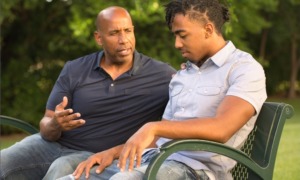
We’ve witnessed mentors anchor young people through the chaos and uncertainty of the foster care system. They step in to fill gaps when overburdened systems fall short, and they stay when others leave. One of our mentors helped his mentee open a bank account for the first time. Another took her mentee shopping for a first job interview outfit.
Liz eventually met her mentor, Cindi, through a foster care mentorship program which profoundly shifted her trajectory.
“My mentor helped me navigate adult life, but more importantly, they believed in me,” Liz said. “When someone believed in me as much as I believed in myself, it changed everything.”
[Related: Understanding aging out of foster care]
Today, Liz is a staff member at Silver Lining Mentoring where she helps ensure that more young people in foster care have access to a long-term mentor.
For organizations hoping to connect more youth with mentors, our advice is simple:
- Prioritize relationships over outcomes — young people need connection more than checklists.
- Respect their voice and invite them to lead.
- Support mentors with thoughtful training (great mentors are prepared, not perfect) and individualized support.
- And finally, commit to young people for the long haul, because building trust takes time.
If we want to truly support young people exiting the foster care system, we need to stop treating adulthood like a finish line they must cross alone. Mentorship isn’t the only solution, but it’s a powerful one. It affirms identity, restores hope and builds lasting networks of care.
Let’s reimagine the aging-out process not as an exit, but as a transition — one that every young person deserves to navigate with support, connection and the promise that they won’t be left behind.
***
Leah Harrigan (she/her) is assistant director of education and training at Silver Lining Mentoring, a Boston-based mentoring organization that has exclusively served youth impacted by foster care since 2001. Harrigan creates educational opportunities for child welfare practitioners and volunteer mentors supporting young people in care.
Liz Barker (she/her) is a program coordinator at Silver Lining Mentoring with lived experience in foster care. Barker partners with service providers to promote best practices for mentoring youth in care through Silver Lining Mentoring’s national training and consulting work.