
Submissions from the field are the main way the Youth Today editorial team lives up to our commitment to be “from and for people who believe that when youth thrive, we all thrive.” We deeply appreciate the time contributors take to step back and reflect, whether recounting their program highlights or describing their research findings. And we know readers value the specificity of the first-person detail that is shared about a program’s participants, processes and impact.
 What allied youth field leaders need now more than ever is the ability to communicate “the why” in ways that reinforce the science behind the specifics. Our commitment to revitalize Youth Today is in direct response to this need. We are always looking for opportunities to show how specific examples bring to life the big meta-analyses of factors contributing to youth success that are the ingredients of powerful learning experience in any program or system. (Two such foundational meta-analyses we’ve explored in recent columns are Michelle Gambone’s Community Action Framework for Youth Development and Roger Weissberg’s S.A.F.E. model.)
Every connection counts. Every experience matters. These are frequent themes in WYTWAT columns. These statements remind us of the collective abundance of opportunities to explore a range of possibilities with different people in different places that are cultivated by the array of organizations across the learning ecosystems found in every community. But these statements are equally important reminders of the opportunities we all have to optimize connections and experiences within our organizations and systems. How can we look for ways to expand or deepen youth-adult relationships with all of the people in all of the places where youth spend their time when they are with us?
[Related: Expanding horizons, essential relationships — The evidence of afterschool impacts]
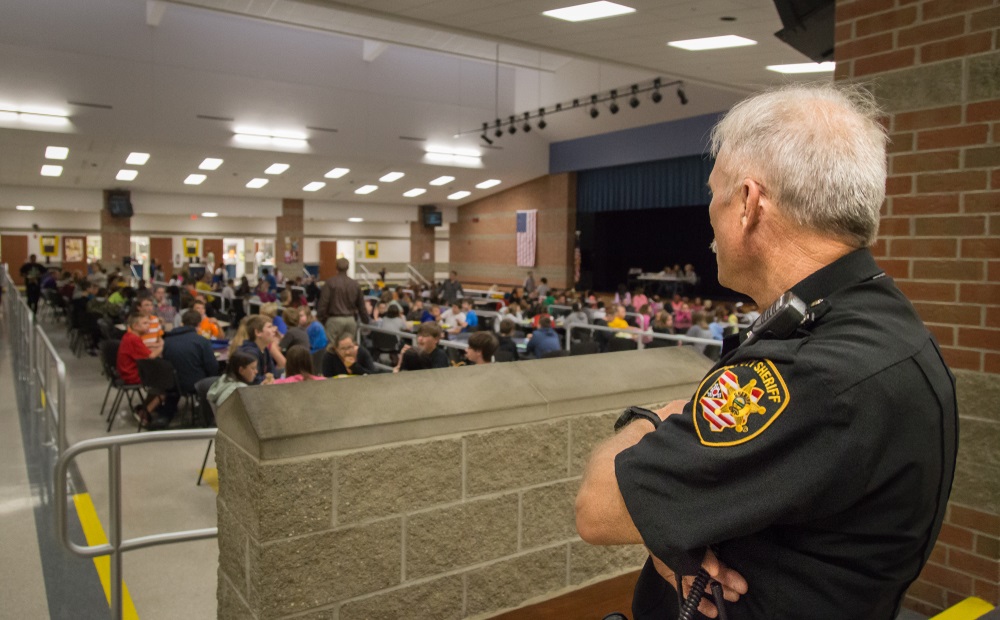
We were reminded of this recently when we learned about two different programs that are thinking differently about the role of law enforcement in young people’s lives. Police officers and school resource officers are not top of mind on the list of people parents want their children spending more time with. But young people do interact with them. These interactions are not always positive. And when they are positive, they are often discounted as exceptions. Perceptions remain unchanged. Both The Teen And Police Service (TAPS) Academy and the National Archery in Schools Program (NASP) work with schools to offer sustained, structured opportunities for youth and officers to build strong mentoring relationships through engaging in skill-building activities that emphasize personal growth, covering topics that are outside the normal interactions youth would have with officers.
The Teen And Police Service (TAPS) Academy founded in 2011 by the Houston Police Department has a mission to reduce social distance between youth and police, teach crime prevention skills, build community through service-learning, and enhance and improve school safety. Now an independent nonprofit, TAPS Academy offers a curriculum that is approved by the Texas Education Agency to award one high school credit. Module topics range from substance abuse and gang awareness to automotive maintenance, bullying and dating, and financial management. Most youth receive 15 to 30 hours of positive interaction through a school-based, cohort model with trained police officers who serve as mentors, sharing their personal stories of overcoming challenges.
TAPS Academy serves over 5,000 youth annually in six states and the Caribbean. The empirical data supports its success showing 20% to 40% positive increases in social bonding and prosocial behavior.
In response to cutbacks in programs such as AmeriCorps and Jobs Corps, TAPS Academy added College and Workforce Pathways programming. Staff help youth assess their skills and interests and guide them onto one of four pathways: higher education, police/first responder, national service, or living wage trades. What’s more unique about TAPS is the dual mentorship that is created in the program —reinforcing that not only the young people can be learners in the relationship but through mutual respect and understanding both the officers and the students can learn and grow.
As TAPS Executive Director Everette Penn describes, TAPS is now encouraging other police organizations to focus on relationship building and to “build upon these powerful mentor/mentee relationships to create skills, networks, bonds and opportunities that will change the trajectory of the youth, their families and the environments they currently reside.”
The National Archery in Schools Program (NASP) is working to expand, and even redefine, the role of the school resource officer (SRO). The program engages SROs as mentors and coaches in school-based archery programs. NASP President Tommy Floyd shares that the program allows SROS to “connect their safety responsibilities with the often-overlooked opportunities for mentorship” to “bridge the gap between students and law enforcement, promoting a deeper sense of safety and trust” that can improve school culture and student well-being. NASP is now in 10,000 schools across 49 states, “offering a million students in 4th – 12th grades of all backgrounds and skill levels the chance to participate in a sport that emphasizes discipline, focus, patience and control.” Through NASP, young people are able to build skills in new, trusting relationships with their SROs.
Both TAPS and NASP illustrate the description of the impact that can occur when we leverage law enforcement officers not just as authority figures but as adults who can and should build strong relationships with young people. These examples remind us of how we can more fully leverage all of the staff already present in or adjacent to our systems.
This rethinking of the role of law enforcement can push us to similarly examine how schools and other academically-focused institutions can go beyond their starting points.
- Primary purpose [beyond academic instruction] to enhance their ability to “create environments where students not only learn but also feel safe, supported, and connected”
- People [beyond teachers] to engage staff already in the building but assigned non-educational roles,
- Places [beyond classrooms] to encourage the development of positive relationships with students through purposeful, constructive interactions
- Possibilities for engagement [beyond academics and traditional team sports] offered students by incorporating low-stakes, high inclusion activities that develop non-academic skills and competencies that foster self-growth in low-stakes, non-competitive arenas
- Practices [beyond selection and sorting] that integrate these opportunities into the formal program offerings to scale growth and ensure access and quality.
The 5Ps Lenses
The learning ecosystem is made up of organizations and systems charged with creating learning experiences that help youth thrive. Common sense – and gobs of research — tell us that youth thriving is enhanced when the connective paths between people, places and possibilities in their lives are visible and affirming. But common practice makes these connections difficult. Every organization is situated within a larger system (formal or informal) that defines its purpose, people, places, possibilities and practices in specific ways that allow it to function consistently.
Simple lenses, like the 5Ps can help illuminate the abundant opportunities available within systems to enrich adolescents’ ECOsystems by ensuring that Every Connection is Optimized. This exercise is as useful for staff in the primary roles defined by their organizations — who often feel overworked and constrained — as it is for those in secondary roles — who often feel under-utilized and pigeon-holed.
Before looking beyond your institutional walls to identify partners, use the lenses to identify untapped horsepower within your organizations and systems. And look for the unexpected mentors, allies and assets wherever you can find them. Every connection matters.
***
In her columns, Karen Pittman is exploring the research behind the statement, “When Youth Thrive, We All Thrive.”
Merita Irby, co-founder of the Forum for Youth Investment, is a partner at Knowledge to Power Catalysts.