


Guided by our vision of a world in which it’s okay to grieve, Kate’s Club has offered programs for grieving children and families for 22 years. Our work was founded with recreational programs like Outings and our flagship Clubhouse Days, during which members participate in group activities like art projects, improv, bike riding and more. At the core of our programs is our data-driven understanding that the best way to cope with grief is to connect with others who are grieving.
Our programs have evolved significantly since 2003, and teenagers have emerged as one of our largest, most involved member groups. Teens comprise 39% of our youth member base.
One reason is that grief can reemerge during the teen years. Even if a teen experienced a death at a young age, grief can resurface as many milestones magnify the absence of someone they expected to be there for them. We also know children who experience loss at a young age may not have the capacity to work through all aspects of grief until adolescence.
[Related: The healing power of camp: Trauma-informed adventures for kids in foster care]
With a robust and committed group of teenagers, we continue to innovate to best support teens through all the unique experiences that grief brings to a life stage already fraught with changing relationships, responsibilities and more.
Kate's Club
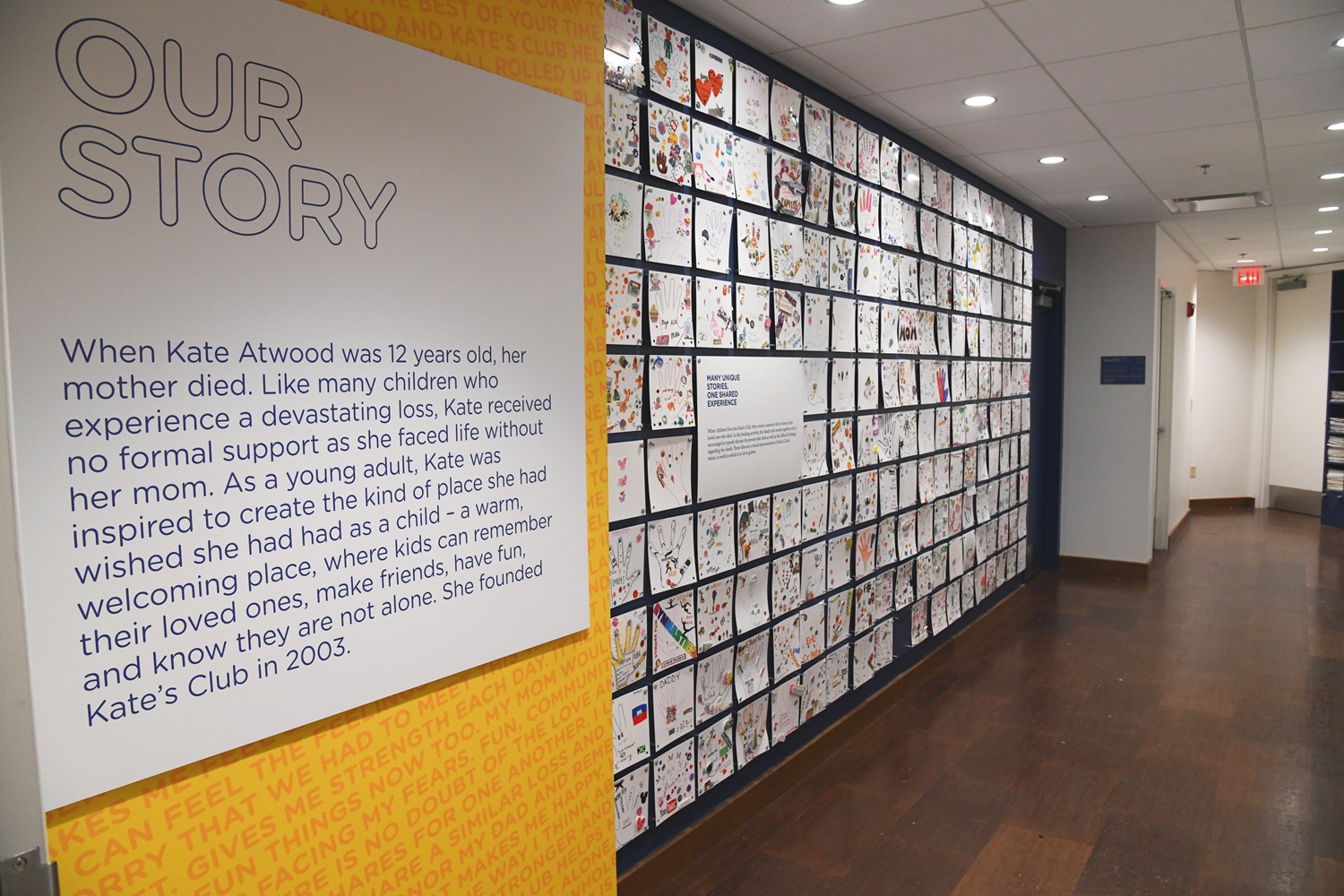
The Kate’s Club clubhouse memory tile wall where dozens of kids’ drawings are displayed alongside the organization’s story.
Supporting teens experiencing grief
Our goal is to provide teenagers with a third space — a space where they feel safe with adult mentors and with peers who understand and welcome them to open up about grief — no matter how messy it feels. To meet this need, we have created:
-
Kate's Club
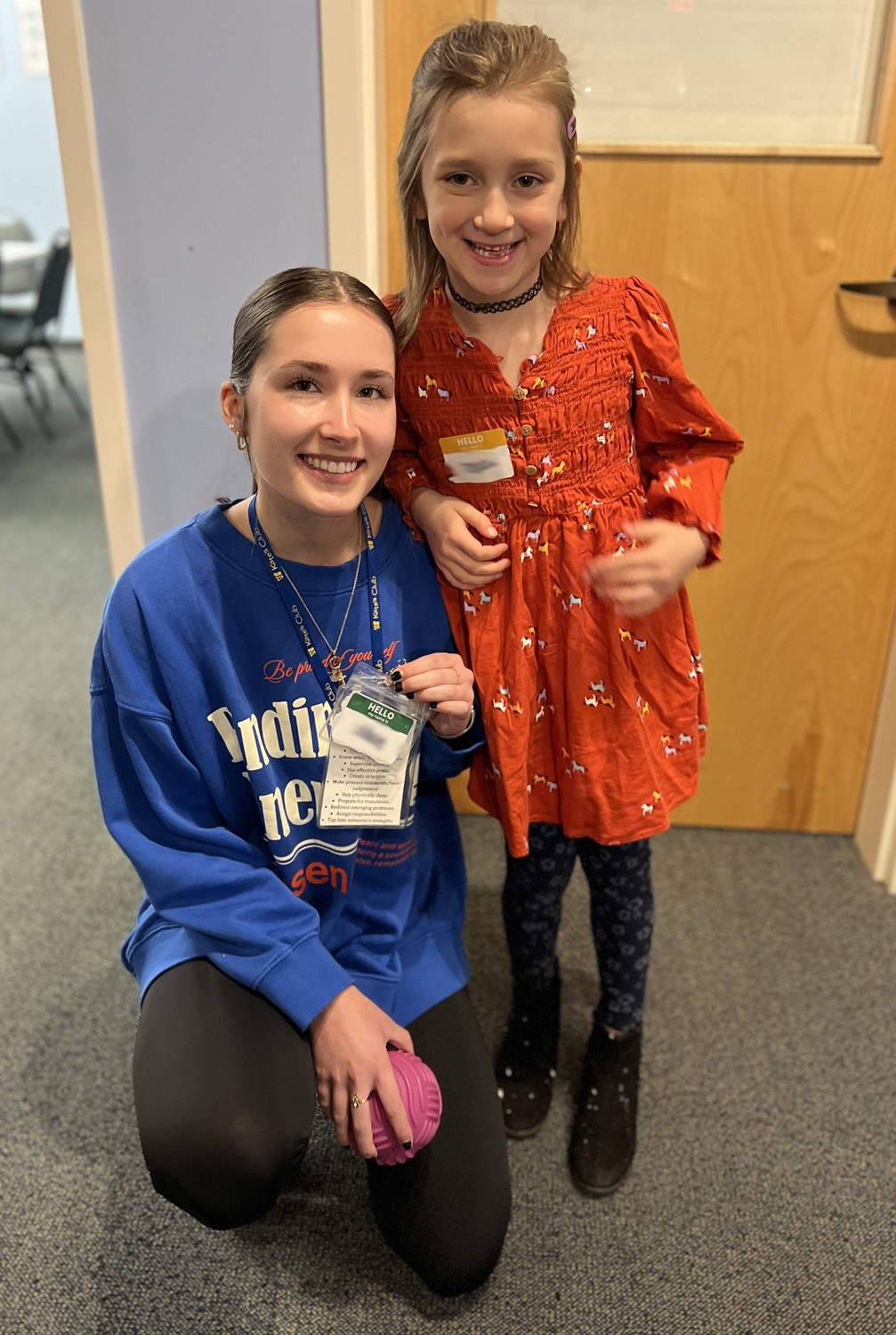
A teen Kate’s Club member and young girl in program pose for a picture at event.
A teens-only lounge to give them a dedicated space and programming to connect on a deeper level with true peers, not just younger kids.
- A teen advisory council to center their voices in our work. This is a developing leadership and learning opportunity for members who want to improve our programs for both themselves and their peers. Advisory council members also support Kate’s Club in advocating for the importance of grief support with potential members and in their communities.
Our teen programming has come a long way, and, as we continue to truly listen to teens about the uniqueness of their experiences, we continue to incorporate their feedback into the program. For us, additional changes are on the horizon, including:
- We have learned that older teens (16 to 18 years old) feel adults in their lives often rush in with advice and suggestions rather than giving them space to feel heard. Our programs are traditionally educational and activity-based, following that same format of giving advice first and listening second. Therefore, we are shifting our programs to start with discussions where the teens can express themselves first. Then, if there is time and desire, they’ll complete a learning activity.
- We have heard that it is difficult for our teens to transition into a new life phase without support when they are accustomed to attending our programs up to twice a month. Therefore, we created our young adult program, a talk- and group-based program for discussing challenges like college, finances, early career milestones, relationships, friendships and more.
Creating a third space for teens
In all we have learned from listening to the teens in our programs, we have come to realize the immense power of youth voice. We urge other professionals and organizations to set aside resources and time to understand how to create connection, community and a true sense of belonging for teenagers. As you embark on the work, identify and listen to teen leaders, then rely on their insight to improve your programs.
A few simple tools have worked for us:
- One way we glean teen insight is through surveys during and after programs.
- Focus groups generate in-person conversations to gather real-time feedback that truly centers their voices. When we review surveys, we understand it is easier to understand comments through our biased lens. Focus groups also allow for more open-ended answers.
- Finally, we also collect feedback through an anonymous feedback box.
All of these opportunities allow us to implement small changes. Then we re-evaluate, implement more changes and repeat.
Engaging the adults in teens’ lives to support teens experiencing grief

Couresty of Lisa Aman
Lisa Aman
We also recognize the importance, that when working with teens, youth development professionals understand the impact of grief. We encourage you to reach out to Kate’s Club to educate and train your staff to be grief-informed and mitigate the risk of grief being misdiagnosed as a behavioral issue or other mental health challenge.
[Related: Youth mental health is personal. Our solutions need to be systemic]
In addition, when working with teens experiencing grief or other challenges, work closely with parents. In the case of grief, bringing in parents helps them support their child outside of our programs and better understand their own grief. We know that a parent’s ability to cope with grief is the number one indicator of how a child copes with their grief, so working parents ensures that neither party grieves in a silo.
***
After starting her career as a consultant with Bain & Company, Lisa Aman became executive director of Kate’s Club in March 2021, driven by the loss of her brother when she was three. This loss shaped her and her family’s lives and fuels Lisa’s commitment to expanding Kate’s Club’s impact across Georgia.