
 School is out. Summer is here.
As Brodrick Clarke said so well in his Fox News interview, “Summer is an amazing space.”
There are good reasons to be concerned about summer learning loss. But summer, especially for adolescents, should be a time for learning love. Corny. But true.
Adolescents need powerful learning experiences
Adolescent brains are not immature adult brains. They are specifically wired to encourage young people to explore and take risks. They look for new experiences to test and hone their skills and build the confidence they will need to thrive in a rapidly changing world. Every experience offers an opportunity for reflection and growth. Most don’t deliver. And the experiences we design are more likely to disappoint than those that occur naturally, especially when young people are required to stick with them even if they are bored or uncomfortable.
Niels Floor, a pioneer of Learning Experience Design (LXD), uses a simple graphic to convey the range of experiences people have that really resonated with me. Luckily, I don’t have any truly traumatic learning experiences. But some of my most memorable experiences were definitely painful.
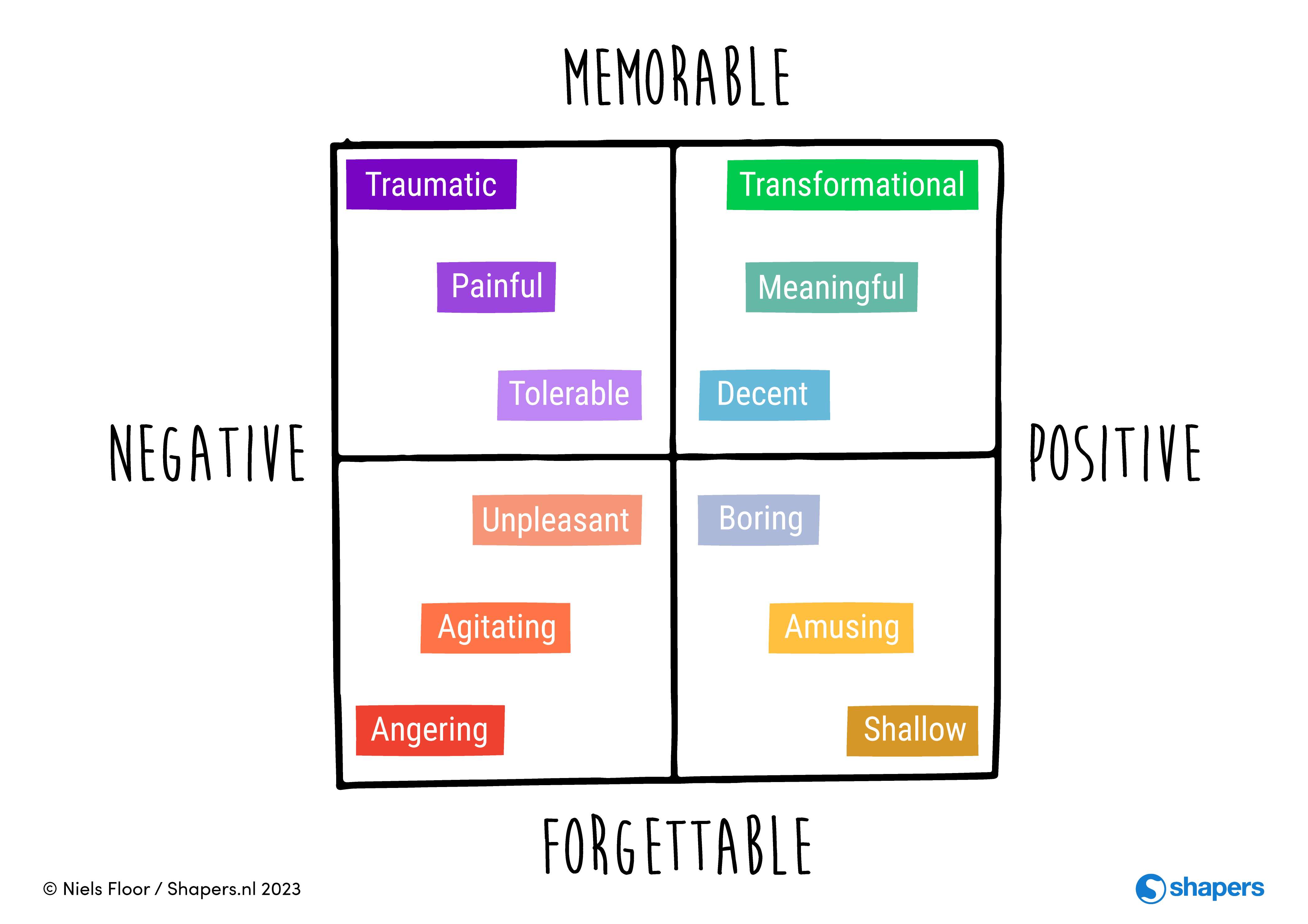
On the LXD website, Floor explains why our efforts to design formal learning experiences often miss the mark:
“There are fundamental differences between designing an experience and designing a course, training or curriculum. An experience goes beyond the content, instruction, exercises, assessments and tools being used. These can be part of the experience, but they are not the experience itself. Experiences include everything that happens to and around you. They influence what you do, think and feel. That’s why LXD focuses on the whole experience.
Focusing on the whole experience requires a more holistic design approach … In education there tends to be a clear emphasis on cognition while emotion is hardly part of the conversation. In LXD, emotion is carefully considered. Designing for emotion and cognition is key to creating a powerful learning experience.”
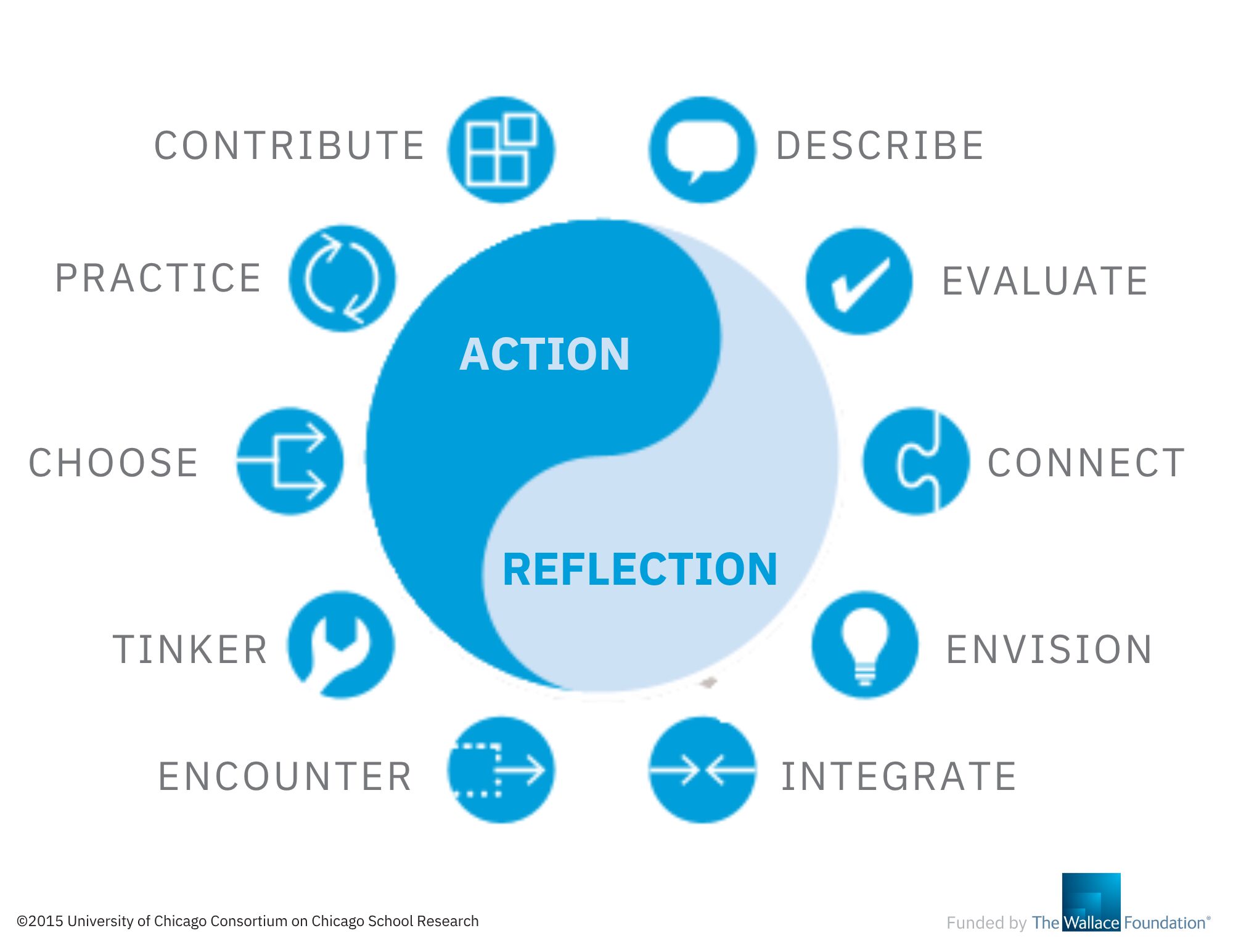
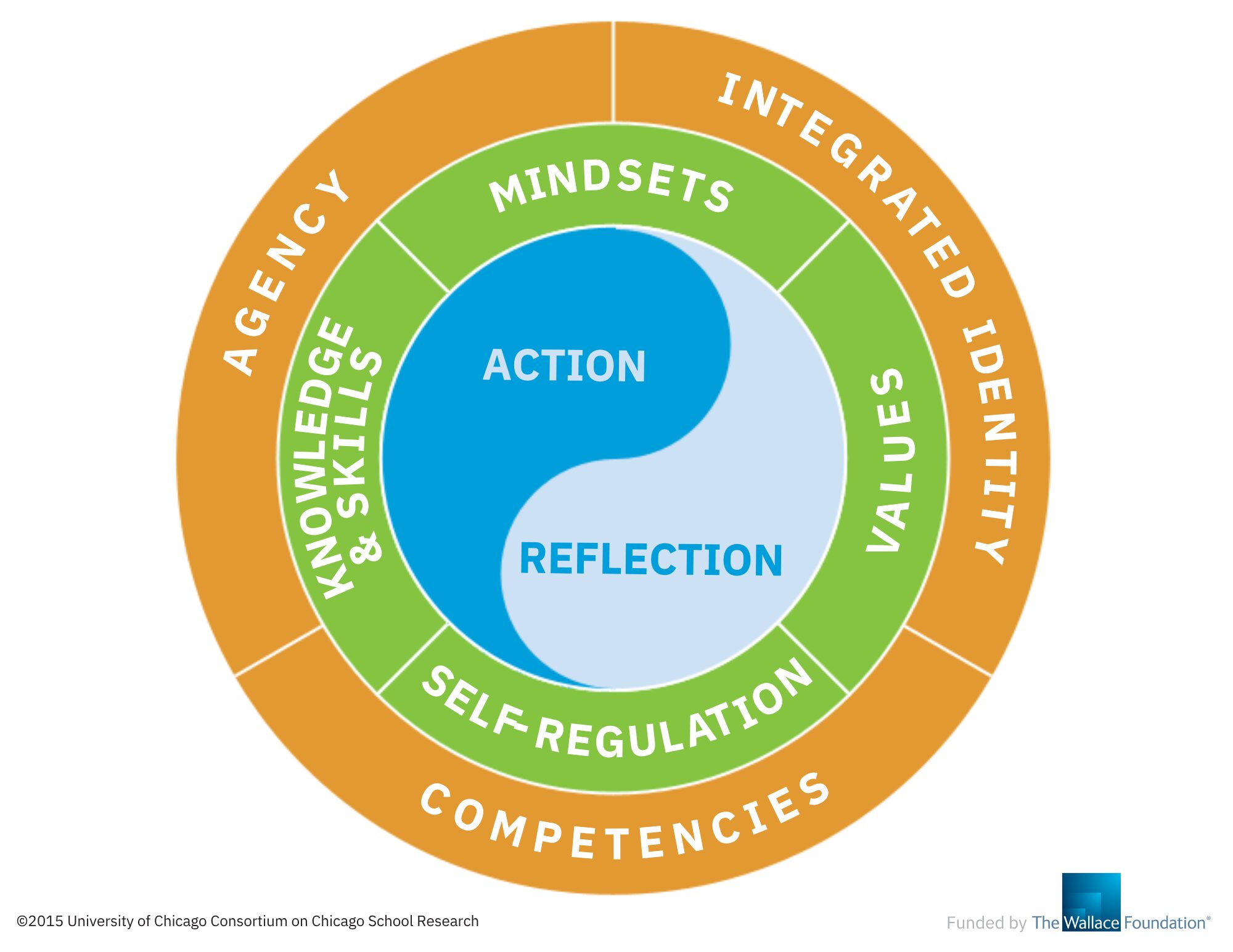
Floor’s pronouncement reminds me of the very practical advice included in the wonderful infographic developed by the University of Chicago Consortium on School Research (UCCSR) in its 2015 report, Foundations for Young Adult Success, that emphasizes the importance of having time to both act and reflect for the development of competencies, identity and agency.
 |
 |
The UCCSR framing also corresponds to elements of the active learning approach David Weikart spent 20 years perfecting at his educational camp for teens. Weikart was the founder and president of the HighScope Educational Research Foundation. Weikart first demonstrated the value of this approach in the Perry Preschool Project — the longest running longitudinal research study of the impact of quality early childhood programming on the life trajectories of low-income preschoolers.
The camp was where he and his team honed the essential elements of a comparable active learning approach for teenagers, eventually paring it down to a two-week immersive camp experience for low-income incoming ninth-graders who were academically at risk. Renamed the HighScope Institute for Ideas, this model was used with two school districts in Michigan (one urban, one rural) in a second longitudinal research study that showed how an intensive, relationship-rich, confidence-building learning experience reset students’ definitions of themselves as confident learners and changed the academic trajectory of their high school years and beyond.
My most powerful learning experience, at age 19, set the trajectory of my career
The learning experience that started and has sustained my interest in what later came to be known as positive youth development was my summer job as a camp counselor at the High Scope Educational Camp for Teenagers. What luck! I was a college student who wanted to be a middle school math teacher. I had no camp counselor qualifications. I had never been to an overnight camp, never been in absolute darkness, never hiked or camped outdoors and didn’t swim well. But that didn’t matter to David Weikart. This was a new educational camp for teenagers. He trusted I could learn these skills alongside the campers. He banked on the fact that I loved math and music and was excited to be offered an opportunity to spend eight weeks sleeping, eating and learning with 80 teenagers.
[Related: In adolescence, every experience matters. Let’s make the ones we design count]
In my interview, Weikart explained that this camp was designed to be educational for both young staff and campers. I would be expected to create daily morning and week-long afternoon learning experiences to engage 12- to 18-year-olds who got to choose from a menu announced at breakfast. I would also be expected to eat, bunk and engage in evening full-group activities with the campers. The staff spent as much time working together to make weekly table and room assignments that optimized campers’ social and emotional growth and ensured the overall sense of community as we did on designing our instructional offerings.
Over those eight weeks, I saw the growth in all of us that came from having time to reflect together each evening on the day’s events. Somehow, in this more expansive and contained setting, we were all better able to appreciate exploration, growth and mastery because we understood that they can be evidenced in many ways at any age.
I was incredibly fortunate to get paid each summer to fuel campers’ (and my own) love for learning. Through trial and error (there were no curriculum guides), I became confident in my ability to, quoting Clarke again, “use anything to teach anything.”
Summer affords the time to be immersed in something different
The magical thing about summer is that young people don’t have to be in school, which, for the vast majority of students, means they can escape the predictable — even if it’s amazingly learner-centered. But this freedom is also what makes summer scary, especially for teens who can legally be left on their own and whose families and communities provide limited options.
You may not have the resources to immerse your teens in a completely new environment or arrange a culminating main stage experience. But, if you want to deepen the impact you have on developing not only their competencies but also their sense of identity and agency, you can use 10-word guidance from the Foundations for Young Adult Success. Act (encounter, tinker, choose, practice, contribute) and reflect (describe, evaluate, connect, envision, integrate). Intentionally building in time to act and reflect together on a range of meaningful experiences, however small, can make a huge difference.
The flexibility parents, youth, school and community educators have to experiment when school is closed makes summer an ideal springboard for building towards year-round, community-based learning ECOsystems in which Every Connection is Optimized so that all youth can thrive.
***
In her columns, Karen Pittman is exploring the research behind the statement, “When Youth Thrive, We All Thrive.”