
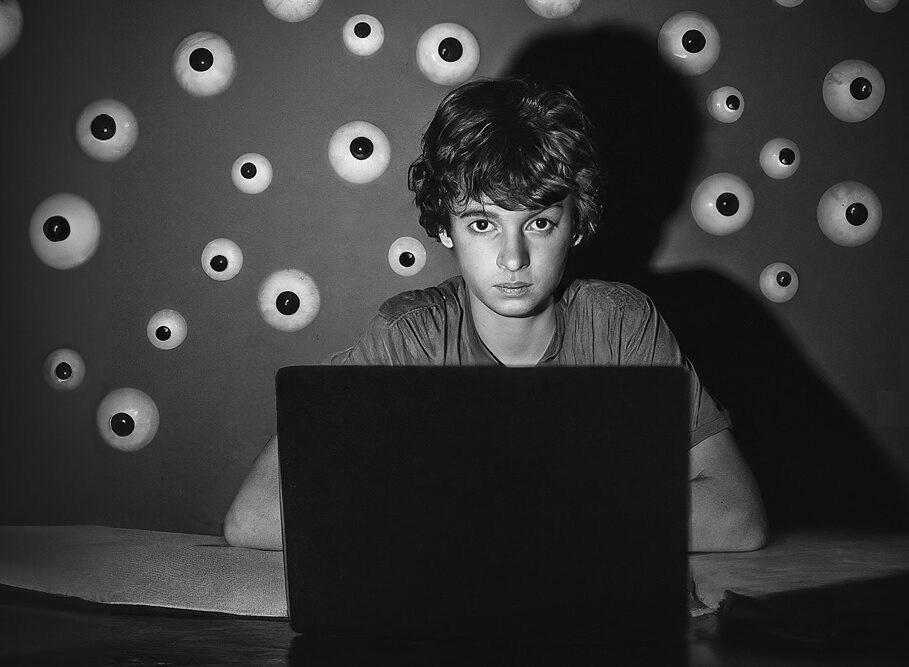

Filmmaker uses infamous 2010 ‘WebcamGate’ case to examine present-day threats to student privacy and digital policing of marginalized kids.
This story first appeared at The 74, a nonprofit news site covering education.
It all began with a pixelated image of a Mike and Ike: the colorful, fruity candy that with a digital blur and authorities’ preconceived notions could perhaps be mistaken for a pill.
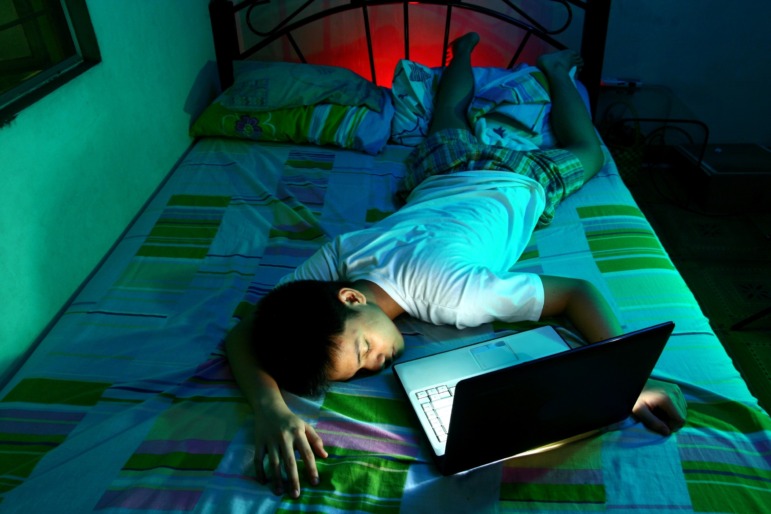
That’s what happened to 15-year-old Blake Robbins, who was accused by officials in Pennsylvania’s affluent Lower Merion School District of dealing drugs in 2009 after they surreptitiously snapped a photo of him at home with the chewy candy in his hand. The moment was captured by the webcam on his school-issued laptop, one of some 66,000 covert student images collected by the district, including one of Robbins asleep in his bed.
Robbins sued and the subsequent case, dubbed “WebcamGate,” is at the center of Spy High, a four-part documentary series now streaming on Amazon Prime, that examines the high-profile student surveillance scandal and the explosion of student privacy threats that followed it.
The Lower Merion School District, which settled the class-action lawsuit, was an early adopter of one-to-one computer education technology programs that provide school-issued laptops to students. Such programs have since become mainstream nationwide, particularly since the pandemic. So, too, have digital surveillance tools like Gaggle and GoGuardian, which alert educators when students express thoughts of self-harm or discuss topics deemed taboo, like sex, violence or drugs.
A cautionary tale
Directed by Jody McVeigh-Schultz and executive produced by Mark Wahlberg, the documentary offers a cautionary tale about what happens when student monitoring initiatives — often intended to promote young people’s safety and well-being — go awry. It also explores how covert student surveillance intersects with far-reaching school equity issues involving race, disability, privilege and discipline.
Courtesy The 74
Filmmaker Jody McVeigh Schultz: “To me it’s a matter of where are [the] spaces where we should reasonably expect privacy? Transparency is the most important aspect of all of this.”
We talked about what he wants documentary viewers to take away from the Robbins’ scandal 15 years after it unfolded — and the lessons it holds for contemporary student privacy debates and schools’ growing reliance on ed tech.
The Conversation
The interview was edited for length and clarity.
The 74: What motivated you to take a deep dive into the Robbins case, and why is it important right now?
Jody McVeigh-Schultz: I grew up just outside of Philly in a suburb called Cheltenham and I had heard about this story. I knew Lower Merion as the high school that Kobe [Bryant] went to. That’s what it was famous for, but I knew about the Robbins story and I was like, “That’s crazy,” when I heard about it back in 2010 and then I kind of never heard anything more about it. It was a really big story and then just kind of went away.
When we talked to folks from wealthy suburbs outside of Philadelphia, I think it’s very clear to me that one of the key indicators of status is education. It’s more important than anything else to people.
The public schools in Lower Merion are really highly rated and people care a ton about the quality of the education and the image of the institution. What are the real world implications of that?
In this case, the way it played out, some of the things that happened were counterintuitive.
Many folks from that community didn’t want to see a lawsuit come to bear against their school.
It was like, “Oh well, you know, this actually is perhaps going to affect our home values,” if you’re selling your home and the biggest selling point is the quality of the education.
Video screenshot/Unrealistic Ideas
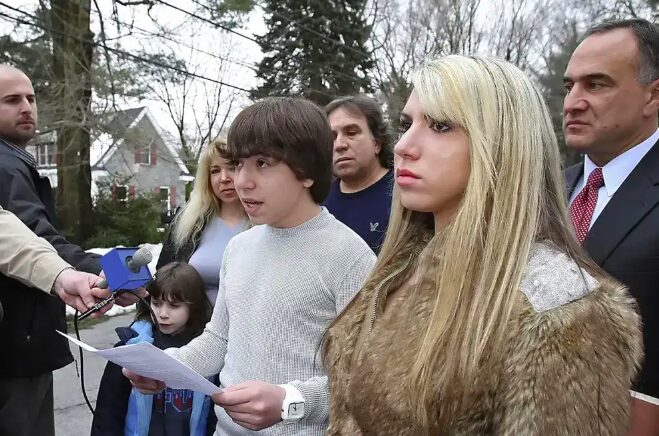
Blake Robbins, then a high school student in Pennsylvania’s affluent Lower Merion School District, speaks to the press about his 2010 lawsuit alleging covert digital surveillance by educators.
That’s something that you wouldn’t expect to be one of the first reactions to finding out that the schools may be surveilling your kids. But it was, and the fact that the Robbins family had lived in the community for a long time but just weren’t considered part of the in-group just because of who they were was very interesting and, I think, led to people being skeptical of them.
The documentary leaves it up to you to decide whether that skepticism is deserved or not.
Absolutely. The documentary certainly highlights how people are complex and have complicated stories. What did you learn about debates over personal privacy, especially when it comes to information about children?
People’s expectations of how much privacy you should be afforded, and how much you should expect without having to ask any questions, those expectations vary a lot.
Somebody who was interviewed in a news piece that ran in 2010 said, “You know, this is the school district’s laptop, they could tap in at any time and rightfully so.” I’m a parent, I have a 2-year-old and a 7-year-old who’s in first grade. To me, that seems a bit absurd, but the truth is, I think there are certain contexts where a school-issued laptop is going to be surveilled.
We know it’s going to be surveilled, but we don’t expect that it will be able to take pictures in our kids’ bedrooms.
To me it’s a matter of where are [the] spaces where we should reasonably expect privacy? Transparency is the most important aspect of all of this. Not only were there no conversations going on like, “Hey look, these laptops are going to be surveilled in a number of ways. You should not be leaving them open in your bedroom, You should not be going on any website you wouldn’t want your principal to also see.”
The IT department specifically thought it would be a bad idea if parents and students were alerted to the existence of the software that could take images.
They felt like, “Well then we won’t be able to recover the stolen laptop because people will just put tape over it.”
One of the journalists we interviewed said it was like trying to kill a fly with a bazooka. This level of surveillance was not required to track inventory. It just wasn’t.
Meet the gatekeepers of students’ private lives]
Hindsight is 20/20 but it’s obvious from what transpired that they spent a lot more money on legal fees and settling these lawsuits than they ever saved by making sure a handful of laptops were not stolen or lost.
What did you learn about the motives of the school district officials, the lawyers and the families involved?
When I’m making a documentary I’m never thinking in terms of quote-unquote good guys and bad guys. Everyone in this story thought they were doing what was best for the students involved. But in the end, I think there was this balance of protecting students ‘ privacy and protecting the image of the school district. When a mistake is made, there is a reluctance to admit and take responsibility and accept blame. Once you do that, you are admitting to what happened and then there’s all these legal ramifications.
Multiple people are like, you know, these kids need therapists, they need somebody to check on them and to be like:
“Hey, your privacy was violated, are you doing OK?”
That did not happen.
junpinzon/Shutterstock
There were no notifications to students or parents telling them the laptops were going to be surveilled. They should not be left open in bedrooms. They should not be used to go to websites you wouldn’t want your principal to see.
I can’t say why that didn’t happen but to me it seems likely that part of not offering people help is that the minute you say this person needs a therapist because of what we did, you’re admitting to a pretty major violation.
The documentary doesn’t focus just on the Robbins case. It offers a deep dive into education policy debates around racial inequities, school integration, gender equality and LGBTQ+ rights. What did you find were the implications of surveillance for these populations?
We talked to Elizabeth Laird at the Center for Democracy and Technology and one of the things she said she sees all the time is that when surveillance is ubiquitous and regularly used in education, vulnerable populations end up feeling the brunt of the negative repercussions.
In this case, back in 2010, people discovered that a disproportionate amount of the students that were surveilled were African American. There was a sense that if this technology was being misused to discipline students or to check up on students then the chances are it was going to be misused for somebody that was a student of color.