

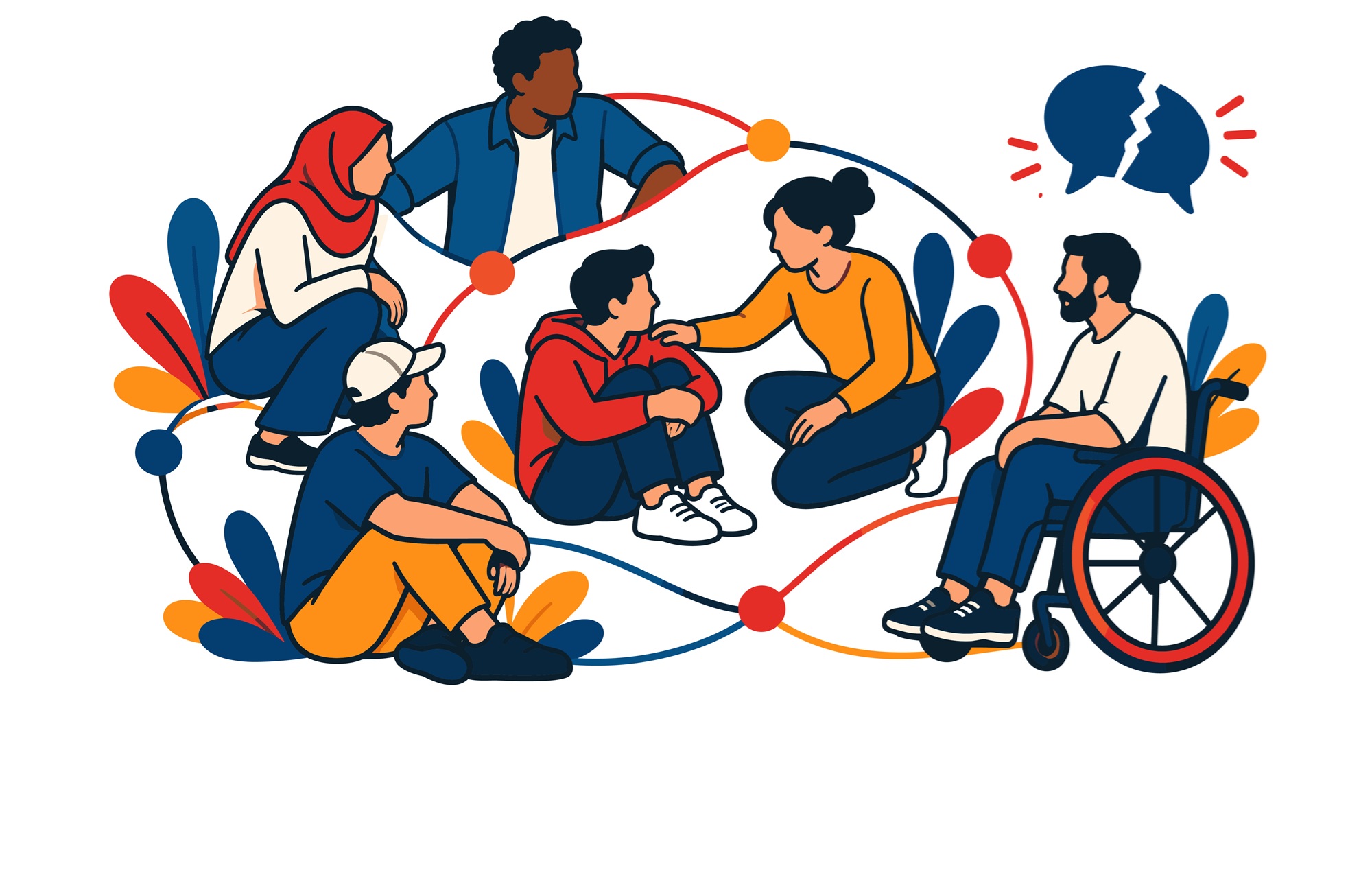
Sunday night stomachaches, begging to skip school, panicky texts to parents during the day. Trips to the nurse’s office, calls to the pediatrician, extra sessions with the therapist. Each adult wants to help, and each is working from a different vantage point. No one sees the whole picture, and collectively they can make it worse.
These scenarios are likely pretty familiar to those working with young people. We’d been hearing these stories for years and wanted to do something about it. InStride Health came out of McLean Hospital, a Harvard Medical School affiliate, and we built it to treat young people ages 7 up to 26 with complex anxiety, OCD and related disorders, now across 26 states.
We took decades of exposure-based cognitive behavioral therapy research and developed an approach to delivering it the way families actually live.
We built our model around what we call “surround sound”: every important adult around a young person learning and reinforcing the same evidence-based concepts and goals. In practice that means a multidisciplinary team, with a psychiatrist, therapist and exposure coach, combined with structured collaboration across caregivers, schools and outside providers.
Our 2026 outcomes analysis examined 3,604 episodes of care from 2023 to 2025, including 1,487 graduates: 97% of graduated patients showed clinical improvement, anxiety symptoms dropped 53% on average, and fewer than 1% required hospitalization within a year. Importantly, the family also benefits: 92% of graduated families report reduced work absenteeism. More than half of those families report an acute behavioral health crisis before they reach us.

What coordination requires
Systems operate on a bureaucratic clock of meeting cycles, waitlists and referrals. Anxiety operates on a behavioral clock: avoidance strengthens with every day it goes unaddressed. And most of the work of treatment happens outside the 50-minute session — for example at Monday drop-off, in the decision about whether to raise a hand, before the birthday party. The adults in those moments help determine whether or not a young person steps outside their comfort zone.
Four things we’ve learned about getting those adults working together:
(1) Coordination won’t happen if it’s not built into capacity.
If a clinician’s caseload is already full, there won’t be opportunities for her to get on the phone with a school counselor or talk with a parent who’s in crisis. This is one of the places where adult care models that are just applied to kids can fall apart. An adult can come to session, do the work and go home to a life they largely control. A 12-year-old goes home to a system of other people. If nobody on the care team has time to reach those people, the work will be undone.
(2) Caregivers need a treatment role and goals.
Courtesy of Kathryn Boger
Kathryn Boger
Accommodation refers to what the people around a family member with anxiety do or don’t do to buffer distress in the moment. It is a rational, loving response to a child in pain. But it strengthens avoidance because the child never learns they can handle the anxiety and comes to believe they need the accommodation to be safe. So caregiver groups and sessions are a core component of our program. Parents identify their own goals and learn the skills and concepts so that, during and beyond InStride, they can continue to support ongoing gains. In research we recently published in Discover Public Health, caregiver strain at intake was highest in families whose child had medical comorbidities, psychiatric medication or school avoidance.
After treatment, 81% of caregivers reported reduced strain, regardless of how complex the case was.
(3) Schools need a specific plan.
A student starts missing school; excuse notes and homebound instruction follow. This brings relief in the moment but entrenches the avoidance, and the longer a student is out, the harder the return. With family consent, we work directly with school staff on the next concrete step: which class, which door, how long and what happens if the student asks to go home. Otherwise, well-intentioned accommodations get in the way of progress.
(4) Close the loop with referring providers.
Two-thirds of our patients arrive through a health plan or provider, often a pediatrician who has been holding a family’s distress with few specialty options. Sending real information back, in a form a busy practice can use in 30 seconds, is what makes a referral pathway durable.
The role of technology
Technology alone will not solve the youth mental health crisis, but it can help the adults around a young person work from the same playbook. These tools, including AI, need to be built around care team workflows rather than added as another disconnected layer.
Some of the most useful work here is about making sure everyone is looking at the same picture. When a coach learns that mornings have been falling apart, the therapist and psychiatrist see it before the next session. Nobody is reconstructing the story from scratch.
We also use AI to reduce operational strain and variability, so that clinicians spend their time on clinical work. These tools surface information and flag considerations, and our clinicians make the diagnostic and treatment decisions. In 2025 we nearly doubled the number of patients we treated and grew the care team by 90% — and outcomes held.
Shared responsibility across systems
Youth development leaders can close these gaps by pushing for data sharing across systems and prioritizing programs that integrate with clinical care rather than running alongside it. The question every youth-serving professional should ask: Does this response move a young person toward their life, or away from it? Your decisions are clinical interventions, whether intended or not, and like any intervention, they are most powerful when coordinated.
The young person with the Sunday night stomachache needs the adults in her life supporting the same approach. The future of youth mental health is not just more care, but better-connected care.
When systems work together, young people don’t just improve. They re-engage with their lives.
***
Kathryn (“Kat”) Boger, Ph.D., ABPP, is co-founder and chief clinical officer of InStride Health. She is a board-certified child and adolescent psychologist and has devoted her career to helping young people with anxiety and OCD. She is passionate about innovative, research-based approaches to improving care and relieving suffering.