

In recognition of National Coaches Day, Madeleine (Mei Mei) Loh, a rock climbing coach and former intern
with the Positive Coaching Alliance, shares her perspective on her path to coaching
and the benefits of the role as a young adult.
I started rock climbing at age 10. I was lucky enough to have a supportive youth team environment with a very positive, growth-centered philosophy and to have been obsessed with my sport since the minute I started. Despite this foundation of support, I still had to work tirelessly to maintain a relationship with climbing as I changed and grew as a person. As is the case for many people, in late high school the pressure and intensity of my sport increased, and it became exponentially more difficult to maintain my drive and passion.
As I got older it felt more and more challenging to balance my identity as an athlete with the natural shifting of my priorities in life. Numerous times, I was faced with a choice between increasing my commitment with intensified training or risking “falling behind”. Making that decision came with more pressure and urgency every year. In the moments in my life when I entered the college application process, directed my energy to my social and academic life, and (as it happens to many athletes) got injured, I became anxious that I wasn’t doing enough as an athlete. On top of that, growing out of my bony, 4-foot frame meant discovering that my body felt a new sensation of fatigue, which made it more difficult to feel like myself in my sport. With everything that I faced — and challenges other youth athletes are no doubt still facing — I now see it as somewhat of a miracle or rarity when athletes come out of their youth careers with the same love and passion they originally had. Remaining loyal to your sport through the transition from being a child to an adult requires an adaptation to continual change that is unbelievably difficult.
[Related: Shifting the culture of youth sport by supporting coaches]
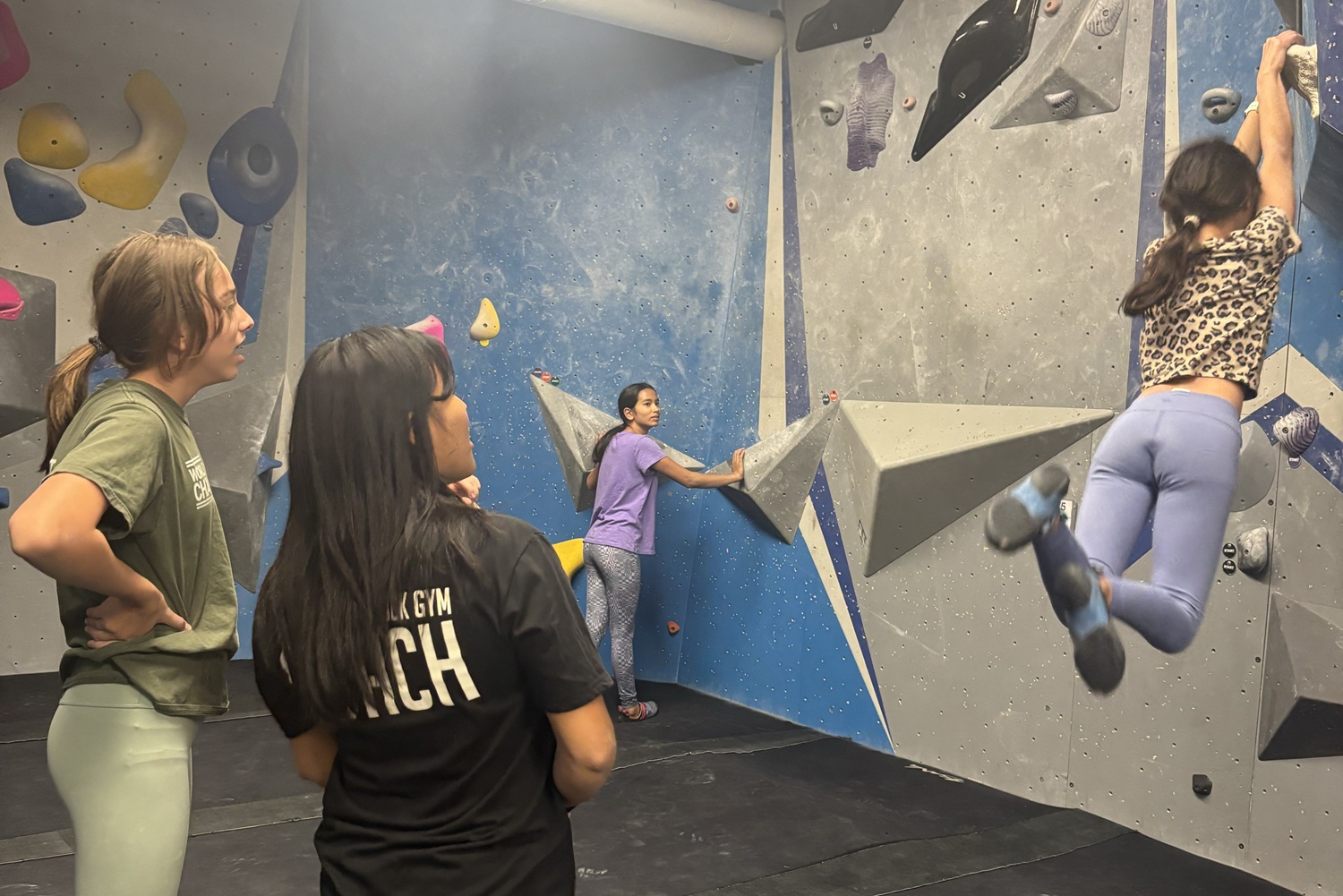
Navigating the process of growing up from a youth athlete has been disorienting, especially as I aged out of the youth competitive circuit and left my team. I lost these key parts of my life but, in their place, I found a new passion and connection to the sport of climbing as I entered the world of coaching. Not only was making the decision to coach one of the easiest of my life, it has been profoundly impactful for me for several reasons.

Courtesy of Mei Mei Loh
Mei Mei Loh
Community: Having moved across the country for college, coaching has allowed me to connect with a much broader community of climbers here in New York City. Surrounded by not only children that I can share my knowledge with but also adults who have years more experience than I do, I am constantly learning from and being inspired by these new role models in my life. Coaching has taken me to new gyms, allowed me to meet new people, and has given me a much stronger network of climbers to share my love for the sport with than I initially imagined I’d have.
Making money: The monetary incentive of having a part-time job (especially as a college student) is not to be disregarded. Specific to my experience in the climbing industry, coaching has also afforded me a free gym membership and access to facilities I would otherwise not be able to use, which I now would never want to give up.
Reset from school: As an undergrad, I’ve noticed that college can feel very self-contained at times. Enclosed by a campus perimeter, my daily life can feel like only a slice of the real world as I interact with people from similar age ranges, demographics and perspectives as myself. Though everything happening within a small radius does promote the feeling of convenience and community, it can also feel confining. Having a set place to be away from school, twice a week, allows me to take a break from the network of school and my peers. In the presence of kids, coaching provides a necessary break from my routine in college and a place where I can reset.
Development of communication skills: Every season, when I come back to coaching, I’m reminded of how interpersonal it is. I am often prompted to deal with challenges that can only come up in real, person-to-person interactions, from comments and questions from the kids that catch me off guard to having to communicate with a parent who has their own set of aspirations for their kids to receiving feedback from coworkers. In my own experience, I’ve learned to be more confident in my communication, to take ownership over my words and my choices, and become less fearful of responsibility. To develop the communication and people skills to work with so many types of people is an invaluable experience, especially as a young adult.
[Related: Reimagining youth sport — Putting positive youth development first]
Relationship to sport: Most importantly, coaching has given me new access points from which to love my sport. While the challenges of growing up as an athlete have felt complicated and frustrating at times, coaching has provided me with a new lens from which to view my relationship with climbing. I am constantly challenged to see the sport through the kids’ eyes and guide them through it, and bringing this positivity to youth athletes reminds me to stay positive in my own relationship to my sport. Seeing the range of ways climbing can bring purpose to the kids’ lives, I’ve been encouraged to see my own relationship with climbing as not so narrowly bounded by just my performance as an athlete. Joy, community, belief, resilience and passion permeate through the space in which I work, and the energy of the youth team has felt infectious and refreshing. Coaching has given me a renewed appreciation for my sport for which I am eternally grateful.
As complicated as growing up in sport can be, there is no doubt that connection to a sport can continue to provide value to people’s lives as they change. Coaching has been one of the greatest sources of value in both my adult daily life and my relationship to my sport, and I truly believe it can be that valuable for so many more young adults who have grown up in sport.
***
Interested in signing up to coach in your local community? Sign up to become a coach and get placed with a program in need through Positive Coaching Alliance: https://positivecoach.org/coach-recruitment/
Mei Mei is a sophomore at Barnard College studying mathematics. While she’s not working on a problem set or coaching the Central Rock Gym youth team, she is at the gym climbing and competing in local competitions and the collegiate series.