
When I began receiving college admission letters, I was incredibly excited to be the first person in my family to be accepted to college. However, that excitement was dampened by my underlying fear of homelessness. At that time, I had no family support and no place to live. What I didn’t know was that I was not alone:
At least 1.5 million college students reported experiencing homelessness in 2019, according to the National Center for Education Statistics.
SCHOOLHOUSE CONNECTION AND TRELLIS STRATEGIES
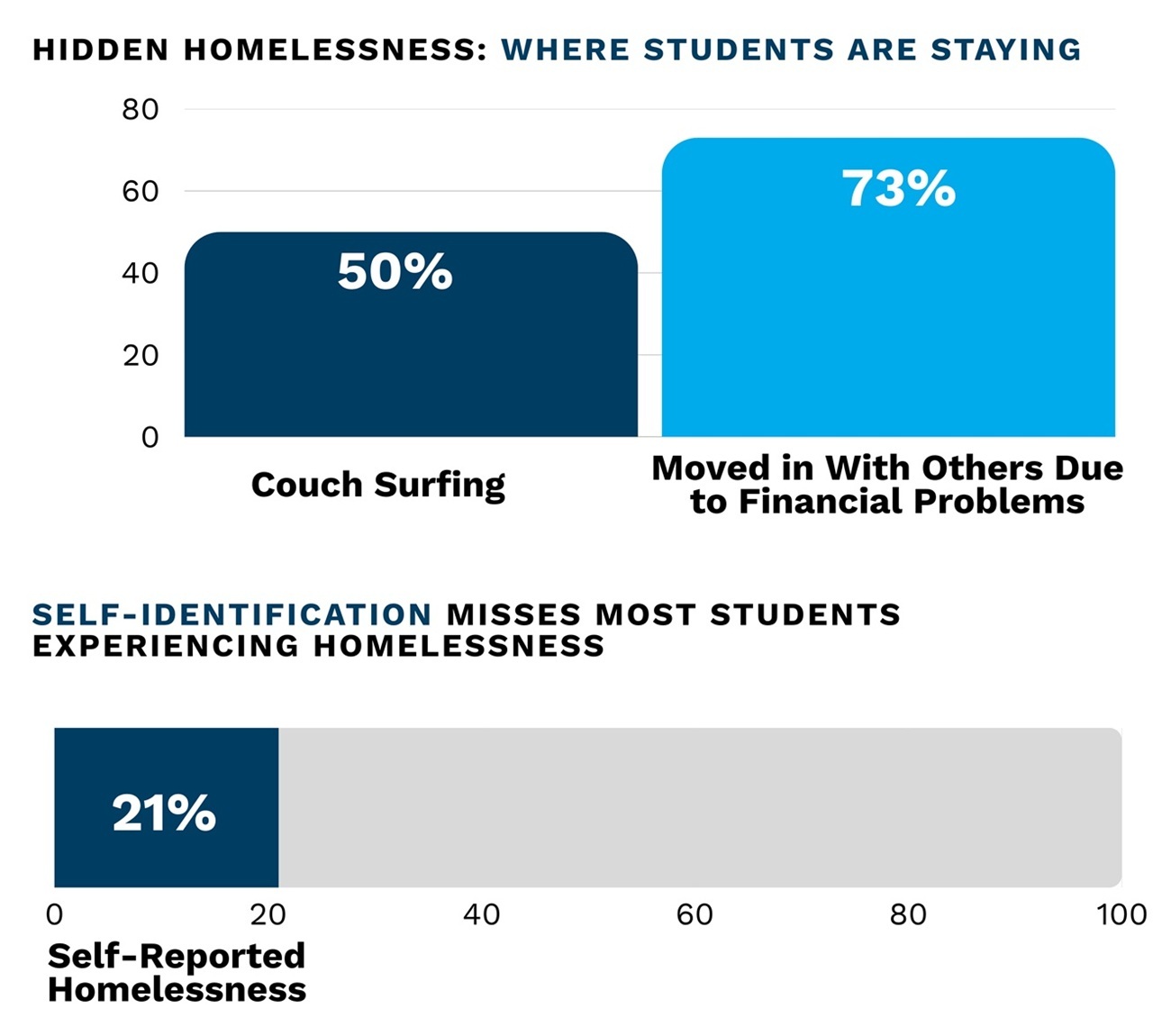
A report from SchoolHouse Connection and Trellis Strategies found that 73% of college students experiencing homelessness have moved in with other people because of financial problems, and 50% have couch surfed. Only 21% of those students said, when asked directly, that they had been homeless.
At my small university in Salt Lake City, the dorms were required for students during their first two years of college. This meant strict move-in dates, closures during breaks and frequent moves.
I asked if it would be possible to move into my dorm early. During my meeting with Residence Life, I disclosed that I was experiencing homelessness on my own. The director of housing looked at me as if I were some sort of alien and said it was against the rules and that nothing could be done.
WHEN POLICIES DON’T BEND
Immovable policies like this disproportionately hurt low-income and homeless students, for whom campus housing is often the only accessible housing.
My college also provided no support during winter and summer breaks when dorms would close. The summer before classes started my freshman year, I stayed in the bathtub of my friend’s one-bedroom apartment with her and her mother.
[Related: How a scholarship for homeless youth gave me the stability to build a future]
Eventually, August came, and I moved into my dorm. I really enjoyed living with my friends, having a bed and living on campus.
But then fall break came. I talked to Residence Life once again, reminded them about my situation, and they said, unfortunately, that unless I was on a sports team, I couldn’t stay. This happened again during winter break. Then spring break.
My living situation was constantly unstable.
SCHOOLHOUSE CONNECTION AND TRELLIS STRATEGIES
I disclosed my situation to one of my professors and, thankfully, they were able to advocate for me and get housing to reluctantly agree to let me stay on campus. Housing waited to make their decision until the day I would have had to leave for break. Before then, I was constantly anxious, considering whether I would need to hide in my wardrobe or sleep on the streets over the break. This made it impossible to focus on school and finals, as I worried about where I would sleep the next day. What people often don’t understand about students experiencing homelessness is just how much they carry on their shoulders and how many things they have to manage, all while trying to navigate school at the same time.
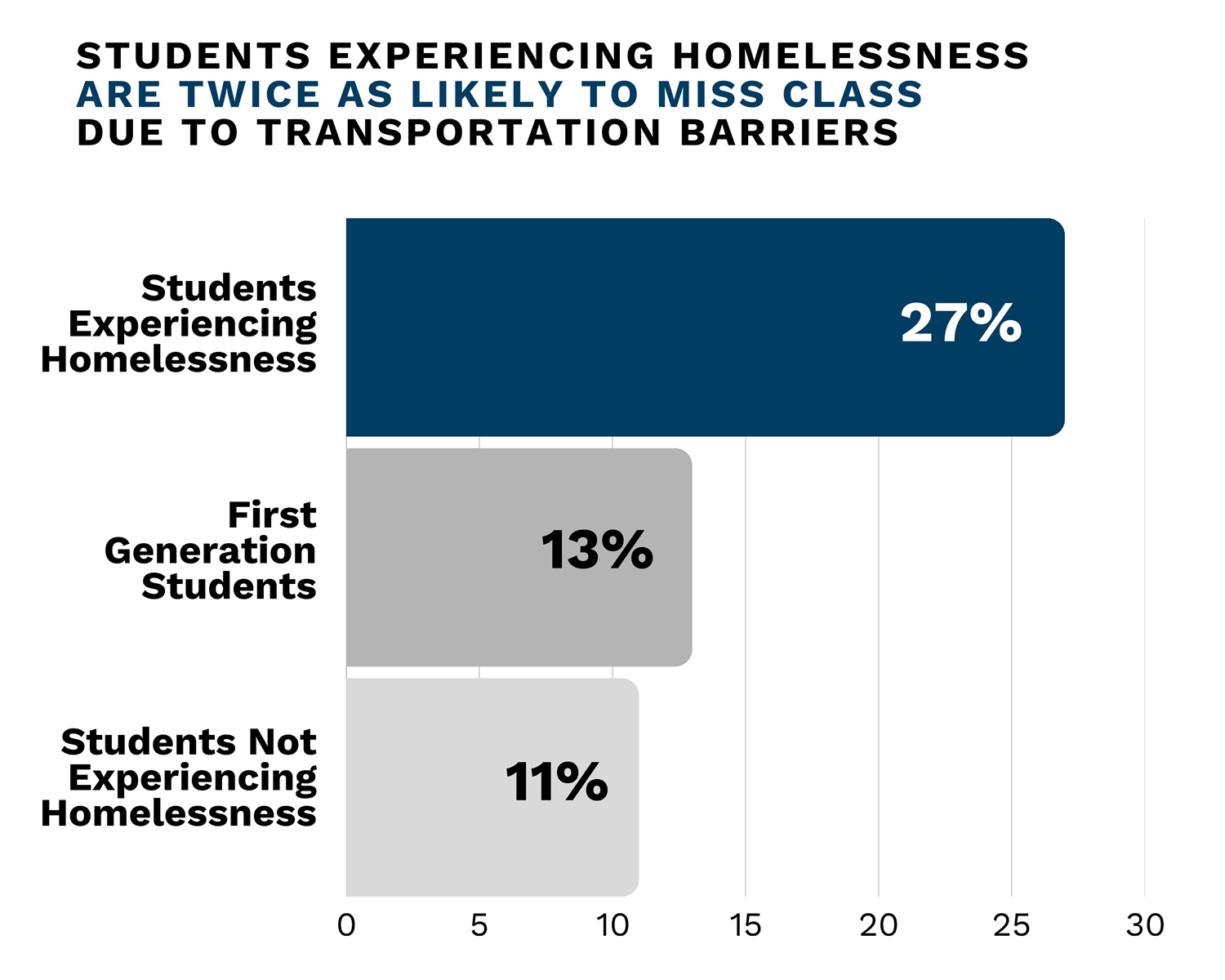
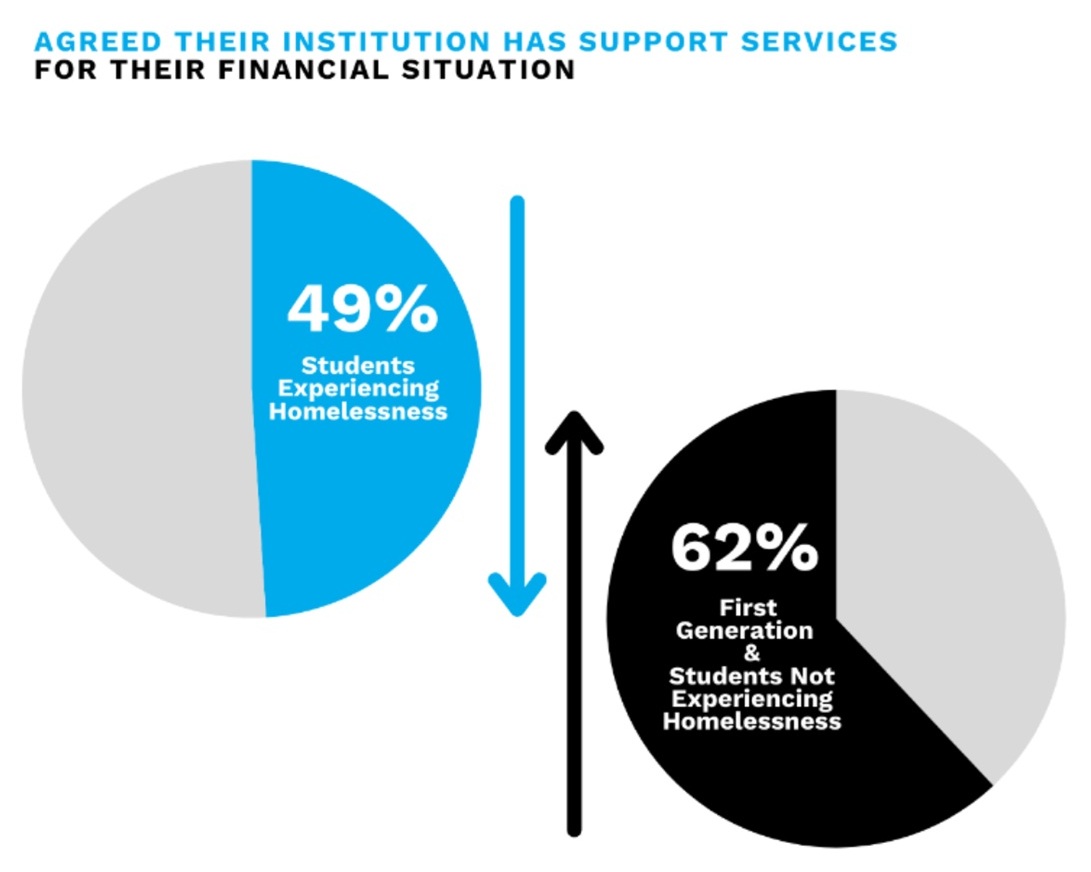
According to data, students experiencing homelessness are far more likely than their peers to miss class because of unreliable transportation or conflicts with work, to screen positive for depression and anxiety and to go hungry. They are also the least likely to say their campus has services that fit their situation. Only 49% agreed their institution offered support for their financial circumstances, compared with 62% of first-generation students who had not experienced homelessness.
The weeks before summer break, I didn’t know where I’d go.
SCHOOLHOUSE CONNECTION AND TRELLIS STRATEGIES
Again. I wanted to stay enrolled, but I was exhausted by constantly disclosing my situation just to be turned away. I was ready to just call it quits.
Thankfully, I had a mentor who stepped in and helped me reach out to a summer research program on campus that provides students with housing over the summer break. The program didn’t usually accept freshmen, but my mentor was able to talk to them, and they made an exception.
Without this support, I think I would’ve dropped out of college.
When I reflect on my college experience, I am very grateful for professors like the mentor I met, who advocate and show up for students experiencing homelessness. As a first-generation student, I had no idea how to go about advocating for myself, but my mentor knew how the system worked. I am so grateful to have met her.
But I also recognize the limited capacity professors often hold and how they cannot always serve as an advocate in the way my mentor showed up for me. This leads to students unnecessarily slipping through the cracks.
A CASE FOR CAMPUS LIAISONS
That’s why I think it is absolutely necessary for campuses to have higher education liaisons, whose job is dedicated to supporting and advocating for students who are experiencing homelessness.
Courtesy of Harper
Harper
We already see this working in K-12 schools. Under the federal McKinney-Vento Act, every school district has a designated liaison whose job is to identify students experiencing homelessness and connect them to what they need to stay in school. The Act has been in place for over 30 years. Colleges, with rare exceptions, have no equivalent.
[Related: Dept. of Education, act now to empower youth experiencing homelessness]
Although strong federal and state policies are needed to ensure students don’t fall through the cracks, colleges can do a lot now. They can designate a liaison now. They can, with planning, keep residence halls open over breaks for students who have nowhere else to go. Several states already require liaisons, and some require priority or year-round housing access for students experiencing homelessness.
I am still figuring out housing. I currently rent the coat closet under my friends’ staircase, with a folded-up mattress topper as a bed. It’s not ideal, but it is my only option, and I am willing to be uncomfortable if it means I have the opportunity to attend college.
I’m the first person in my entire family to attend college, and it’s been an immense privilege. I hope that in the future, more students living in situations like mine have significantly more support.
***
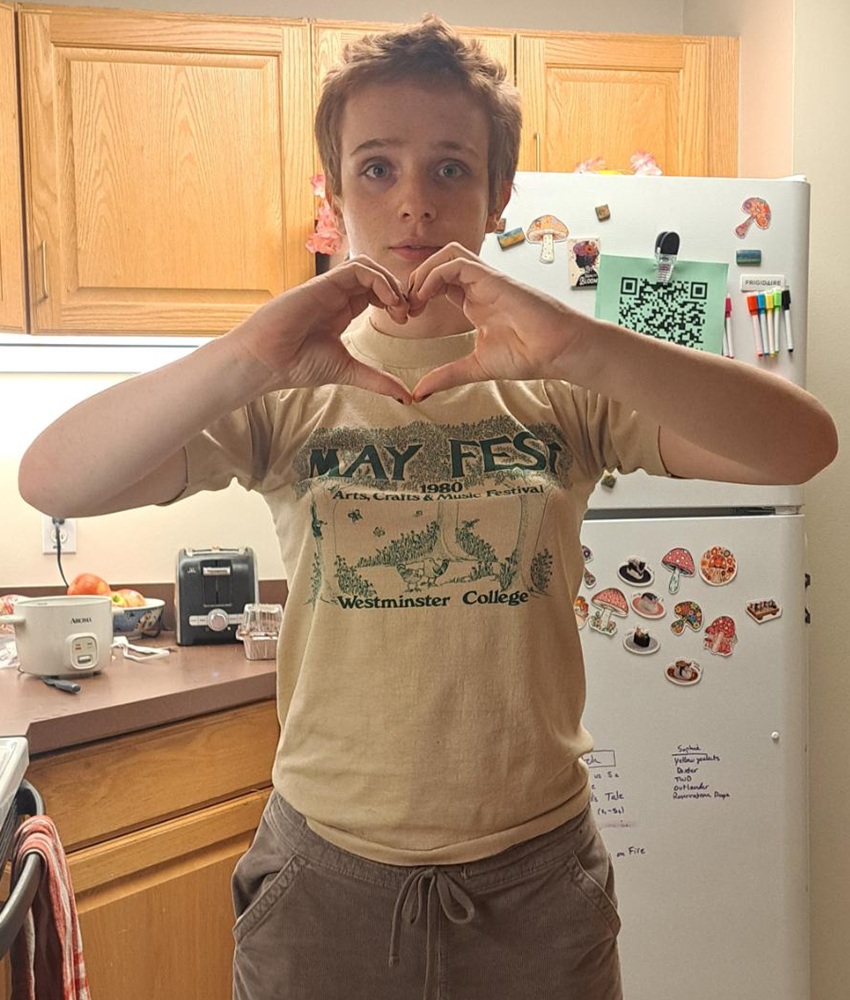
Harper is a junior at Westminster University in Utah, a McNair Scholar and a SchoolHouse Connection scholarship recipient. She studies literature and plans to go to graduate school and become a professor. Her last name is being withheld at her request.