
Youth Service America (YSA) is an international nonprofit organization founded in 1986. Its mission is to promote youth service, youth voice and youth volunteerism. YSA supports young people aged 5 to 25 by increasing the quantity and quality of volunteer opportunities available to them, both nationally and internationally. The organization acts as a resource center, partnering with hundreds of other groups to empower youth through service-learning, advocacy and leadership development.
Scott Ganske is vice president of education at YSA. Scott comes from a multigenerational family of educators. But his passion for service learning stems from the sense of purpose he gained in middle school through taking on projects teachers suggested. He took that passion into college, establishing a Big Brothers Big Sisters chapter on the way to getting his teaching degree. At every decision point, he looked for where he could make the most difference. This drive led him to leave classroom teaching to champion service, taking a job with Learn and Serve Texas before joining YSA. Over his 14 years there, he has worked with hundreds of schools and community organizations, developing tools and trainings that truly integrate service with learning.
The Conversation
Q: As a classroom teacher, once you began implementing service learning, your student growth quickly became the top in the state. But even with this success, your classroom strategies weren’t being replicated. Why do you think that was?
Scott Ganske: In any given week, I would have five to 10 teachers from colleges coming to watch me because the kids at Guadalupe were showing such growth. But I wasn’t teaching to the textbook. I spent the first three months just getting to know the kids, getting to know their community. When I was teaching, I was the lone wolf, and I was never able to get the school’s leadership to make the commitment to this approach, because it is time and it is energy. Sometimes I would convince other teachers, but they would only take on certain elements.
I was at what they called a “clipboard” school. If you didn’t have the objective on the wall, you got reamed, you got yelled at. What are you doing? Why are you not teaching what every other teacher is teaching? So I had tons of pressure. I worked at the hardest schools where they didn’t allow this kind of stuff, but you have to be able to prove that those objectives do align.
Unfortunately, most schools, most districts now only have one or two teachers fully committed to service learning. They’re very rarely on the same campus, and it’s usually that overachiever teacher that just like really is obsessed with filling the gaps in purpose for students – coming in and giving them a different type of understanding of how the world works. You do feel alone.
Q: Are you pleased with how service learning is playing out in schools?
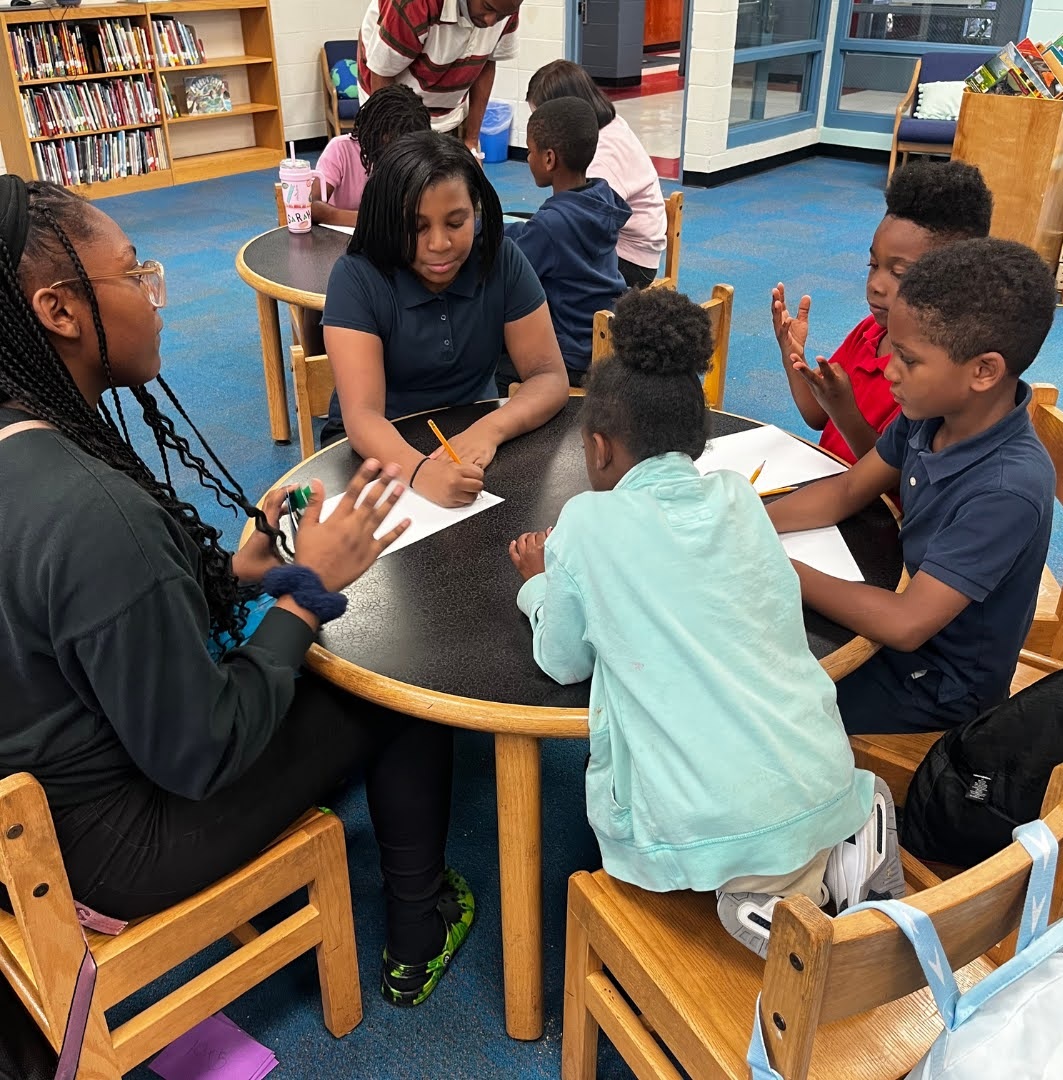
Courtesy of Youth Service America
Youth service workers help young students with math.
To be frank, I’m struggling.
When I’m looking at service learning, I’m looking at academic objectives – linking it to what students are learning in the classroom, finding a connection to meaningful community impact and engagement from beginning to end. That’s where I differ from a lot of others, that focus on place-based service or student service learning where students participate in pre-organized service activities and then reflect on their experiences.
I’m at a crossroads with these types of service requirements, because I think that they sometimes really take away from what we’re trying to achieve. I think many districts see it as a check-off, and then that mindset passes on to the principal, passes on to the teacher and, ultimately, down to the student.
Q: How are you helping educators on their own service learning journeys?
Last year, I interviewed 50 teachers that love service learning, and 50 teachers that wouldn’t touch it with a 10-foot pole. The amazing thing was, among the 50 teachers that wouldn’t touch it, there were the ones that didn’t want to do it because it’s a lot of time, a lot of energy, a lot of pushbacks. But there were also teachers who wanted to do it but were too nervous to talk to their kids about service. Some just didn’t know how to get started. Others said, what if they have 100 ideas? How do I tell them no?
These insights helped me design tools that meet educators where they are – like the online course I created with Arizona State University Mary Lou Fulton College of Teaching and Learning Innovation. We co-designed a 15-hour course structured for parents and paraprofessionals working either during the day or after school. It’s linked to a micro-credential and/or continuing credit hours. We got a grant from the Mott Foundation that allowed 75 afterschool teachers to take the course.
Additionally, at YSA, we’ve built a simple three-question on-ramp to invite everyone to use our tools: Are you a youth or an adult? What age group do you work with? Are you a novice or more experienced? Your answers lead you to one of 12 separate resources. So if you’re new to service learning, and you’re an adult facilitator, and you work with middle, high school or older students and you click those three, you will get a resource that is written in a nice, friendly language, because you’re new to it, but that targets that age group.
Q: Starting with relationships may be risky for teachers in some schools focused on compliance, but it’s where most youth organizations start – build relationships, explore interests, build real-world skills. How does service learning play out in out-of-school time programs?
I would say it’s a different form of service learning for the most part. It doesn’t have as much of the academic lens on it, but it does show ownership and planning and students being involved. When they work with their students to plan projects, OST organizations are using the IPARD/C (Investigation, Preparation & Planning, Action, Reflection, Demonstration/Celebration) process YSA developed. The IPARD/C model engages youth in the early stages of project design.
I offer support to afterschool educators on connecting service to the academic curriculum, but I make it clear this is optional, like putting topping on your ice cream.
My advice to anyone: Don’t start with too many objectives. Start with two or three you know that you can have an assessment or a rubric for. For example, select one you can actually show that if my students are focusing on a childhood hunger policy, this links to persuasive letter writing, which in fourth grade is a big deal. Or in math, for data analysis, I can show that students have not only surveyed but analyzed recent data on certain ZIP codes in the area and done the statistical analysis that meet the objectives.
Q: Does summer provide an opportunity to activate service learning with schools and community organizations?
Yes! Service learning fits in with summer learning perfectly. I’ve actually found that, depending on the program, it’s easier to integrate it in the summer than it is during the school day. School districts that have summer programs are more willing to try it. They’re looking for different things.
Many afterschool and summer programs are often doing some form of service learning without knowing it. I think it just takes a little bit of a bump from someone in their network to help them understand that they’re closer than they think. When I taught in afterschool programs, I let the students lead it. I would have students doing the training using our Youth Changing the World toolkits and then coming up with something they can show me while I’m running table to table. Or I would have fourth-graders using Kids In Action. They can fill it out, show it to their teacher and say, “Is this even possible?” This investigation aspect of service learning, to kick off the whole process, is very possible in afterschool and summer.

Courtesy of Youth Service America
Students in Donna Chang’s middle school class in Tacoma, Washington, conduct water-quality testing as part of their Semester of Service.
Q: There’s a strong push for a redesigned education system that prioritizes real skills for real life through real experiences. Project-based learning is emphasized, but not service learning. What’s your advice?
Project-based learning (PBL) is huge, and important. But PBL really sets us back because they make service optional. So, I just work with the districts and teachers to help them find on-ramps to include service. We have to meet people where they are. If you’re doing PBL, let’s plan PBL 2. We have a chart showing the difference between PBL and service learning in the Youth Changing the World toolkit. But I’m looking for even simpler ways to help people get started.
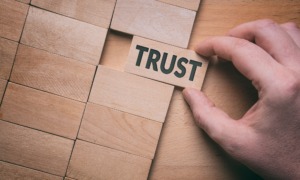
YSA has great tools and trainings, but, as I wrote in my Youth Today column, the missing ingredient is often trust – adults trusting youth and trusting that the extra time taken up front will have huge payoffs.
Our goal is to get more practitioners to see the value of using a process that the students own beginning to end, especially investigation through planning. This is where academic skills integrate with individual interests to ignite purpose and demonstrate every young person can lead.
Q: Where do you think service learning needs to go next?
I have a passion project, separate from YSA that I hope to realize. It’s called LEAD from the Start (Learn. Engage. Act. Demonstrate) and it’s focused on the elementary years. I think we can make scalable impact if we start service learning younger, just like reading and writing and math. We’ve gradually pushed the funding, the programs and the credits toward middle and high school.
I’m hopeful that by starting younger with LEAD as a clear integrated goal, we can align academic, service, social-emotional and project-based learning.
Q: Focusing on the younger years really parallels your own journey, yes?
I’ve thought about it a lot over the years. I don’t know if I was ever really looking for service. I was looking for purpose, but I think ultimately, I was looking for leadership. I wanted to show that a kid who’s shy can be a leader, a kid who comes from a low socioeconomic area can be a leader.
***
In her columns, Karen Pittman is exploring the research behind the statement, “When Youth Thrive, We All Thrive.”