

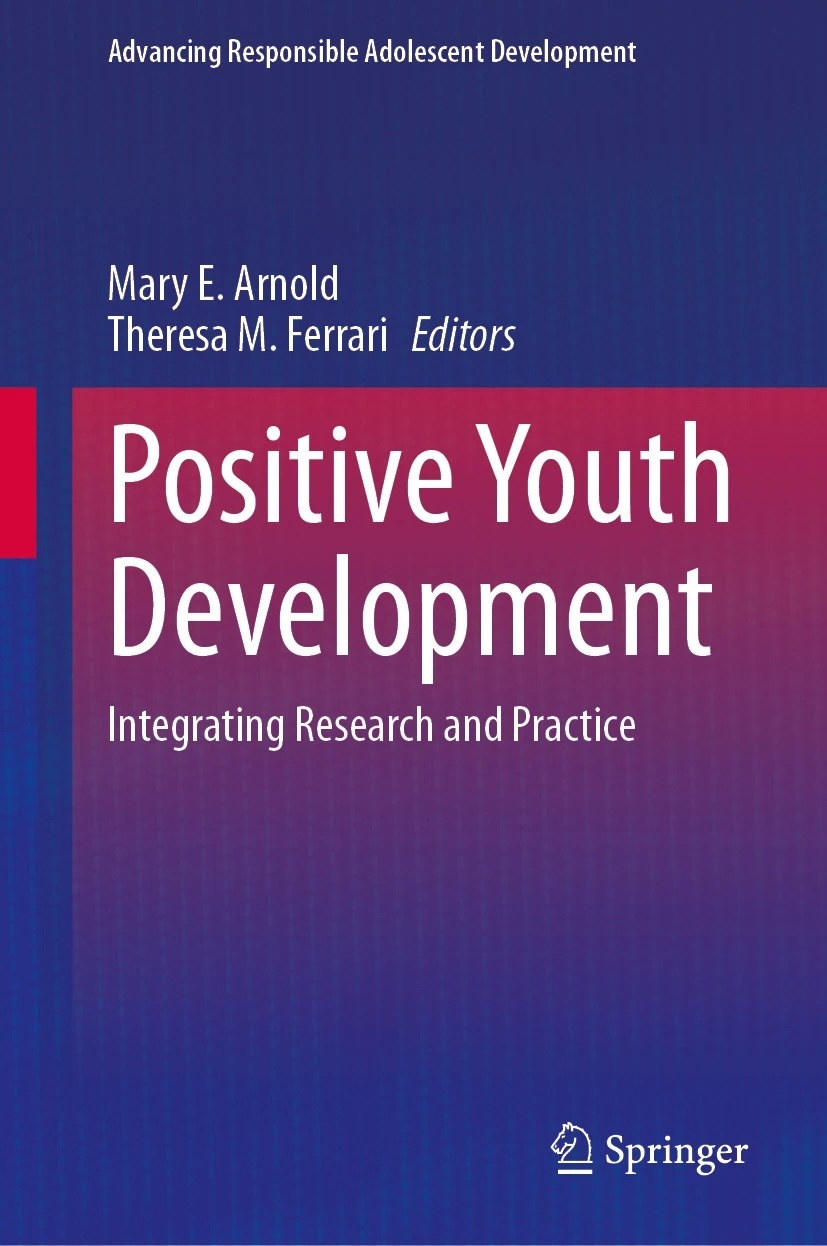
 This is the third piece in our series featuring the chapter authors of “Positive Youth Development: Integrating Research and Practice.” In this piece, I talk with Kim Sabo Flores who, along with Diego Catalán Molina, co-authored Chapter 8 in the volume — “Learning and Meaning Making in Youth Development Settings.”
Flores and Molina’s chapter reveals how meaning making — the process of reflecting on and making sense of experiences — actually strengthens brain connectivity during adolescence and predicts future success. Meaning making emerges through four interconnected practices in youth programs: engaging authentically with youth, promoting peer bonds, expanding interests, and sharing power. Their research with 350,000 youth demonstrates that when programs prioritize authentic relationships first, young people are better equipped to explore their identities, develop critical consciousness and understand their place in the world.
I asked Flores to tell us more about herself and why the topic of meaning making matters to the field.

Q: Who are you and how did this topic become important to you?
My interest in meaning making is deeply personal. As a young actress in New York City, I found power in performance — in stepping into roles that stretched my understanding of who I was and who I could become. Acting allowed me to explore alternate selves, try on new perspectives and begin shaping an identity beyond the one I’d been performing most of my life. It was my first real experience of becoming through doing.
Over twenty years ago, I left the stage behind and walked into a nontraditional college classroom, terrified. I wasn’t sure I could learn. But then a professor asked me a question no one had ever asked before: “What do you want to learn?” That simple, radical question changed everything. I wasn’t treated as a problem to be fixed or a passive recipient of knowledge — I was invited to co-create my learning. That mentoring relationship became foundational to my transformation. It taught me that meaning making is not a solitary activity — it’s social, participatory and deeply shaped by the relationships around us.
[Related: An invitation to learn, reflect and act together for equity-centered thriving]
As I explored different careers — from social work to teaching — I eventually found myself drawn to alternative education settings — afterschool and youth programs where creativity and expression were central. I recognized them immediately as environments where young people were not just learning but becoming. These programs honored their voices, their experiences and their capacity to grow through play, performance and connection.
That journey — from actress to learner to developmental psychologist — has shaped the way I see youth development. When young people are invited to experiment with new roles, engage in participatory settings and are supported by mentors who see young people as who they are becoming — not just who they are — they thrive. They don’t just find meaning in the world — they create it.
Q: Why is this topic important for youth development practitioners at this moment in history?
This topic is more critical now than ever before. We are living through a time of profound societal transformation, driven by rapid technological change, the rise of artificial intelligence and shifting global and local dynamics. In this new era, the nature of work, learning and human connection is changing dramatically.
To thrive, young people no longer need a static body of knowledge but rather a dynamic set of capacities: the ability to think critically, communicate effectively, collaborate across differences, create innovatively and continuously learn and adapt.
These are often referred to as “21st-century skills” and are widely recognized as essential for career readiness. Yet, many employers report that these skills are increasingly difficult to find.
These critical capacities are not often developed through traditional instruction. They are cultivated through meaning-making experiences — opportunities for young people to explore who they are, connect deeply with others and make sense of the world through real-world challenges. As young people engage in these experiences, they not only prepare themselves for the future of work — they also gain the insight and agency to shape the future. In doing so, they become active participants in shaping new types of connections, structures, communities and society.
Q: Can you share a story or example from your own experience that would illustrate this concept?
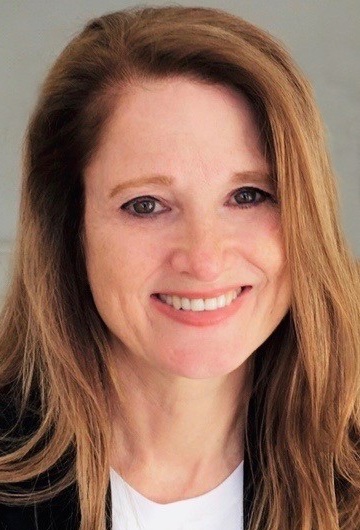
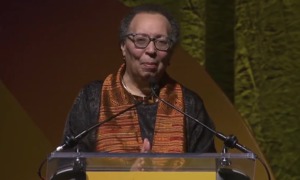
Courtesy of Kim Sabo Flores
Kim Sabo Flores
I’ve had the privilege of working on many youth participatory evaluation and research projects, and one recent experience stands out. I’ve been collaborating with a group of young researchers — ages 21 to 25 — who are exploring what it takes for youth-serving organizations to help young staff thrive, not just in their current roles but in the workforce and in life more broadly.
What’s been powerful to witness is how the research process itself has become a catalyst for meaning making. These young people entered the project with deep lived experience — insight into what it feels like to be a young person navigating early work environments. But as they conducted interviews, analyzed data and reflected together, they began to see their own experiences through a new lens. They started to recognize how their identities, skills and values were shaped by both challenges and supports in their work environments.
One of the most profound shifts I observed was how they began to see the adults in their organizations differently, especially the mentors, both formal and informal, who had supported them. Through the research process, they came to understand the critical role these adults played not just in job performance but in their personal development. These mentors weren’t just concerned with tasks and productivity — they were invested in who these young people were becoming. They cared about their well-being, their career trajectories and their growth as contributors to the world.
This process of stepping back, reflecting and making meaning of their experiences, especially in community with peers and guided by caring adults, was incredibly empowering. In fact, all of them now talk about their own roles as mentors to younger peers and their commitment to paying it forward. The young researchers’ meaning making didn’t just lead to better research; it led to deeper self-understanding and a clearer sense of purpose.
Q: What practical recommendations or “takeaway” messages can you offer practitioners who are looking to implement these concepts in their communities?
The most important takeaway is this: relationships matter. Authentic, caring and supportive relationships are the foundation for meaning making and, more broadly, for all youth development.
At Hello Insight, our research consistently shows that strong adult-youth and peer-to-peer relationships are central to young people’s growth. These relationships create the emotional safety and trust that young people need to reflect, take risks, tinker with new ideas, ask questions and make sense of who they are in relation to the world around them.
[Related: Giving Tulsa students a clear path from curiosity to career]
When young people feel truly seen, heard and valued by the adults and peers in their lives, they are more likely to explore their identities, voice their experiences and connect those experiences to larger social, cultural and personal narratives. These relational spaces allow for moments of challenge, perspective-taking and self-discovery — key ingredients for meaning making.
For practitioners, this means prioritizing relationship-building in every aspect of programming. Create time and space for intentional conversations. Model vulnerability and curiosity. Invest in staff training that emphasizes empathy, cultural responsiveness, active listening and deep reflection. And remember that even small gestures of care and consistency can have a lasting impact on a young person’s ability to feel connected, make meaning and grow.
***
This is the third piece in our series featuring the chapter authors of “Positive Youth Development: Integrating Research and Practice”.
The first piece can be read here: On Integrating Research and Practice: A new resource bridges the gap
The second piece can be read here: On readiness to change