


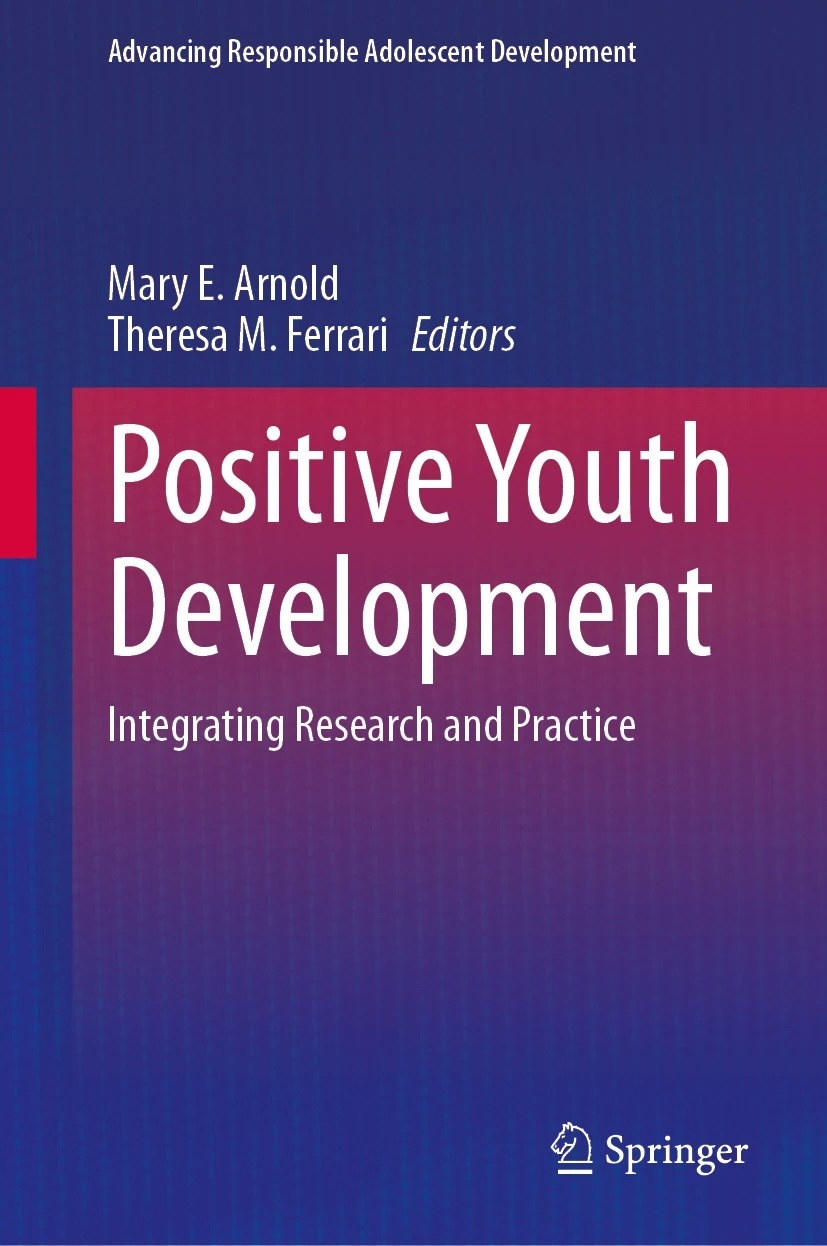
 This is the fourth piece in our series featuring the chapter authors of “Positive Youth Development: Integrating Research and Practice.” In this piece, I talk with Thomas Akiva, who co-authored Chapter 7 in the volume along with Kimberly Howard Robinson — “Program Quality: Why It Matters and How to Strengthen It.”
Akiva and Robinson’s chapter demonstrates that program quality — the observable practices that determine whether youth feel comfortable, engaged and want to return — can be systematically assessed and improved through continuous cycles of assess-plan-improve.
Rather than a one-size-fits-all checklist, modern quality improvement draws from three key developments: recognizing relationships as the “active ingredient” that makes programs work, integrating social-emotional learning into all aspects of programming and centering equity by ensuring high-quality experiences are accessible to all youth, not just some.
I asked Akiva to tell us more about himself and why the topic of program quality matters to the field.

Q: Who are you and how did this topic become important to you?
At the start of my career, I spent several years as an OST practitioner, mostly as a camp counselor and director. Then I worked for the Weikart Center for Youth Program Quality and helped develop the original Youth Program Quality Assessment and Intervention — so youth programs and youth program quality have been an important part of my professional life for several decades. After I got my Ph.D. and became a youth development researcher, I conducted several studies with Simple Interactions, a formative and summative tool focused exclusively on adult-youth or adult-child interactions.
These experiences have led me to believe strongly that program quality is an important way to represent the heart of youth programs — program quality tools aim to describe in words what makes a good program tick and provide pathways to program improvement. Program quality tools also provide a language for people to talk about the most important parts of their work, which is important for consistency, improvement and describing a program’s strengths to others.
Q: Why is this topic relevant/important for youth development practitioners at this moment in history?

Courtesy of Thomas Akiva
Thomas Akiva
Program quality improvement systems can help practitioners get better at what they do and talk about what they do. That’s important for young people, as improved program quality can improve the youth experience and youth outcomes. For example, many youth are experiencing mental health concerns, exacerbated by the social isolation and disruption caused by COVID-19. Focusing a program on key indicators of program quality associated with belonging, welcoming and psychological safety can have a huge impact on these young people.
[Related: On learning and meaning making]
In addition, although youth programs never really had easy paths to financial stability, they are facing more financial uncertainty now than ever before. It’s therefore increasingly important to demonstrate and discuss effectiveness, and program quality is a key part of that. For youth development practitioners, program quality research and instruments are an important component in professional advancement.
Q: Can you share a story or example from your own experience that would illustrate this concept?
Our chapter discusses the history and emergence of program quality tools and describes their use in program quality initiatives, which most often occur at the program network level. That is, a network of programs — often led by an afterschool intermediary — undertakes a program quality initiative. Our chapter includes several examples of networks that have successfully implemented improvement systems in various ways.
[Related: Coaching, not correction: The shift youth-serving systems need to build real leaders]
But I’ll share a story that illustrates the value of talking about program quality with colleagues. A few years ago, I worked with several local children and teen librarians on a project focused on interactions. In professional development settings, we shared videos of a librarian interacting with kids and then discussed as a group our noticings and wonderings about the interaction. One video showed drop-in time in the teen section of the library, and it was relatively chaotic. Through conversation, the leader decided to change the routine so students would come up to get their snack and have a brief conversation with her. This small change was hugely successful and led to many meaningful, relationship-building conversations.
Q: What practical recommendations or “takeaway” messages can you offer practitioners who are looking to implement these concepts in their communities?
Youth program quality, despite sounding jargony, is actually a very exciting topic because it gets at the core of everyday interactions and program design. The tools and processes that exist are sophisticated, user-friendly and useful. Today’s tools focus on relationship-building, creating productive learning environments and creating environments where young people can grow and lead. Practitioners can learn more from their local afterschool intermediaries or from the many online sites that describe youth program quality.
***
This is the fourth piece in our series featuring the chapter authors of “Positive Youth Development: Integrating Research and Practice”.
The first piece can be read here: On Integrating Research and Practice: A new resource bridges the gap
The second piece can be read here: On readiness to change
The third piece can be read here: On learning and meaning making