

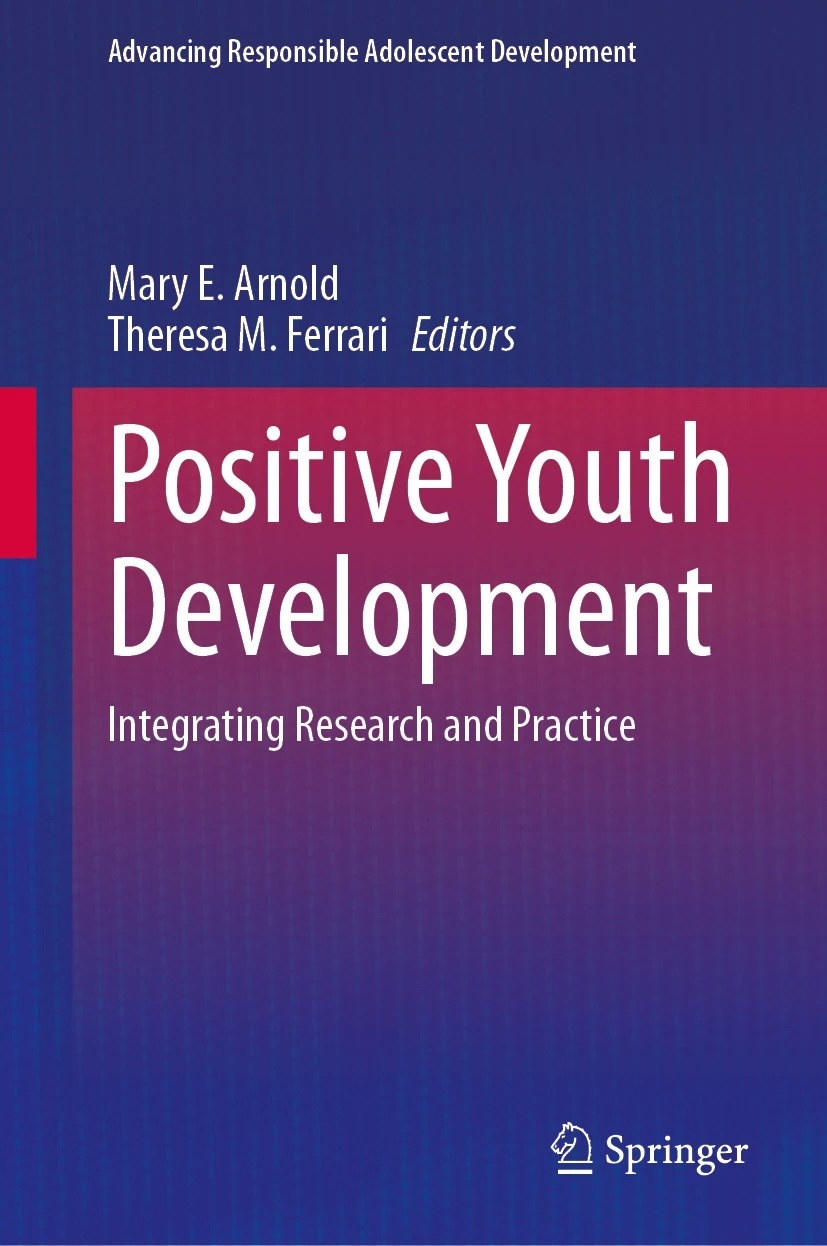
 This is the fifth piece in our series featuring the chapter authors of “Positive Youth Development: Integrating Research and Practice.” In this piece, I talk with Gene Roehlkepartain, who co-authored Chapter 11 in the volume along with Katherine Ross, Miray Seward and Kara Hirano.
In “Developmental Relationships: The Roots of Effective Youth Development Practice,” Roehlkepartain and colleagues demonstrate that developmental relationships — characterized by five interconnected elements (Express Care, Challenge Growth, Provide Support, Share Power and Expand Possibilities) — serve as “the active ingredient” determining whether youth programs succeed. Drawing on Search Institute’s framework and surveys of nearly 12,000 youth across diverse settings, the authors show that young people who experience strong developmental relationships with program staff are significantly more likely to report thriving across every measured outcome, from academic motivation to civic engagement.
I talked with Roehlkepartain about his background and why developmental relationships matter now more than ever.

Q: Who are you and how did this topic become important to you?
I recently semi-retired from Search Institute, where I’ve worked for almost 35 years. Until recently, I was a senior scholar, which was one of several roles I held. I’m staying connected through a couple of projects, which is the “semi” part.
The significance of relationships has been a central theme in Search Institute’s work dating back to the 1960s and in my own work since I started at Search in 1991. However, our focused exploration of developmental relationships started in the early 2010s when we began asking: “What exactly happens in relationships with and among young people that makes those connections especially powerful? And what elements of these relationships can be more intentionally nurtured?” You can download the resulting research-based Framework of Developmental Relationships from Search Institute.
Q: Why is this topic relevant and important for youth development practitioners at this moment in history?
You could say that developmental relationships were central to effective youth development practice long before they were termed “developmental relationships.” What has changed is the multitude of forces that work against life-enriching relationships in young people’s lives, whether between youth and adults or among young people themselves.
[Related: From relationships to opportunities — What we learned about social capital mobilization]
Some of these forces have been around quite some time. For many young people, families and youth development practitioners, time demands erode opportunities to cultivate deep, enduring and trustworthy relationships. In addition, people of all ages face the pressures of productivity, distractions from electronics and the widespread retreat into private spaces linked by delivery services, which may feel safer but are also more isolated. These and many other dynamics diminish opportunities to practice the complex and delightful work of being in relationships with one another.
That’s why this framework can be so useful right now. It seems obvious, yet it can actually make what we do more challenging.
Q: Can you share a story or example from your own experience that would illustrate this concept?

Courtesy of Gene Roehlkepartain
Gene Roehlkepartain
A few years ago, my colleagues and I were introducing the Developmental Relationships Framework to practitioners in several well-known and effective organizations. They were eager and on board — ready to jump in, which they did. As a result, they started to see things change. Young people seemed more interested and engaged. Staff were feeling energized and renewed.
Then our partners started raising hard issues and questions. The young people were bringing up more personal, deeper and more difficult issues in their lives — issues and experiences about which the practitioner had never heard or known. Suddenly, they were feeling overwhelmed. How could they develop programs and expertise to address all these needs? Had they opened a Pandora’s box that should have stayed tightly closed?
That’s when the conversation started to turn. These issues and experiences were always there; we just didn’t know about them. While it was easier before, it hampered their ability to connect meaningfully. Now that they were learning more, how might they frame their work and responses primarily through a relationship lens rather than defaulting to a programming lens?
Q: What practical recommendations or “takeaway” messages can you offer practitioners who are looking to implement these concepts in their communities?
I can suggest a few, based on what we’ve learned from practitioners we’ve worked with.
- It really starts with being intentional in how you cultivate developmental relationships. That’s one of the reasons the framework and supporting measures can be so valuable. They help you remember the balance among the elements and how to be intentional in nurturing them across multiple relationships.
- Remember that relationships are mutual. This understanding requires that each person in the relationship contribute to and grow through it. A primary developmental task in adolescence is growing the capacity to make responsible choices. That growth occurs best within trustworthy developmental relationships.
- Nurture a relationship-rich culture in your organization. This involves creating physical and emotional spaces where relationships flourish. It includes ensuring that young people from many different backgrounds and life experiences feel seen, safe and known. It requires considering how each element shapes how the organization works and interacts with young people and their families.
- Finally, I would extend the focus on relationships to the broad web of supports in young people’s lives. Young people need to experience developmental relationships across their ecosystems — in their homes, neighborhoods, schools, programs, parks, faith communities and other places they spend time. Building relationships across those systems can play an essential role in strengthening that web of connectedness.
***
This is the fifth piece in our series featuring the chapter authors of “Positive Youth Development: Integrating Research and Practice”.
The first can be read here: On Integrating Research and Practice: A new resource bridges the gap
The second can be read here: On readiness to change
The third can be read here: On learning and meaning making
The fourth can be read here: On program quality