
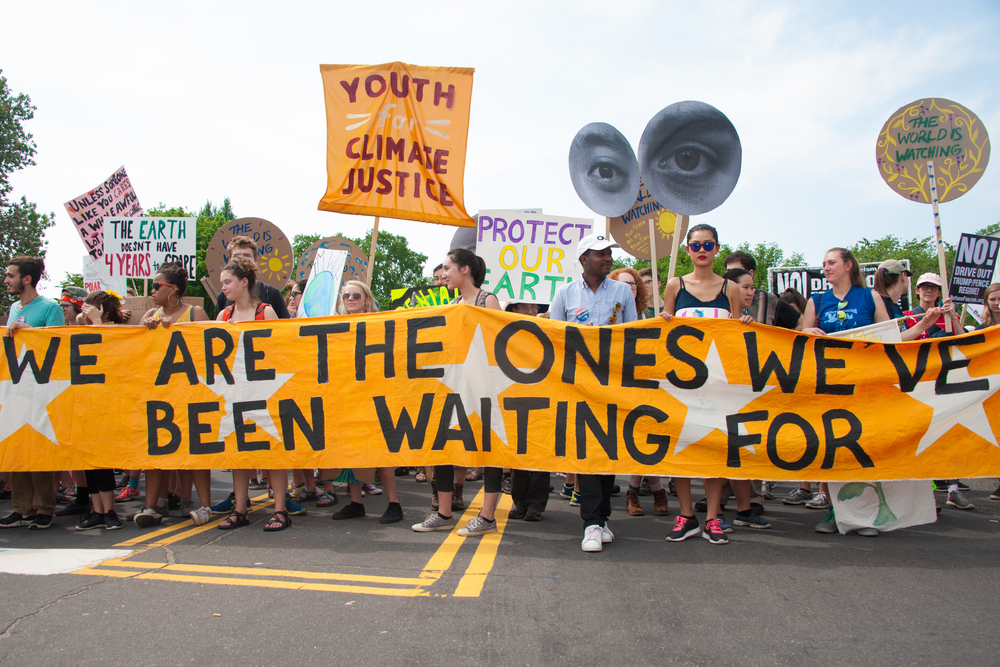
The silence of the Zoom call was deafening as I presented my PowerPoint about the benefits of turning campuses solar. The education board member to whom I was speaking remained impassive. But more upsetting than my disinterested audience was the realization that, as I looked around at those present, there wasn’t a single student. In that moment it became painfully clear to me that the voices shaping our future aren’t ours. I left that Zoom call with the same response I’d heard so many times before: “Try again in a couple months!” But the discussion had sparked a very important question: Why are youth left out of decision-making spaces and conversations about the climate crisis we will inevitably inherit?
Living in the heart of Silicon Valley, it’s easy to believe that progress is automatic.
But walking through my school, I realized that the same city that powers electric cars
and boasts AI on its billboards still lights classrooms with fossil fuels.
Studies from the U.S. Department of Energy show that schools with solar can cut their energy use by up to 65-80% and redirect those savings into enhancing classroom culture. According to the California Energy Commission, about 62% of California’s electricity now comes from renewable sources, meaning roughly a third of electricity still comes from natural gas. And my peers and I have historically had no say in the matter, even though climate change is a crisis my generation has inherited.
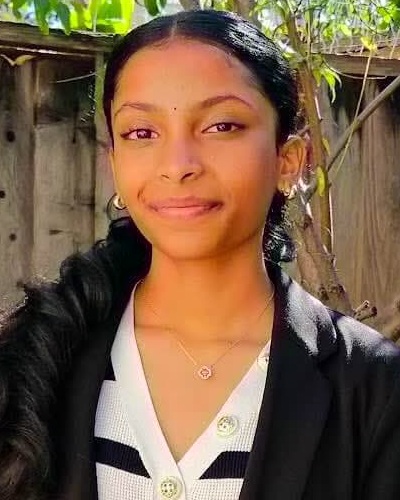
Courtesy of Mahi Mekala
Mahi Mekala
This is why I have started to advocate for a change that feels both practical and imperative: installing solar panels on all new school construction.
I have begun with my own high school, Notre Dame San Jose. I started by researching cost models and technical specifications and then reached out to school officials to advocate for the benefits of going solar. I learned in my early conversations that many high school campuses lack the footprint necessary to convert to solar energy; so back to the research I went in order to include specific footprint requirements in the model regulation I drafted.
[Related: Why are we so afraid to let young people lead?]
But convincing my school leadership wouldn’t be enough. I knew I needed to take this effort to the district board, who were far less likely to be persuaded by a lone voice. I began building a coalition of peers in the school district who would support my proposed regulation.
My friends and fellow students liked what I had to say, but far too few jumped into action with me. After being met with “I don’t have the time to commit to this” or “I am uncomfortable making public comments,” I realized I had to change my approach. Instead of packing the room at a board meeting, I found another way to showcase my peers’ voices. Using a Google form, I collected statements from them about their fears for a future in which climate change remains unaddressed and their desire for near-term solutions.
I created a tool that captures my generation’s desire to contribute to eco-friendly campuses in a way that does not require them to be physically present in these spaces. This approach to coalition building and advocacy is evergreen — the statements I gathered have become an archive I can tap for future advocacy work — and more inclusive — because those with physical limitations, lack of transportation or just a fear of public speaking no longer need to give in-person testimony at a board meeting.
Through my efforts I have also learned the importance of organizational collaboration. My peers at California Youth Climate Policy (CYCP) inspire me to create space for youth in climate policy where we are often unheard. Movements like Fridays for Future and the Sunrise Movement remind me that youth advocacy becomes truly impactful when paired with partnership and action. With the help of impactful mentors and motivating peers, I began to see strength in numbers.
Advocacy has not been easy. One of the biggest barriers remains the perception that students lack the expertise and authority needed to influence district-level decisions. At times meeting with board members and other officials felt like speaking to a wall. The self-doubt I carried added another layer of complexity.
But my work researching energy savings, drafting a concrete proposal and presenting these solutions reminded me that youth action is not merely valid — it’s essential.
My experience has helped change the conversation at my high school. But teachers, administrators and youth workers anywhere can take a lot from my experience. Adults can empower students by providing mentorship and opportunities to be present in decision-making spaces. School boards should strongly consider policies that require renewable energy on their campuses, integrate climate literacy into their curriculum and create authentic and authoritative channels for student input on sustainability initiatives. Youth-serving organizations can bridge the gap between student passion and institutional power by offering training and platforms that help young people turn sustainability ideas into concrete policies and tangible community-level action. My work has shown me that when students are heard and uplifted, we create concrete solutions in our communities, proving that the next generation — even though we aren’t adults, can’t vote and have still-developing frontal lobes — has both the vision and the capability to lead our schools toward a more sustainable future.
[Related: Young people shine light on the path forward]
I want to continue my advocacy work to push for renewable energy policies in my school district. I also want to mentor other students to do the same. My advice to adults is rather simple: work with us. Support youth-led initiatives with funding, mentorship and trust because we might lack PhDs and decades of specialized training but we understand the gravity of the climate crisis and other contemporary issues that we will inherit. When young people are given real seats at the table, climate action is something we can lead right now.
***
Mahi Mekala is a high school student passionate about youth climate action and civic engagement. She spends her time coordinating policy proposals, being a Bharatanatyam dancer or watching the Great British Baking Show. All in all, she hopes to create tangible change in her community, protect the planet to the fullest of her ability and encourage other youth to do so as well!