

 A community of practice (CoP) is a group of professionals who meet regularly around a shared passion for their aligned work to learn and improve practices. In the case of San Antonio-based Excel Academy (EA), the focus is on strengthening youth workers’ capacity to build trusting, inclusive and intentional relationships with each and every youth in their programs. Youth workers in EA come from a range of youth development programs, including local affiliates of big national organizations like Big Brothers Big Sisters and small grassroots programs like The Empower House.
There are up to 30 youth development workers in each EA cohort, and they participate for up to three years. In the first year they learn about relationship-building using Search Institute’s Developmental Relationships Framework and about racial equity and cultural humility through sessions led by a local psychologist. Putting those learnings into practice in year two, youth workers use youth survey results to create and execute an implementation plan based on the Annie E. Casey Foundation’s Results Count Framework. Youth development workers in year three of Excel Academy serve as mentors and coaches for incoming cohorts.
The promise of a CoP, as a social learning system, is that the collective is greater than the sum of its parts – that a coordinated effort of the youth development ecosystem is more impactful than the work of individual programs combined. EA delivers on this promise.
Courtesy of Diane Hsieh
Diane Hsieh
The webs of relationships built in EA encouraged youth workers to share resources in a coordinated way in service of youth.
For example, Beatrice from Good Samaritan Community Services befriended Jackie from YWCA, who gave her a tour of their new facility and extended their food and hygiene pantry’s access to her youth. When two participants shared about transportation barriers for some of their youth, staff from another program offered the use of their van.
Simply put, EA facilitates youth workers to become strategic in directing youth to opportunities and resources beyond their respective programs.
Kristen from SA Youth put it this way: “Remembering that I have this collective group of people and we are all working towards making youth development better for the same people, the community of San Antonio, it really helps with that mission-driven mindset rather than getting bogged down by despair.”
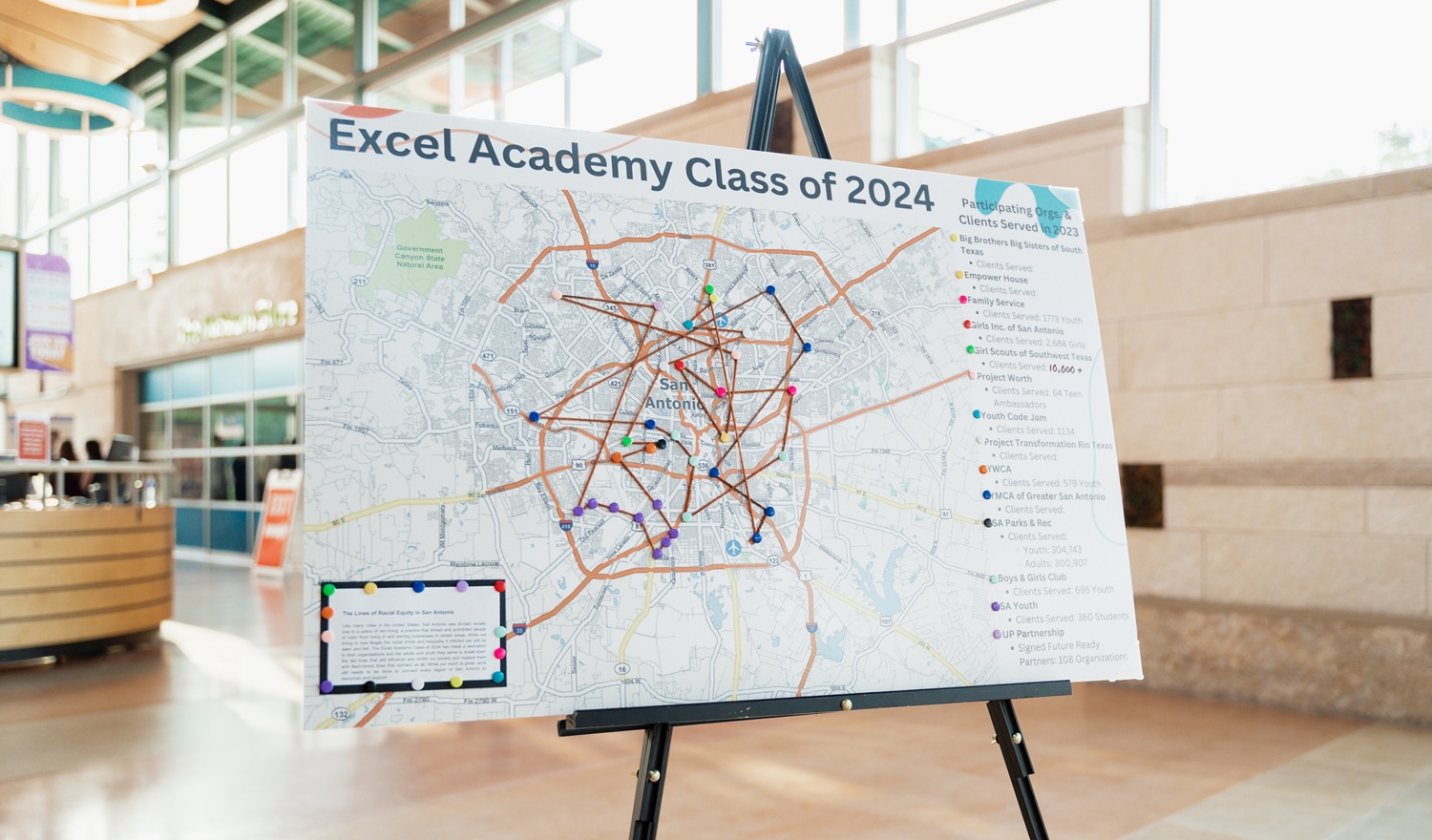
Excel Academy
A map of San Antonio with strings and pins mapping out community organization work and connections across the city showing the “web of relationships”.
EA ignites program collaborations.
Courtesy of Shelby Payne-Drayton
Shelby Payne-Drayton
Youth Code Jam, a small nonprofit with three staff, provides coding experiences to youth who have limited access to technology or are traditionally marginalized in the STEM spaces. When EA brought Benny from Youth Code Jam and Molly from Girls Inc. of San Antonio to the same table, literally over breakfast, they talked about how the collaboration between their two organizations is a win-win, with one program expanding their reach and the other enriching their summer camp curriculum. Through EA, the programs in this community of practice amplified their reach and impact.
Youth workers feel validated, affirmed and rejuvenated from their participation in EA’s cohort model.
As Liz from the Boys & Girls Club shared, “It gives us professionals the chance to talk about it with people who understand, every day is different. Some days with youth development, there are really good days, and other days, it’s not such a great day. Just kind of having a cohort of like-minded people who understand both the highs and the lows of it.”
The bonding and collective mindset that EA cultivates is critical for supporting a sustainable, committed and growing youth worker workforce and culture.

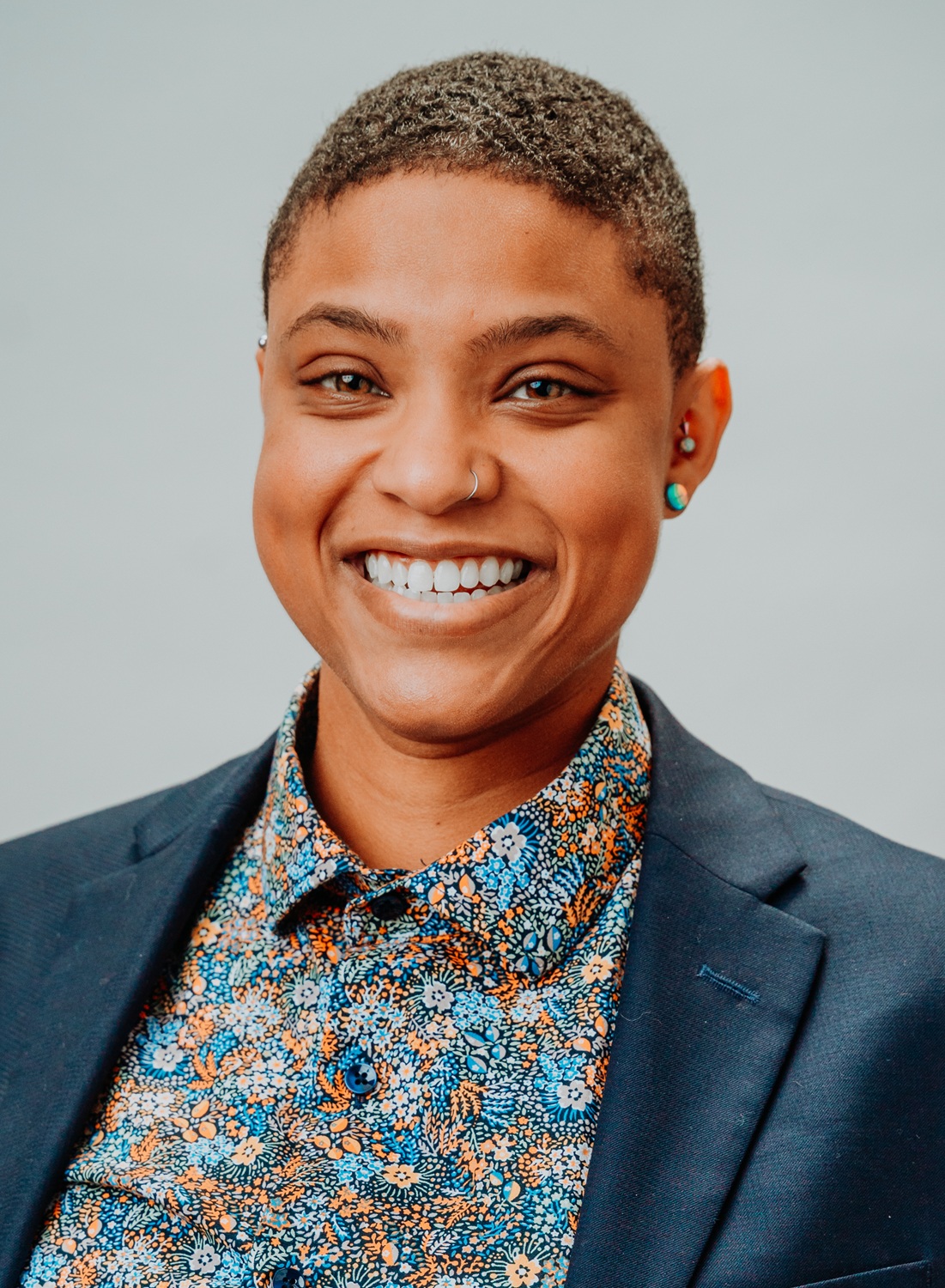
Courtesy of liz moseley
liz moseley
As Adriene from Family Service explained, “[EA] really developed and bridged a lot of connections of supporting each other’s program and not seeing our organizations as competition but as a support network for our communities and the youth that we serve.”
That is, youth workers in EA recognize that for all youth to thrive, programs need to see each other as collaborators instead of competitors.
Alexander from SA Youth compared this to “a power strip of wires, and we’re all just connected and just helping each other out. It’s a big helping hand, like a big educational hug.” This shared vision is particularly important during a time when youth development funding is scarce.
The intentional design of EA allows for these outcomes, and leaders from across the youth development ecosystem recognize the unique role they can play in support of the CoP.
- EA is possible because of the care, love and intentionality of UP Partnership, the lead intermediary organization. When launching a CoP, intermediaries must deeply listen and be adaptive to the evolving needs of the partners to co-create spaces where they feel safe enough to be themselves, to make mistakes and to learn and grow. When intermediaries model what transformative relationships look and feel like, partnering programs can carry these practices into their own spaces, co-creating healing and empowering youth ecosystems.
- For each program, leadership buy-in is essential for realizing the full impact of EA in supporting staff growth and program transformation. Trust is earned by creating space for CEOs to share their needs, honoring their perspectives, and showing how their engagement supports real outcomes for staff and youth.
- Finally, all this take funders who see the value of programs coming together, funders who are committed to and invested in a collective vision of youth thriving. To support a CoP, funders should look beyond individual program outcomes and invest in the connective tissue of relationships, trust-building and shared learning that allows systems to transform. They must be willing to fund the slow work of belonging: the facilitation, reflection and coordination that turns a network of providers into a learning community capable of collective impact.
***
Note: Some individual names are pseudonyms (to protect confidentiality).
Diane (Ta-yang) Hsieh is a research scientist at Search Institute, an applied research nonprofit organization that focuses on positive youth development.
Shelby Payne-Drayton is a senior manager of coaching and facilitation at UP Partnership, where she leads Excel Academy — a leadership program helping youth development professionals strengthen their organizations through racial equity, developmental relationships and continuous improvement to create lasting impact for young people.
liz moseley works for collective liberation, believing in the beloved community as a site of transformation. As Director of K12 & Youth Development at UP Partnership, a collective impact organization, they advance equity so San Antonio’s young people and educators can shape a more just future.