

For decades, schools across the country have invested heavily in literacy reform. New curricula, mandates and funding have reshaped classrooms, yet reading scores continue to decline for far too many students, especially those with dyslexia and other learning differences.
As a reading specialist, I understand why change feels daunting. Teachers are stretched thin, administrators are under pressure and students can’t afford another “experiment” that costs them time. But in my work, I’ve started asking a different question: What if part of the solution lives beyond the reading block?
Literacy and STEM are often separated in school schedules, but they share something powerful:
reasoning, pattern recognition, sequencing and problem-solving.
Strong readers rely on these same skills to decode, make meaning and communicate ideas. When literacy instruction connects to hands-on opportunities to think, build and create, learning accelerates, especially for students who learn differently.
Talk openly about struggle
Another part of my background brings another layer to this work. I am profoundly dyslexic and have ADHD. I know what it feels like to sit in a classroom and think, “Everyone is getting this except me.” I remember what it felt like to believe being “bad at reading” meant being “bad at school.” Too many students internalize those messages early, causing them to disengage, stop taking risks and stop believing effort leads to success.
[Related: Giving Tulsa students a clear path from curiosity to career]
Because of my lived experience, I talk about struggle openly with students. I tell them I know exactly what it feels like to mix up letters, forget directions or feel overwhelmed by a page of text. I make mistakes in front of them on purpose and model how to recover. I want them to see that struggle is not a deficit. It is a sign that their brain is working hard and that is a strength.
Books, Bots and Beyond
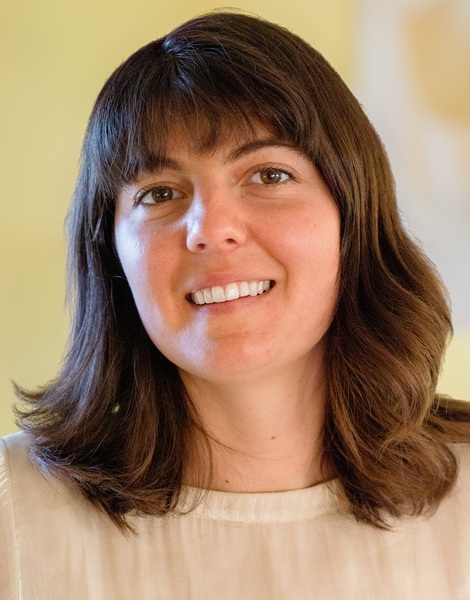
Courtesy of Carly Swanson
Carly Swanson
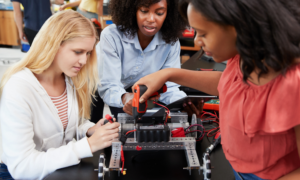
I’ve seen this firsthand through Books, Bots and Beyond, an afterschool program that pairs structured literacy intervention with STEM enrichment in communities where many students have historically lacked access to both. Students meet regularly for explicit reading instruction and also spend time designing, coding, building and experimenting. Sometimes these sessions happen on different days, which reinforces an important message: struggle is part of learning, no matter the subject. As students persist through complex STEM challenges, they begin to trust their ability to do hard things. That confidence carries into literacy lessons, where striving readers are more willing to take risks, stay engaged and believe they can work through difficulty. Reading is no longer separate from curiosity or perseverance. It fuels both.
[Related: What happens when Bronx students lead the way in STEM equity]
When students receive explicit, systematic reading instruction and then apply thinking skills in STEM spaces, something shifts. They begin to see themselves as capable problem-solvers. They build confidence through reasoning and creativity, and reading then becomes a bridge rather than a barrier.
During a recent program year, every student showed measurable growth in literacy skills, but the growth I think about most didn’t fit neatly into a data chart. I saw students who once avoided reading getting excited to pick out new books. I watched reluctant readers volunteer to read aloud.
Parents told us their children were reading at home for the first time,
not because they “had to,” but because they wanted to.
I also saw belonging take root. Many of our students come from communities where opportunity has not always been evenly distributed. Aligning literacy and STEM gives them access not only to skill building but to identity building. They begin to picture themselves as readers, scientists, coders and leaders. That is positive student development in action.
Lessons to take away
These are the most important lessons I’ve learned during my time as a literacy specialist:
First, don’t treat literacy and STEM as separate priorities. They reinforce one another. When students experience success in one area, it builds confidence in the other.
Second, support educators alongside students. When teachers receive ongoing coaching and space to practice new strategies, implementation becomes sustainable rather than overwhelming.
Finally, remember that belonging is as critical as instruction. When students feel seen, capable and safe to take risks, learning follows.
At its core, Books, Bots and Beyond is about changing the literacy story for students, educators and communities. For students who have been told, directly or indirectly, that reading just “isn’t their thing,” this model replaces shame with success. And for districts searching for solutions that honor both urgency and care, it offers an example of how alignment can drive meaningful results.
Literacy reform doesn’t have to mean abandoning creativity or innovation. When we stop treating literacy and STEM as separate priorities and start recognizing their shared foundation, we open new doors for students who need them most.
Reading is not just about words on a page. It is about making meaning, solving problems and believing that learning is possible. When literacy meets STEM, students do more than catch up. They move forward.
***
Carly Swanson is the IMSE district instructor at Falls Church City Public Schools and regional tutoring director for the Books, Bots, and Beyond Program at Dyslexic Edge. A certified reading specialist and literacy leader, she leverages her professional expertise and lived experience to empower students and educators through evidence-based literacy and STEM instruction.