
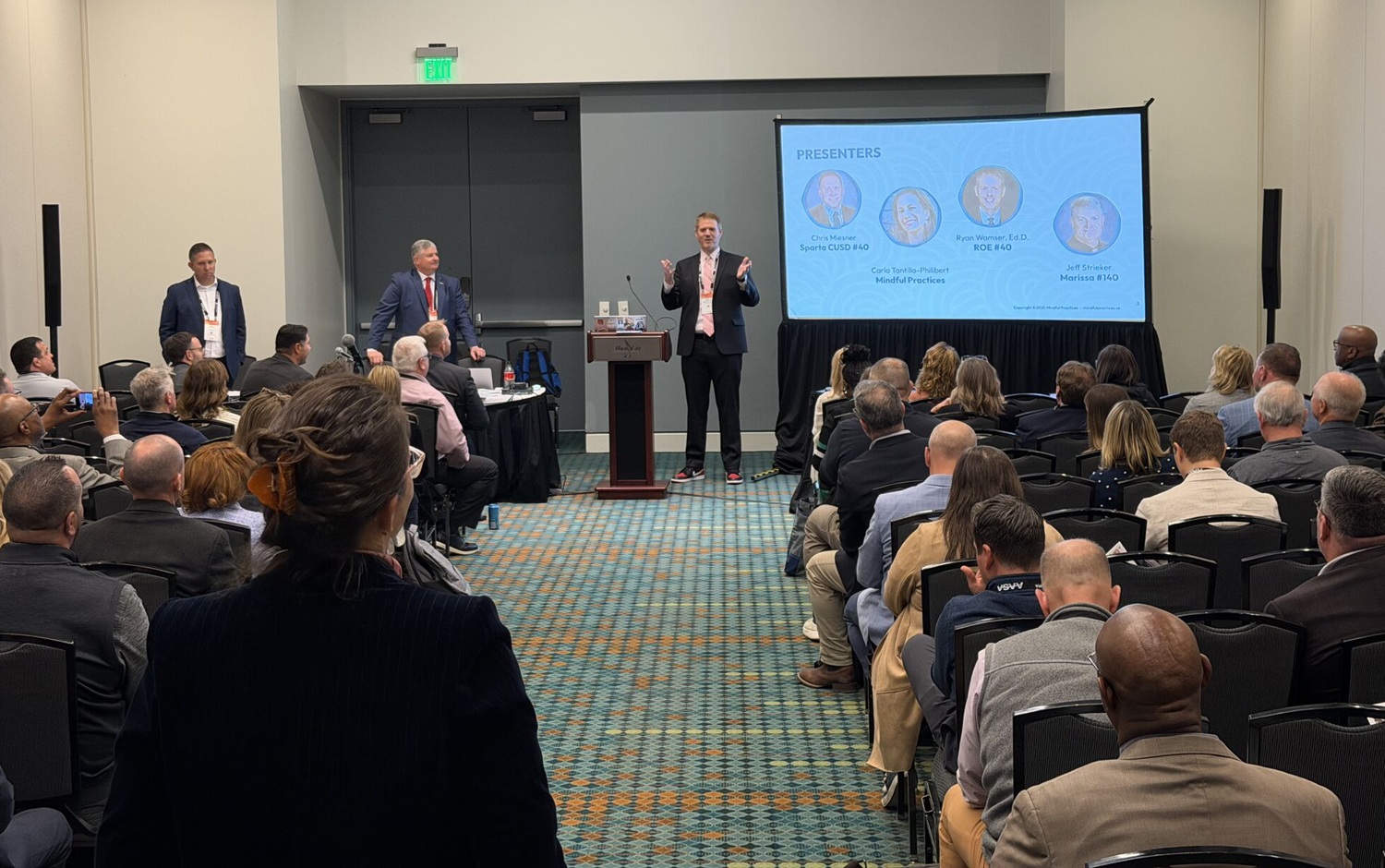
At the 2026 National Conference on Education hosted in Nashville by the School Superintendents Association, I heard a sentence that defined my first experience attending this event.
“Being nice doesn’t cost anything,” said Superintendent Kyle Estes of
Russellville Independent Schools in Kentucky, “but it means everything.”
Representing Healthier Generation, I attended the conference to listen for emerging district priorities, strengthen relationships and identify opportunities where afterschool, school health and community partnerships can work in greater alignment.
I attended sessions featuring superintendents from Kentucky, Arizona, Illinois and Washington state. These district leaders described how intentionally designing cultures of belonging improves staff retention, student behavior and academic performance. Cultivating a sense of belonging was framed as a lever for achieving school culture and climate goals.
That matters for afterschool leaders — especially those doing this work daily with limited resources, long hours and high emotional demand.
Why this focus is urgent
At a conference convening nearly 4,000 superintendents, these education leaders pointed to important trends: persistent youth loneliness, high daily screen use and rising mental health challenges among adolescents, including ongoing feelings of sadness and hopelessness.
[Related: Beyond fragmentation — Advancing continuity of care and cumulative opportunities in OST]
Afterschool educators see this every day when students walk through the door carrying the weight of their day. District leaders are responding with intentional culture design.
To deepen the strategic partnerships many afterschool leaders are already building, we must understand this shift and embrace deeper school-community collaboration.

Five strategic moves afterschool leaders can make now
1. Treat belonging as infrastructure.
High-performing districts are investing in structured time for adult collaboration and reflection. They’re measuring improvements in school climate alongside academic achievement. Afterschool programs build belonging instinctively — through relationship, play, mentoring and family trust. The opportunity now is to connect that work to district priorities.
- Map your programming to attendance goals.
- Show how your mentoring supports broader community and family engagement.
- Connect your youth leadership work to school improvement plans.
- Make the “rounds” — use regular quick check-ins with everyone from custodians to bus drivers to see how folks are truly doing.
2. Keep anchoring your narrative in valid evidence.
Superintendent Ben Shuldiner of Seattle Public Schools challenged leaders to “find the valid narrator” and “tell the story you own and understand.”
Afterschool leaders are some of the best storytellers in education. You spend countless hours with families.
You see what happens when a young person feels safe.
During our roundtable session, Emily Thege, director of America’s Healthiest Schools, and Superintendent Michael Robert of the Osborn School District in Arizona described how participation in a national Healthy Schools recognition framework supports staff morale. The emphasis was on documenting success. Your partnership with school district leaders — especially their communications and public relations departments — can make a significant impact. With declining enrollment in public schools, these stories are critical to retaining students and staff.

Courtesy of Daniel W. Hatcher
Daniel W. Hatcher
3. Center identity to unlock engagement.
In a session hosted by Audio Enhancement, Superintendent Demetrus Liggins of Fayette County Public Schools in Kentucky noted that when young people learn and engage in their native language, it can “unlock their personality.”
Afterschool spaces and partners like libraries, recreation centers and faith communities are uniquely positioned to affirm identity, language and youth leadership in ways that reinforce district equity goals. Youth voice is not an add-on; it’s part of the architecture of school community — something we’re proud to be working on with Superintendent Van Ayers of Hillsborough County Public Schools and the Alliance for Public Schools.
4. Operationalize service.
Dr. Deanna Ashby of Studer Education reminded leaders that “service is an ongoing set of actions.” In the same session, Superintendent Mark Martin of Meade County Schools in Kentucky added that leaders should be judged by what they do for their most vulnerable students.
[Related: From systems leadership to ecosystems stewardship — A next step for OST intermediaries?]
Afterschool educators, especially 21st Century Community Learning Centers, serve many of those vulnerable students daily. The challenge is sustainability. Move beyond one-time events to systems: mentorship pipelines and targeted engagement strategies that align with district goals, especially attendance metrics.
5. Protect adult sustainability.
Ryan Wamser, director of school improvement for Regional Office of Education 40 in Illinois, delivered one of the most impactful reminders of the week: the sustainability of this work relies on life.
“Put your health first. Put your family first.”
Afterschool professionals know burnout well. Long hours. Thin staffing. Fragile budgets. High emotions. It was affirming to see how superintendents are recognizing that adult well-being is essential for student success. Afterschool leaders must advocate for structures that support their teams — clear roles, reflective time, celebration and fair pay.
Thriving does not happen within a single pillar. Schools, afterschool programs, community partners and families operate in a shared ecosystem. The superintendents in Nashville were not asking for more programs or curriculum. They were asking for aligned partners.
Afterschool leaders, that’s us! But we must:
- Approach belonging as foundational to both well-being and performance.
- Integrate youth voice into school improvement goals.
- Align wellness initiatives with staff retention and recruitment strategies.
- Keep demonstrating measurable impact and map goals to district priorities.
***
Daniel Hatcher is the Senior Director of Strategic Partnerships at the Alliance for a Healthier Generation where he has served since 2008. During his time at Healthier Generation, Daniel developed and led a national youth advisory board and helped create afterschool standards for healthy eating and physical activity. A nationally recognized workshop facilitator, he has spoken at education and youth development conferences in over 35 states and Canada.
Alliance for a Healthier Generation work with schools, youth-serving organizations, businesses, communities and families, to promote health equity environments that support whole child health. Their work has positively impacted 31.1 million children across the country by increasing access to nutritious foods, high-quality physical activity, social-emotional support, and tobacco-free environments.