

“Look inside and you’ll see
When you’ve got so much to say it’s called gratitude
And that’s right.”
— MCA, Beastie Boys
“The development of purpose is one of the most important tasks
of adolescence and early adulthood.”
— William Damon

Gratitude is often treated as a polite habit, a personal virtue or a wellness practice. Simple and straightforward. Young people are encouraged to say thank you, write gratitude lists or focus on what they have.
Developmental psychology tells a story that’s a bit more complicated. In this context, gratitude is a developmental capacity that goes beyond a behavior or a feeling. It is the ability to recognize how one’s life has been shaped by others, to understand one’s impact in return and to feel a sense of responsibility that grows out of that awareness. Gratitude matters because it reflects an important shift in how people see themselves from isolated actors toward participants in a greater system of relationships, influence and obligation.
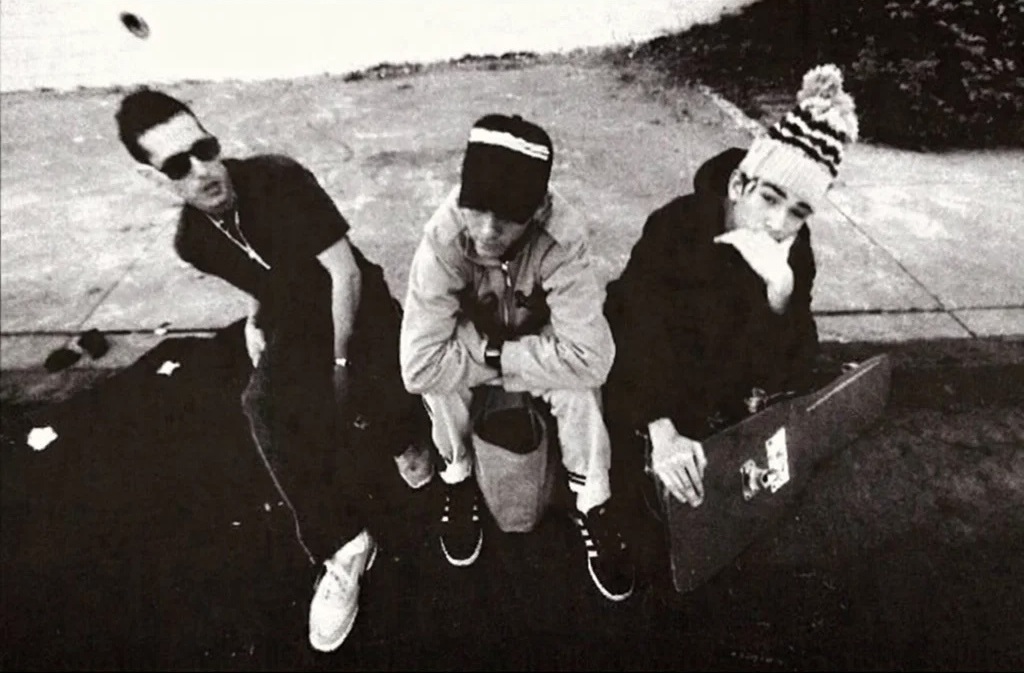
In my opinion, few public figures provide us a clearer example of this shift than Adam Yauch, better known as MCA of the Beastie Boys.
MCA’s legacy is often remembered through music, activism and cultural impact. But seen through a developmental lens, his story offers something else: a clear example of how gratitude can emerge alongside maturity, identity and purpose.
Gratitude is not where we start
From a developmental perspective, this matters. Erik Erikson argued that adolescence and early adulthood are dominated by the task of identity formation, which involves figuring out who you are, how you belong and how you are seen. At this stage, identity is often performed outwardly. It is loud, experimental and sometimes reckless. The goal is differentiation, not reflection.
Early success can intensify this dynamic. When young people are rewarded for bravado, transgression or shock value, those attributes become reinforced because they are effective, not because they are grounded. Identity gets shaped by feedback loops rather than reflection.
[Related: Coaching, not correction: The shift youth-serving systems need to build real leaders]
The early Beastie Boys fit squarely within this developmental reality. Their rise was rapid, their visibility immense and their personas rewarded for being provocative and boundary-pushing. That combination of intense recognition arriving before perspective had fully formed created an environment where experimentation and bravado were not just encouraged but publicly amplified. This is not an indictment; it is a developmental observation. When identity is still taking shape, high visibility and cultural reward can make immature decisions more likely, more consequential and harder to undo. Identity work at this stage is provisional, and the stakes are often much higher than young people are equipped to manage.
Gratitude rarely shows up here as an influence. Not because young people are ungrateful, but because gratitude requires something identity formation has not yet fully developed: perspective over time.
The developmental turn: Looking back without freezing
One of the most striking aspects of MCA’s evolution is that he did something many people, especially public figures, struggle to do: he looked back honestly.
He publicly acknowledged the harm in some of his earlier lyrics, took responsibility without deflection and changed how he showed up as an artist and cultural figure. Importantly, he did not disown his past or pretend it never happened. He integrated it.
This distinction matters. Erikson described healthy identity not as a clean break from earlier selves but as an integration of experience. Growth relies heavily on memory.
This is where gratitude begins to take shape. The first step is recognition. Recognition of influence, recognition of impact, recognition of who and what shaped you and who may have been affected along the way. Recognition alone is not gratitude, but it makes gratitude possible. Gratitude emerges when that awareness deepens into appreciation and responsibility.
The influence of purpose
William Damon’s work on purpose helps clarify what happens next. Damon defines purpose as a stable intention to accomplish something meaningful to the self and consequential to the world beyond the self. Purpose marks a developmental shift from self-definition to contribution.
Gratitude and purpose are closely connected, but they are not the same. Gratitude reflects growing awareness of influence, interdependence and responsibility. Purpose reflects what people do with that awareness over time. In this sense, gratitude can be understood as a developmental foundation for purpose. Once people recognize what they have received from communities, cultures, collaborators and predecessors, the question naturally changes from “Who am I?” to “What do I owe?”
[Related: From relationships to opportunities — What we learned about social capital mobilization]
MCA’s later life reflected this shift. His activism, particularly around Tibetan freedom and anti-war efforts, was purposeful. It was sustained, values-driven and embedded in how he used his platform. This was gratitude expressed through responsibility and long-term commitment.
Why this matters for youth work
For those who work with young people, this framing has real implications.
First, it reminds us not to freeze youth in their worst moments. Identity formation involves experimentation, missteps and revision. It’s messy, and when systems respond to adolescent missteps with permanent labels or exclusion, they interrupt development rather than support it.
Second, it challenges shallow approaches to character education. Gratitude cannot be forced on a timeline. It emerges when young people are supported in reflection, accountability and repair, not when they are instructed to be thankful.
Third, it asks us to design environments that make growth through messiness possible. MCA’s evolution was not inevitable; it was enabled by time, reflection, community and the freedom to change course. Youth systems should offer the same conditions.
Gratitude, understood developmentally, is not about manners. It is about moral eyesight, which requires the ability to recognize interdependence, impact and responsibility.
Growing up in public
MCA grew up in public. He made mistakes in public. And he modeled what it can look like to mature publicly without pretending to be perfect. That may be his most enduring lesson.
Gratitude is not a starting point. It is something people arrive at when identity stabilizes,
purpose takes shape and responsibility becomes unavoidable.
And if we didn’t know that before — well, now we do.
***
Pass the mic: Where hip-hop meets human development. Each month, Daniel Warren, Ph.D., will bring scholars and rappers into dialogue to spark new ways of seeing youth, culture and change. Previous pieces in series:
Shifting the game: Kuhn, hip-hop and the future of youth work
When positive youth development meets the Native Tongues
Biggie through Bronfenbrenner’s Eyes
Daniel Warren is director of youth development and education at Fluent Research. He holds a B.S. in psychology from Northeastern University and a Ph.D. in human development and child study from Tufts University.