

When I taught a lesson on sexual orientation to seventh graders this year, one student asked quietly, “What does ‘straight’ mean?” I expected the question to be a joke, but it wasn’t. Several other students nodded, admitting they didn’t know. They had heard jokes and slang online, but none of the words were explained clearly to them. That moment made me realize how many young people are trying to understand themselves — and others — without accurate information.
I’m a junior in high school now, but when I was in middle school, I was a participant in a program called JAM: Just Ask Me. The program began in 2009 when a group of students at PS/IS 218 in the South Bronx worked with the nonprofit Women’s Housing and Economic Development Corp. (WHEDco) to design peer-led lessons that provided honest, age-appropriate sex education.
Since then, I’ve become a peer educator for JAM. College and high school students lead JAM classes for middle schoolers on consent, healthy relationships, gender, reproductive health and more. As the program evolved, JAM expanded to cover substance use, social media and internet safety, and a curriculum called JAM Jr. was added for younger students.
Before stepping into a classroom, JAM peer educators go through about 20 hours of training focused on consent, healthy relationships, sexual health and facilitation skills, including public speaking. Development continues in real time as peer educators co-teach and reflect on their experiences in the classroom. Students begin as volunteers, and those who demonstrate strong skills and commitment are later hired into the program.
Awkward at first, then eye-opening
When I first entered JAM in sixth grade, it was uncomfortable. I wondered why sex education was coming so early, and I didn’t know what to expect. Over time, I discovered I was learning a lot. I learned what consent really means — not only in romantic situations, but in everyday interactions. I learned about different sexual orientations and identities and why it matters to treat people with respect.
The lessons changed how I saw myself and the people around me. When I started high school, I wanted to help others get those same tools, which is why I became a peer educator.

JAM: Just Ask Me
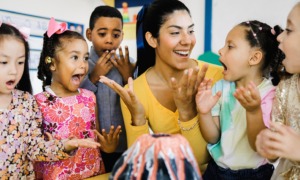
A group of students learning about puberty and other sex ed topics while in an JAM program lesson.
Why peer-led sex education matters
Learning from someone close in age makes a big difference. Because teen peer educators recently sat in the same seats as their students, they speak with authenticity and understanding. I believe this closeness makes the learning experience more real and effective.
When adults teach these topics, students often feel judged or afraid to ask honest questions. In JAM, students often start out shy, but the moment they realize it’s a safe space, they open up and start asking the questions they’ve been holding onto because they finally feel comfortable enough to ask them.
[Related: The missing voices in climate decision-making — Youth]
I tell students I’ve been where they are. Over time, what starts with giggles becomes a real conversation. Students share their thoughts, ask life questions and test ideas they might have picked up from social media or friends. That’s where the real learning happens.
When young people aren’t taught, they fill in the blanks

Courtesy of Nerly Molina
Nerly Molina
Every year, I see new students who come in with misunderstandings about their own bodies or from what they’ve heard online. Some believe misinformation about anatomy. Others carry prejudices about LGBTQ people — not from hate, but from ignorance.
Without spaces like JAM, they may not have an opportunity
to question what they think they know.
Outside class, I’ve watched peers make decisions based on myths and misinformation. They aren’t intentionally making harmful choices, but without accurate information, their decisions can lead to unintended consequences for themselves and others. Teaching students before those decisions are made can make a real difference.
Timing is important, too. Many students start middle school already curious about relationships, their bodies or their sexual orientation. By the time they reach eighth grade, some are experimenting or hearing rumors. Offering sex education early supports healthier choices before misinformation becomes entrenched.
Why all schools should offer comprehensive sex education
In New York, my home state, lawmakers have introduced bills to require comprehensive sexual-health education from kindergarten through 12th grade. I support this legislation and hope that other states will follow.
Today, fewer than 30 states require any form of sex education by law. Even in states that mandate instruction, the quality and content of that education can vary dramatically. Many schools teach only HIV prevention or abstinence. Few require curricula to cover consent, gender, healthy relationships or inclusive sexuality.
Young people deserve access to comprehensive sex education that gives them accurate information, builds respect and empathy, and helps them make healthy, informed decisions. Programs like JAM — peer-led, youth-centered and responsive to real challenges — offer a model worth scaling across all states.
***
Nerly Molina is a junior at Beacon High School in Manhattan. She is a peer educator with WHEDco’s JAM program and has taught workshops on consent, healthy relationships and youth wellness to middle school students in her community.