
 A note from Karen Pittman, editor-in-chief and publisher:
You know the feeling: Another policy shifts; another initiative rolls out, and you’re left wondering how to make it work for the young people in front of you — with less time, fewer resources and a growing sense that the ground keeps moving. David has spent his career studying how people learn and develop, watching brilliant practitioners navigate impossible conditions. I have spent my career studying the people, places and possibilities that support youth thriving throughout the community and looking for ways to shift power closer to where learning happens. Together, we have written about the importance of the entire learning and development ecosystem for equity-centered thriving.
Both David and I are at points in our careers when we have the luxury of focusing time on projects that can bridge the worlds of research, policy and practice and break down the barriers that separate systems. So, when Richard Long, former executive director of the Learning First Alliance, suggested that David host a podcast series to bring the rich insights locked inside three academic papers on educational inequities surfaced during COVID for practitioners, he jumped at the chance.
And when David subsequently asked if he could use column space in Youth Today to introduce the series to readers, I quickly agreed but offered a condition: The content had to be relevant for practitioners across the learning and development ecosystem. When I met with David and Richard, I warned both that fulfilling this condition would mean extra work. Most of the experts lined up talk about community from the perspective of schools. I insisted that David, in his interviews, and Richard, in his editing, bring out the independent roles families and community organizations play in young people’s lives beyond the building and the bell.
I’m delighted to report that the carefully edited episodes I have heard and participated in meet this condition. I encourage Youth Today readers to listen to the monthly episodes, which are broken into 30-minute segments for easy consumption. David and I will also share highlights and comments in future columns.

Introducing the “Knowledge Exchange” podcast
 Here’s the reality: Educators, youth workers, families and community leaders are doing extraordinarily complex work in extraordinarily challenging times — often without access to the knowledge that could help them succeed. But the knowledge we have is heartening. It points toward what works, what matters and what’s possible — even now.
Each month, the “Knowledge Exchange” will feature unscripted conversations with foundational thinkers, exemplary practitioners and policy leaders to explore what we actually know, what we’re still learning and what it takes to support equity-centered thriving when the stakes are high and the path is unclear. We’ll explore a topic — like addressing equity in the aftermath of COVID or moving beyond SEL curricula to real-world competency building — through episodes that include multiple conversations that will enable listeners to appreciate the underlying logic and nuances in the evidence and approaches. In each episode, listeners will hear from these individuals how their ideas can be enacted in diverse contexts. The goal here is to use example-rich conversation to help hard-working practitioners deepen their understanding of key findings and approaches and reflect on how to incorporate the takeaways into their practice.
As a historical sociologist, I draw hope from knowing that even in the most difficult periods, people find and create spaces to innovate, to nurture each other, to keep the work alive. I see such places across the nation and around the world. I’ll use this column in Youth Today to give you a taste of the conversations with some of the sharpest minds in the field on pressing topics that just might change how you do your work.
Episode one: Addressing educational inequities in the wake of COVID-19
The first three-part episode, “Addressing educational inequities in the wake of COVID-19,” focuses on what it would mean to stop chasing the latest crisis and ask deeper questions instead.
In Part I, Michael Feuer and Gloria Ladson-Billings — two scholars whose work has fundamentally shaped how we think about learning and equity — join me to explore what it means to take an ecosystem view of learning. Drawing on research commissioned by the National Academy of Education in COVID’s wake, they argue that equity cannot be reduced to access or outcomes alone.
Ladson-Billings, one of the past presidents of the National Academy, kicks off the podcast with a pithy summary of the three commissioned papers that serve as the jumping-off point for the series:
“The first paper is about the fundamental work of schooling — academic performance — and so we’ve got to figure out what was happening to ensure student learning.
“The second one is about building supportive conditions and comprehensive supports to enhance student and educator well-being and thriving … Kids come as fully human, and as a result, their mental, emotional and social well-being has to be attended to.
“The third paper is about supporting families and communities. We are finally at a place where we understand it is not just one child that walks into the classroom, a community walks in there with you, and if you’re not attending to all of those things, you are going to miss being successful with that child.”
As Ladson-Billings and Feuer engage with these themes, Feuer underscores the role of evidence in this work, particularly in polarized times.
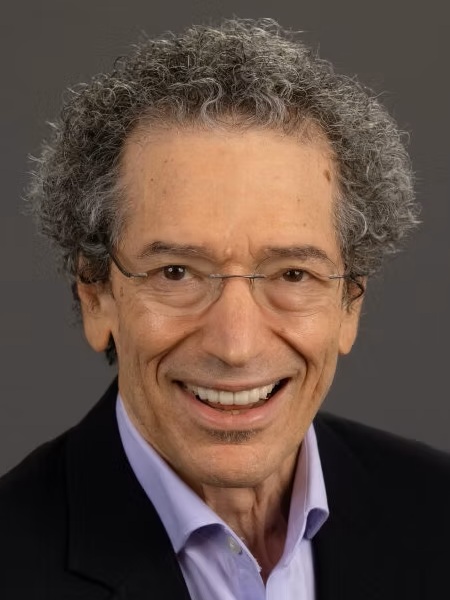
Courtesy of David Osher
David Osher, RCC
“There are a lot of opinions,” he notes, “but our responsibility is to get the right data — and get the data right.”
Together, they make the case for evidence that is rigorous and humane and for learning ecosystems that include schools, families, communities and history.
In Part II, former West Virginia Governor Bob Wise brings his framework of the “three Ps” —policy, pedagogy and politics — and a practitioner’s understanding of how change really happens.
“Nothing moves without politics,” Wise says, “but policy works best when it reflects good pedagogy.”
He offers a clear lesson for educators and advocates alike. “You don’t change minds with briefs. You change them with experiences,” he says.
In Part III, Scott Palmer, managing partner of Education Counsel, traces the origin story of the science of learning and development. He describes a group of leaders confronting a hard truth: Despite decades of reform, education systems remained rooted in industrial-era assumptions.
“We realized we hadn’t fundamentally changed the system,” Palmer reflects. “So we flipped the script — research first, practice second, policy last.”
COVID made the stakes unmistakable.
“The pandemic revealed what the science had been telling us all along,” he adds. “Relationships and connection aren’t extras — they’re prerequisites.”
Across these three segments, these leaders ground research in the real-world complexities of getting good ideas to actually move, even in challenging times.
***
David Osher has been an organizer, professor, dean of an experimental college and schools of human services, researcher, and a TA provider and organizational consultant. His work focused on building humanizing conditions and capacities for and individual and collective thriving and equity.