

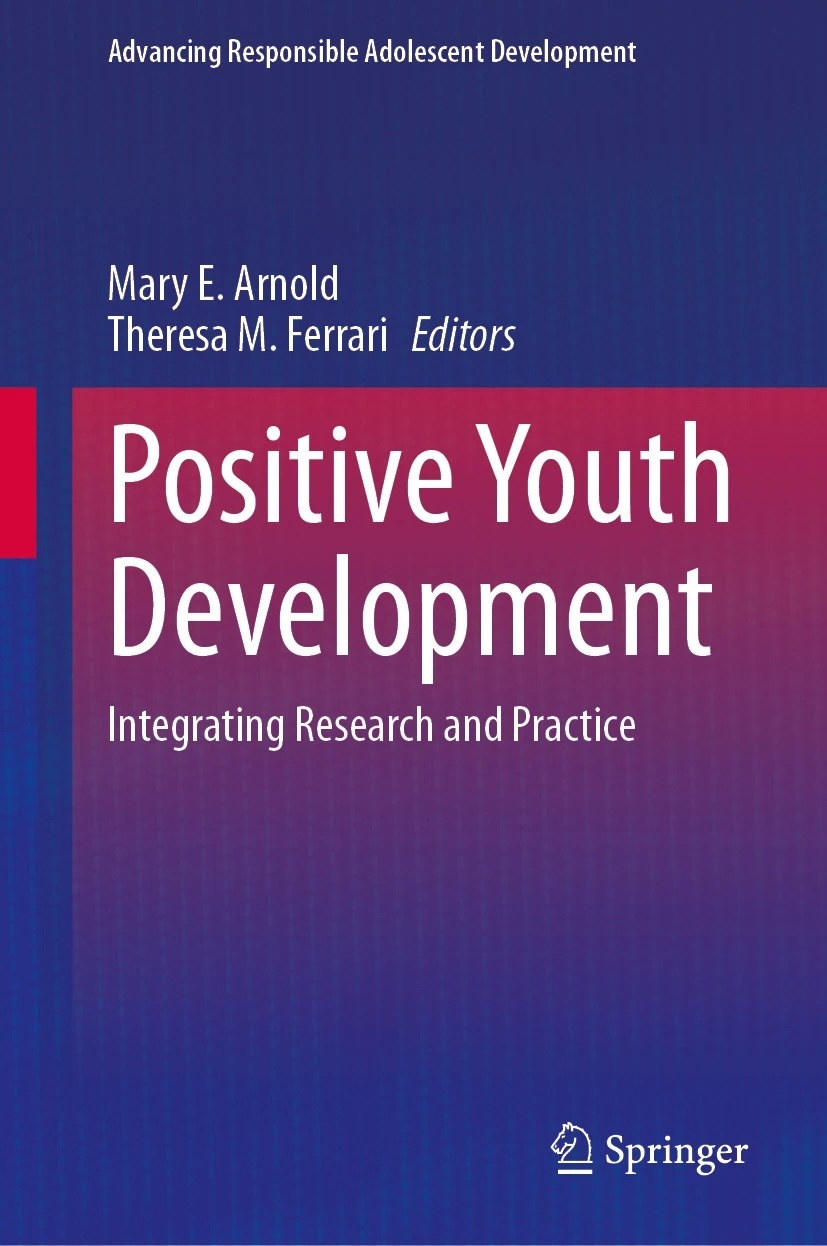
 This is the second piece in our series featuring the chapter authors of “Positive Youth Development: Integrating Research and Practice”. In this piece, I talk with Arielle Lentz who, along with Jessy Newman, co-authored Chapter 6 in the volume — “The Practitioner’s Challenge: Readiness for Change.”
This chapter outlines how practitioners can determine their program’s readiness to implement science-based youth development. Lentz and Newman’s chapter frames organizational readiness as four interconnected ‘gears’ — strong program operations, staff beliefs and skills, engaged stakeholders and intentional practices — that youth development programs must assess and strengthen before implementing science-based practices. Rather than launching directly into new programming, the authors recommend programs first ‘take stock’ by examining their culture and climate, assessing whether staff have the bandwidth and buy-in for change and ensuring youth and families are meaningfully involved in decision-making.
Throughout the chapter, practical readiness questions help practitioners reflect on where their programs are strong and where they need to build capacity. One key insight they offer is that programs don’t need to be 100% ready to begin but they must understand their readiness levels and adapt implementation accordingly.
I asked Lentz to tell us more about herself and why the topic of readiness matters to the field.

Q: Who are you and how did this topic become important to you?
Arielle Lentz: Right now, I am a researcher at the American Institutes for Research (AIR), where I mostly study youth development programs. Before AIR, I was an afterschool and summer program director in Pittsburgh, Pennsylvania, and before that I worked in a number of youth development programs in the Philadelphia area.
[Related: The new federal education tax credit: A time to make lemonade?]
The topic of readiness for science-based youth development programs is important to me because, when I was working in the field, I had several experiences with leadership introducing new initiatives and challenges with staff buying into and adopting the changes. When I later learned about readiness through a project at AIR, it was a lightbulb moment for me. Learning the science behind why those changes were not successful in our organization helped me understand the value of readiness when doing something new in a youth development program.

Courtesy of Arielle Lentz
Arielle Lentz
I know this chapter would have been helpful to me when I was working in the field because it would have given me information and language needed to communicate with my leadership about why we weren’t ready for the changes they wanted to introduce and how to get us ready for those changes, so I look forward to sharing it with others!
Q: Why is this topic relevant/important for youth development practitioners at this moment in history?
Readiness is an important topic for youth development practitioners right now because programs are constantly seeking new funding, and funding is often tied to requirements or expectations of the program to adopt new practices or change existing ones. Pausing to reflect on readiness for meeting those requirements or expectations can help practitioners understand whether they are positioned to engage in those practices and, if not, what specific areas need more capacity building to get ready in those areas.
Q: What practical recommendations or “takeaway” messages can you offer practitioners who are looking to implement the concept from your chapter in their communities?
My biggest takeaway from the chapter is that it’s ok to not be ready for something! It is unrealistic for an organization to be 100% ready for a change, but understanding each of the aspects that go into readiness — from the organizational capacities to the staff and the young people and families — can help practitioners understand which specific area to be most mindful of when targeting supports to prepare for something new, and this can help ensure more efficient use of time and resources.
***
This is the second piece in our series featuring the chapter authors of “Positive Youth Development: Integrating Research and Practice”.
The first piece can be read here: On Integrating Research and Practice: A new resource bridges the gap