

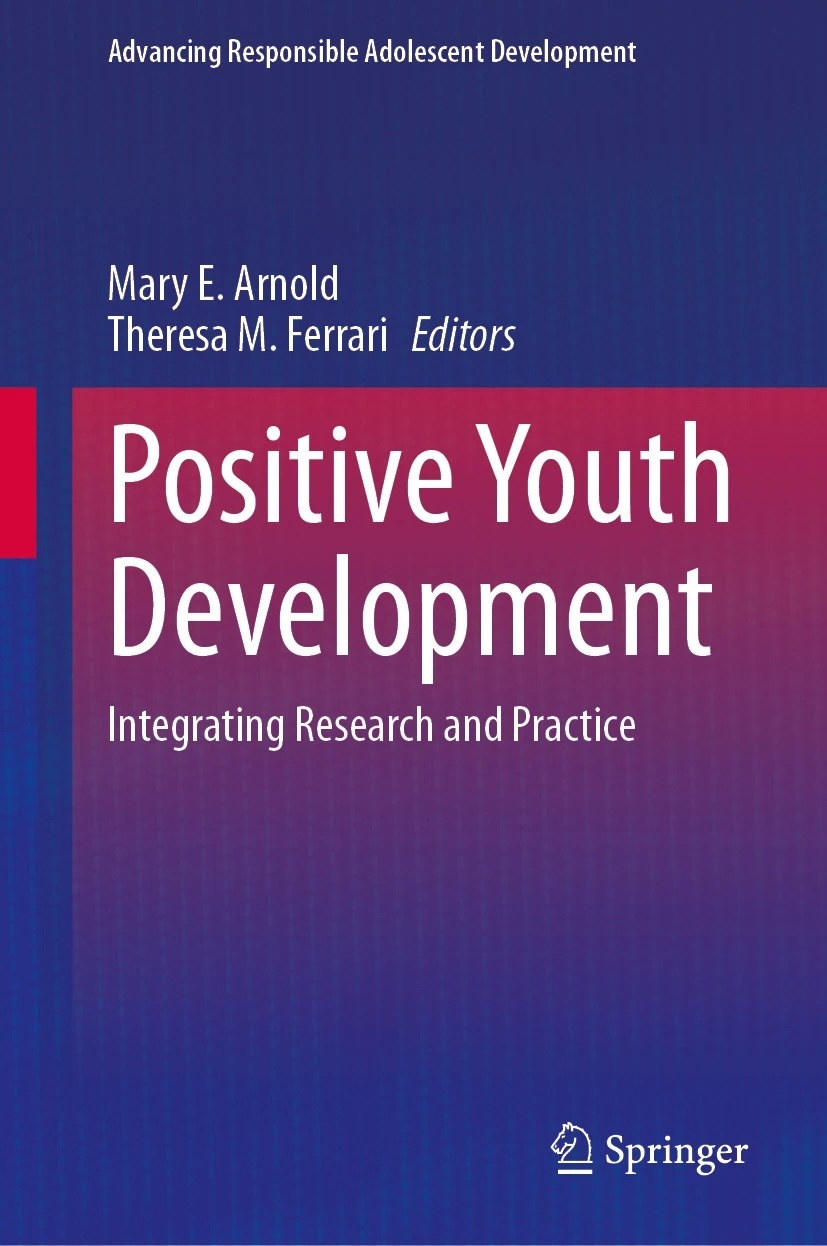
 In August of this year, months of collaboration between thought leaders, scholars, researchers and practitioners came to fruition with the release of “Positive Youth Development: Integrating Research and Practice”, edited by Mary Arnold, professor of human development and family sciences at Oregon State University, and Theresa Ferrari, extension specialist with Ohio 4-H Youth Development. The volume was born of a desire to elevate the science of youth development and ensure its translation into effective youth development programs — programs that have an enduring positive effect on the lives and well-being of young people, especially at a time in history when that outcome is imperiled by multiple facets of life in America following the COVID-19 pandemic and related social and political stress, all of which have taken a toll on our learning systems and youth well-being.
Good youth development practice that leads to positive impact in the lives of young people is based on multiple streams of research. Most youth development practitioners, however, have only a limited understanding of the research base supporting their practice, and even less of an appetite (or time) for reading technical research papers.
[Related: A capstone essay on 50 years of promoting positive youth development]
This volume aims to provide a bridge between practitioners and the scholars who have dedicated their careers to understanding how children and adolescents learn and develop and to identifying the critical factors and opportunities that youth need to thrive. The ultimate goal of this book, a first of its kind, is to bring the voices of leading youth development scholars directly to youth development practitioners, translating current research into easy-to-understand concepts, with direct and clear application in youth development work.
“Our dream for this book is that youth development practitioners will understand the science behind their work and become intentional about putting the science into practice,” Arnold said.
“We envisage this book to be a roadmap of sorts, and a text to which readers
return again and again as their practice evolves.”
Chapters in the book are organized around the 4-H Thriving Model — a positive youth development theory of change developed by Arnold. The model is derived from many strands of research that inform high-quality youth development practice that makes it applicable for all PYD programs. This means that the elements of the model likely reflect the theory of change of many other youth development programs, and thus the book is written for all youth development practitioners and students, as well as scholars and researchers for use as a succinct reference text.
The 388-page volume contains 22 chapters, organized in five sections:
Integrating Research and Practice
(1) Helping Youth Thrive: Elevating the Science of Positive Youth Development in Practice
(2) Putting the Science of Learning and Development to Work in Community-Based Youth Development Programs: Why this Volume Matters for Today’s Youth Development Professional
The Positive Youth Development Solution
(3) Fully Prepared Doesn’t Make You Problem-Free: The Science, the Evidence, and the Impact of the Youth Development Approach
(4) Promoting Positive Youth Development: The Meaning and Significance of Models
(5) Translating Models into Practice: How the 4-H Thriving Model is Optimizing Positive Youth Development Program Quality and Outcomes
(6) The Practitioner’s Challenge: Readiness for Change
Developmental Settings
(7) Program Quality: Why it Matters and How to Strengthen It
(8) Learning and Meaning-Making in Youth Development Settings
(9) It Begins with Belonging
(10) Fostering Youth Sparks and Social Capital for Greater Equity in Positive Youth Development Outcomes
(11) Developmental Relationships: The Roots of Effective Youth Development Practice
(12) Ensuring Equity, Access, and Opportunity for All Youth to Thrive
[Related: When positive youth development meets the Native Tongues]
Helping Youth Thrive
(13) Social and Emotional Learning: The Process and Product of Positive Youth Development
(14) How Teens Learn from Challenges and How Program Staff Support this Learning
(15) Creating Caring Compassionate Youth: How Youth Development Programs Foster Prosocial Development
(16) The Development of a Hopeful Purpose
(17) Only Connect: Supporting Transcendent Awareness in Youth Development Programs
(18) Emotion Regulation: Foundational Abilities for Optimal Youth Development
(19) Navigating to Success: Intentional Self-Regulation and Goal-Directed Skills
The Fruits of our Labor
(20) When Every Youth Thrives, We All Thrive: Bridging Science and Practice
(21) Equipping Young People to Build Long Lives They Love
(22) The Unsung Heroes: Celebrating the Youth Development Professional
The chapter authors include many familiar names of individuals who are dedicating their life’s work to advancing the optimal development of youth. This article launches a series of Q&A interviews with chapter authors in which we aim to understand:
- Who they are, how the topic of their chapter became important to them and how the concept has played out in their own experience.
- Why their topic of focus is relevant/important for youth development practitioners at this moment in history.
- Practical recommendations or “takeaway” messages for practitioners who are looking to implement these concepts in their communities.
***
Over the coming months the series will introduce many of the chapters and their authors and share the author’s unique perspectives.