
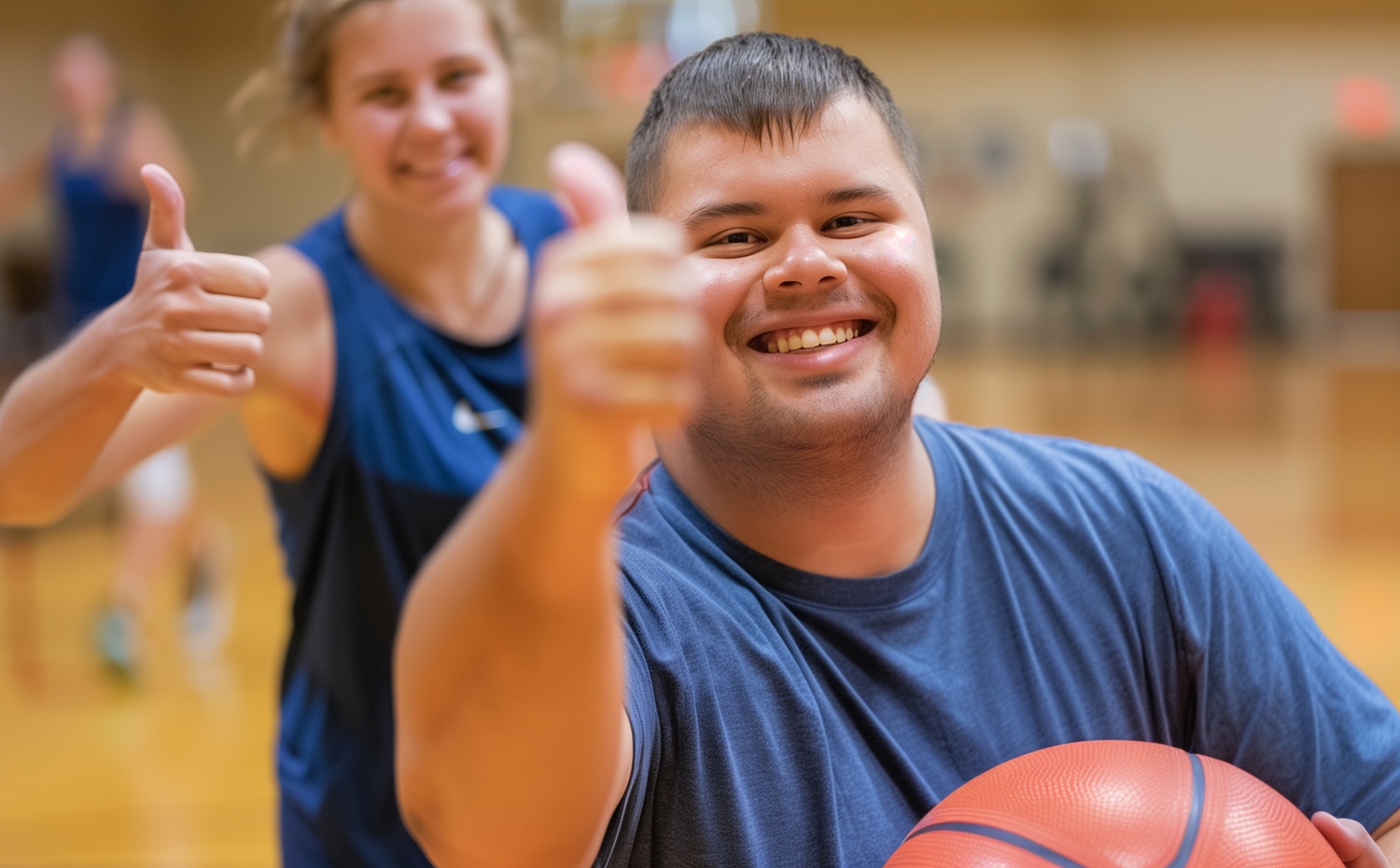
It’s fall, and across the nation, the school year is in full swing. For students, it’s a time to reconnect with friends, dive into classes and join intramural activities. For parents, it’s the return to carpool and afterschool programs. For those of you who work with youth, it’s also a time to think about how you can help them build confidence, connection and a sense of belonging.
For us at the University of North Carolina Wilmington (UNCW), it also means being back to Unified, where people with and without intellectual disabilities (ID) train and compete together on the same team. Unified isn’t just about sports; it’s about creating opportunities for connection, understanding and leadership. At UNCW and across the country, Unified programming brings students of all abilities together to celebrate inclusion, build genuine friendships and show what’s possible when everyone is invited to play and belong.
For example, through Unified basketball on campus, students who might never have met in a class come together as teammates, cheering each other on, learning from one another and proving that inclusion is a win for everyone. And research backs that up: a 2023-2024 evaluation by the UMass Boston Center for Social Development and Education found that students who participate in Unified Sports and attend multiple whole school engagement events report the highest sense of belonging at their schools. That belonging, in turn, is linked to more positive attitudes toward peers with ID.
[Related: Reimagining youth sport: Putting positive youth development first]
Unified has shaped our time as students at UNCW in ways we could never have imagined. We first met through a local inclusive program in town four years ago. Our friendship grew stronger at the Special Olympics North Carolina Summer Games. Today, we are proud members of Special Olympics U.S. Youth Ambassadors, a group of young leaders with and without ID who serve as spokespeople and advocates for the Special Olympics Unified Champion Schools program.
Through Unified basketball and cheerleading, we’ve had the chance to make and meet new friends and stay active while doing so. We serve as co-presidents of our school’s Unified club. As a team, we lead practices and guide our friends through different drills. Being a leader in a safe and inclusive space has allowed us to become more confident leading in the classroom.
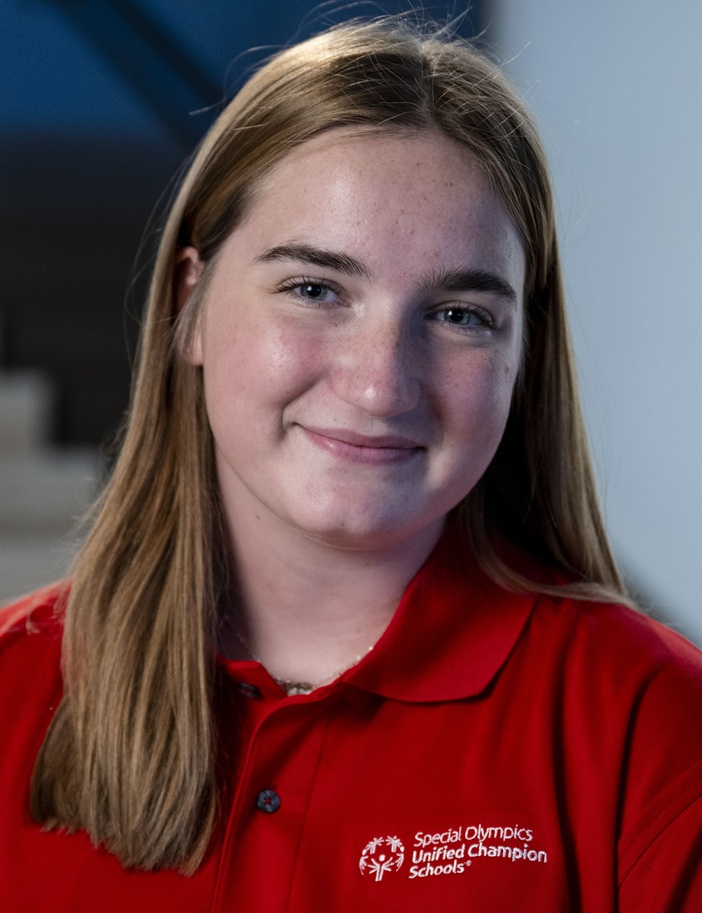
Courtesy of Skylar Spencer
Skylar Spencer
Unified has also shaped our future. For Skylar, playing Unified basketball in high school and now volunteering and leading at UNCW confirmed that she wants to be a recreational therapist working with people with ID. “I just fully found my passion.”
Kathryn hopes to give back by becoming a teacher, creating classrooms where all students feel welcome. “I want them to know they can make friends.”
[Related: From athlete to coach — A new ascent]
As Special Olympics U.S. Youth Ambassadors, we’ve led Unified activities on campus and in our community, and the experience has shown us the power of inclusion beyond the classroom. Unified has taught us teamwork and leadership, which are skills that extend into every space where young people gather, whether it’s an afterschool program, a recreational league or a community center.
The Unified Champion Schools model provides a framework that can easily be adapted by community-based organizations and out-of-school programs. Here are five practical ways to get started:
- Build a team of champions. Start by identifying a small group of young people and adult mentors who are excited about inclusion. Whether they’re from a recreation program, foster care organization or afterschool club, a strong core group is the foundation for success.
- Partner with local schools or Special Olympics programs. Reach out to a nearby Unified Champion School or your state Special Olympics office to explore collaboration opportunities. This could mean co-hosting an inclusive sports day, supporting Unified students as volunteers or offering space for events. This video is a case study showcasing the partnership between Special Olympics and Boys & Girls Clubs of America.
- Use ready-made resources. Special Olympics offers free “plug-and-play” materials, including the Be an Inclusive Leader Learning Journey for young adults. These materials make it easy to start without having to create everything from scratch.
- Empower youth leadership. Inclusion grows when young people take the lead. Give them real roles in planning, coaching or mentoring. For example, we co-lead weekly Unified basketball practices, which helped us develop communication, organization and leadership skills we now use in college and in life. In this video, students like us explain how programming turned “before” into “after,” and why every school should consider giving its students the same opportunity for growth.
- Focus on belonging and fun. Unified isn’t just about sports. It’s about relationships. Encourage your group to celebrate wins together, share meals and make space for authentic friendships. Inclusion works best when it feels joyful. Unified friendship is always in season, and Special Olympics Montana’s Lucas and Brinkley are proof. Watch their story.
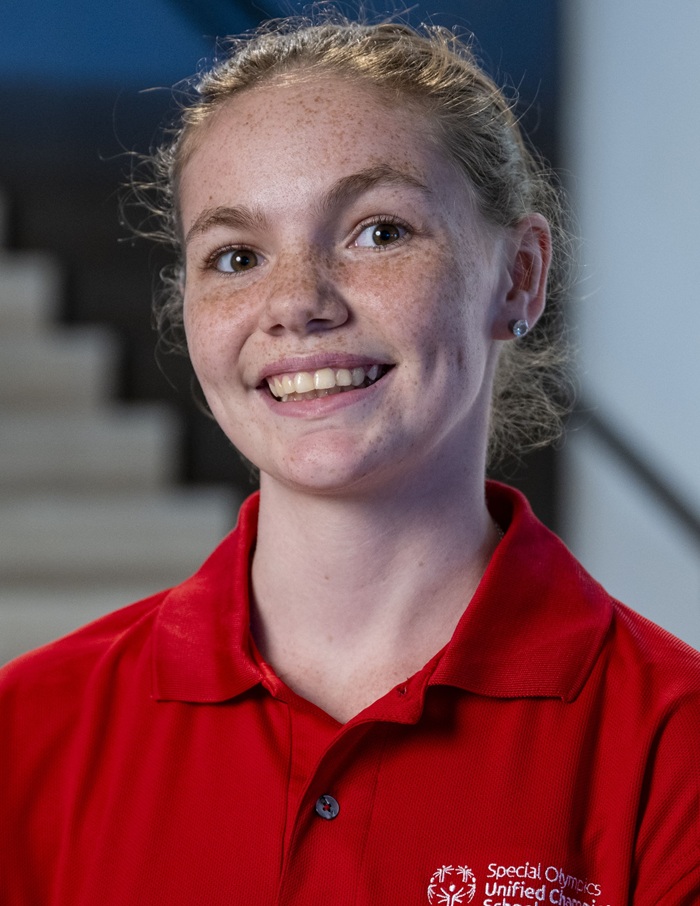
Courtesy of Kathryn Jackson
Kathryn Jackson
Initiatives like the Unified Champion Schools program demonstrate that inclusion is possible anywhere young people gather. In fact, compared to their peers, students who feel a greater sense of belonging report that their schools are more inclusive for students with ID, according to the same 2023-24 evaluation by UMass Boston. Now in its 18th year and with more than 10,000 schools nationwide, the program showcases what’s possible when youth and adults commit to inclusion through three interconnected components: Unified Sports, inclusive youth leadership and whole school engagement.
If you’re a youth professional, coach or mentor, consider how you can bring Unified opportunities into your organization. Create spaces where every young person can lead, belong and thrive. To learn how to launch or support Unified activities in your community and organization, visit GenerationUnified.org.
***
Unified Champion Schools is a registered trademark of Special Olympics, Inc.
Skylar is a junior at the University of North Carolina Wilmington, studying recreation therapy with a minor in service dog training. Involved in Special Olympics and Unified programming since high school, Skylar previously served on North Carolina’s Eastern Youth Activation Council and as president of Best Buddies at UNCW.
Kathryn graduated from New Hanover High School in Wilmington in 2023. She is part of UNCW’s Watson College Transition Program for Young Adults, a partnership with New Hanover County Schools. She continues her involvement in Special Olympics as a youth leader.
Both Skylar and Kathryn are members of the Special Olympics U.S. Youth Ambassador class of 2026, a group of selected youth leaders with and without intellectual disabilities who act as ambassadors and spokespeople for the Unified Champion Schools movement. Together, Skylar and Kathryn represented Special Olympics North Carolina at Capitol Hill Day and USA Games and led the Youth Leadership Experience through their Youth Activation Council.