
How We See Us
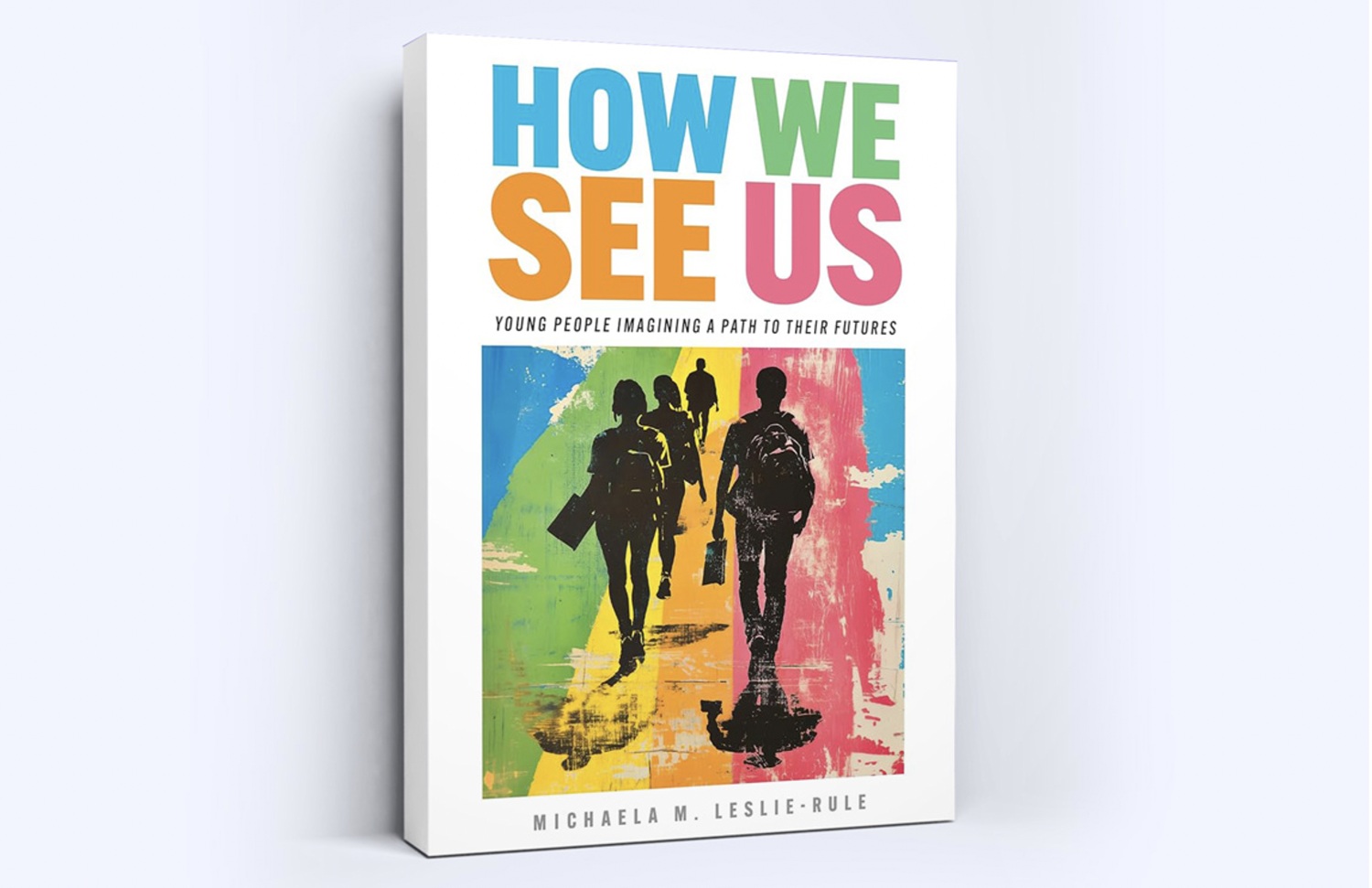
The cover of “How We See Us”.
 Michaela Leslie-Rule is a senior program officer at the Gates Foundation and author of the recently published “How We See Us: Young People Imagining a Path to Their Futures.” Leslie-Rule brought her deep interest and background in research and narrative change to this book. “How We See Us” amplifies the voices of young people approaching adulthood as they consider their experiences, needs and goals for their education, early careers and lives.
I had the opportunity to talk with Leslie-Rule about her learnings from writing “How We See Us” and the advice she’d offer youth development professionals.
This interview has been edited for length and clarity.

Q: What motivated you to write a book that really lifted up young people’s stories as part of narrative change?
Michaela Leslie-Rule: I’ve been doing research for a long time and often young people’s voices are brought in too late. There’s a lot of excitement about centering young people in our collective work in education and youth development. Everyone is buzzing about co-design, for example, but in truth it rarely happens. We often invite young people to the table after the problem and scope has been defined, after partners or funders have been identified and roles assigned, after the goals have already been articulated. Young people are not driving the agenda; they are consulting on an agenda that has already been defined by adults. It’s like we are saying, “Please add your words and identity here and here — in these predetermined places, but don’t add your voices.” We don’t want to engage with their power.
In research, young people’s voices are often presented anecdotally. Many of us — the adults in the professional youth development, research, philanthropy, education space — are tasked with writing reports about young people at one point or another. We’ve been trained to include one or two quotes or other proof points that provide evidence of an insight or observation. The quotes are usually short, the analysis is typically long — the difference between the space allotted to the adult voice and the youth voice is often stark.
[Related: Why are we so afraid to let young people lead?]
So, for me, the book was very much a series of experiments pushing back against these norms and challenging the field and myself to consider what it might look like to present young people’s voices more holistically. I made the choice to include longer excerpts from our focus group transcripts that require the reader to really engage with how young people speak — not just what they say, but how they say it. I also experimented with finding a balance between my own voice and the voices of the young people who I spoke with. I wanted to invite readers to observe — in some way — the dynamics that occurred in the focus groups, where young people really spoke to one another and the adult observed and offered questions as jumping off points for conversation between and amongst the group.

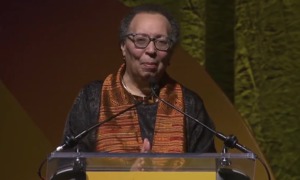
Courtesy of Michaela Leslie-Rule
Michaela Leslie-Rule
Q: How do you feel that amplifying and privileging youth voice in the work that you do helps move narrative change?
Michaela Leslie-Rule: I mean, I think time will tell, right? I think this book is one particular vehicle for sharing new narratives and stories about and from Black and Hispanic young people. A book reaches some audiences and leaves out others. When I think about the potential for educators, youth development experts, parents and policy makers — people that are thinking about education — my hope would be that the book encourages them to reflect on the ways in which they contribute to or amplify problematic or crisis narratives about young people who are Black, Hispanic and from lower income communities. I hope the book provides tools that adults can lean on to interrogate their own commitment to centering young people’s voices, knowledge and power — and to learn from the places where they fall short. Narratives are patterns of beliefs embedded in our stories. So you change narratives by infusing our work with new stories. This book is a nudge for folks to consider how they do that, especially when the stories they may be telling about young people don’t reflect the stories young people tell about themselves.
Q: What are your takeaways and lessons learned from the research project?
Michaela Leslie-Rule: I think at a high level, the biggest takeaway is around the notion of surviving, striving and thriving. This is the meta framework of the research, and in fact is the name of the report. Surviving, striving and thriving describes the different emotional states that young people expect to go through as they move towards their education and personal goals. A lot of the young people myself and my team spoke with felt they were “surviving” from a work perspective. They were working low level jobs and really feeling they didn’t matter as individuals to their employer. They felt kind of replaceable and felt they didn’t have a lot of control. They don’t have control over their time, over their labor. They often feel like they’re kind of living paycheck to paycheck.
Then at the opposite end of the continuum is the feeling of thriving. The young people we spoke with often had a very clear sense of what it will feel like to “thrive” but were sometimes unsure of the specific occupation that might get them to this emotional state. But they knew what it would feel like. They wanted to have control. They wanted to be able to travel. They wanted to be able to have ownership over their time, over their resources. So I think that one of the of biggest learnings from the research is pushing against this notion that we need to ask young people, “What do you want to be?” and actually it may be more powerful and important to ask them “How do you want to live? What do you want to experience? How do you want to feel?” And this could actually be a helpful entry point for conversation about life goals, education and career.
Q: What would your messages or advice to youth development professionals be?
Michaela Leslie-Rule: How do we make sure that we’re engaging with young people’s emotions about their lives and that we don’t reduce it to a series of steps that you take to some end goal that is fixed and immovable? I think we talk about career and reaching our life goals as being linear, and that’s how we talk to kids about it. But the reality is that for any adult that’s in the middle of your career, you know that it is not linear and you know that you do a lot of their feedback loops. You iterate and if you are lucky and all goes well, you have multiple opportunities in your life to reflect on what you’ve learned and to make new choices.
Reflection, adaptability, curiosity. That is a skill set. I think that one of the most important things we can do for young people is to tell more honest stories about what it takes to get from here to there. Our stories need to be more complex. We need to describe, in great detail, the feedback loops, the risks, the failure and fear, elation and boredom … without tying it all up in a neat bow at the end. They need to know and feel that the journey is ongoing, and it is full of both certainty and uncertainty.
There is a framework about this in the book that is concerned with how young people say they want to explore, experiment and select career pathways. What young people said is they want to be able to try things out without their choices being catastrophized. They want to know that their whole life is not going to hinge on a single decision they make when they are 17 or 18 or 20. I think the best thing that we can do is to ensure that the trying out of life is available to all young people regardless of race or income level or educational background. We need to build systems that encourage young people to develop and revise goals, to figure life out in safe spaces, to be curious about themselves and the world around them. And we need to trust young people to be capable of making good decisions. Making decisions is one of the few constants in life.