

Eckerd Connects is a national nonprofit supporting youth, families and job seekers in greatest need, including opportunity youth. Founded in 1958, it has grown from a small nonprofit in rural Florida to become a presence in 20 states.
 Michael D. Smith became the new President and CEO of Eckerd Connects on June 16. A trail-blazing social impact leader committed to creating meaningful community change to improve the lives of youth and families, Smith is known by many for his work on Social Impact Funds at the Case Foundation, with My Brother’s Keeper with the Obama Foundation, and as the CEO of AmeriCorps in the Biden Administration.
I had the chance to talk with Smith to learn how Eckerd Connects is partnering with public agencies and community organizations across the country to build more visible pathways to success for opportunity youth.
THE CONVERSATION
Q: You have become the go-to guy for launching ambitious national initiatives. Are we correct that this is the first time you’re actually running a direct service nonprofit?
Michael Smith: I tested my chops when I was a kid working at the Boys and Girls Club that I grew up in. Those were my first jobs as counselor, camp director, communications director. But that was the last time I had anything to do on a day-to-day basis leading a direct service youth-serving nonprofit. My entire career has been about serving those sorts of organizations. But, yeah, this is my first entree. This is a new world.

Courtesy of Michael Smith
Michael Smith
Q: Was this an intentional next step challenge for you?
No. I worked at AmeriCorps until 12 p.m. on Inauguration Day. I was hearing from recruiters about some things, but nothing that really got me excited. So I decided to start my own consulting firm to take on things that were interesting to me and give me space to rest a little bit. I’ve never taken a real vacation between jobs. Things were going well when I got a call from a search firm asking me if I was familiar with Eckerd Connects. I had never heard of Eckerd Connects. But I started reading. I started having conversations. And I fell in love with them. I fell in love with the mission. I fell in love with the work that they do across the country. And before I knew it, there was this pivot taking place I had not planned on at all.
Q: Tell us about the organization and the mission.
Eckerd Connects has been around for almost 60 years. It was founded by Jack and Ruth Eckerd. Jack Eckerd was the founder and CEO of Eckerd Pharmacies. He was very politically involved during the Nixon and Ford administrations and somewhat during Reagan’s as well. His mission was simple: How do you create pathways to opportunity for kids that are otherwise overlooked by society? In 1968, that was largely done through therapeutic wilderness camp programs operating across Florida and the U.S. We wanted to give young people who have dealt with serious challenges a transformative experience. They’re going to build skills through doing new things like building tents, paddling down the river. They’re going to get in touch with their emotions. We piloted what it means to do trauma-informed care. Slowly but surely, other states and cities start coming to Eckerd saying, “Hey, we’ve got this residential program for adjudicated youth. Hey, we’ve got this Foster Care Program.” And before you know it, Eckerd Connects is now operating in 20 states, serving approximately 25,000 children and families a year. In addition, more than 200,000 job seekers come to our one-stop operations looking for help.
[Related: What is the next step?]
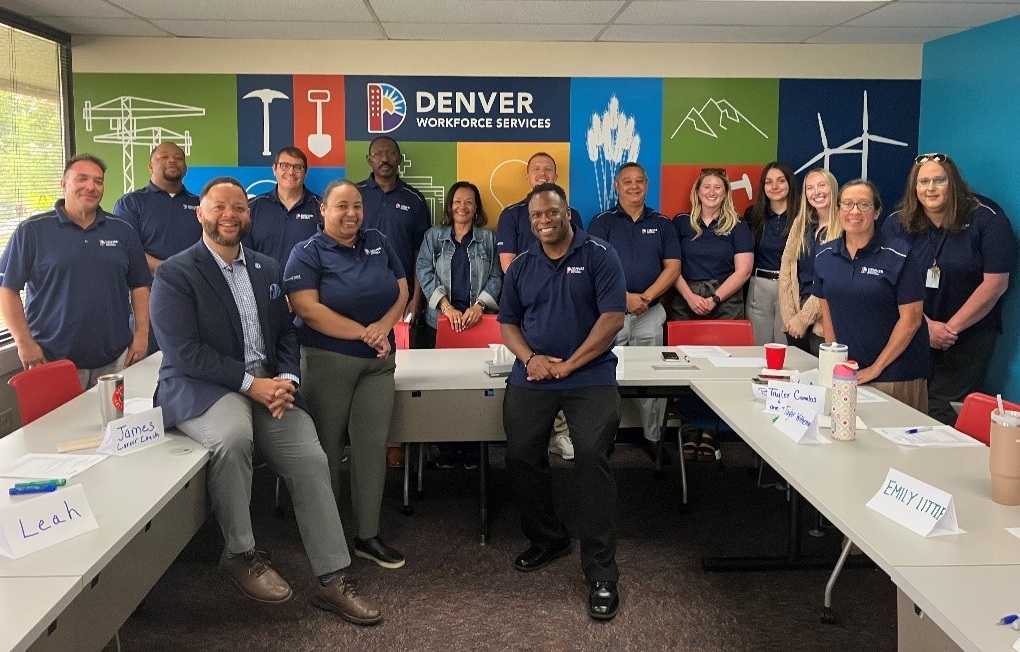
We work in three major areas: Children and Family Services, which is the natural evolution of our work and the primary work we were doing 20 years ago. We added Juvenile Justice Services. So, for instance, we operate several residential academies in North Carolina for justice-involved youth who come for six to eight months after they’ve come out of the juvenile justice system. And they go to school there. They get social emotional learning. They get therapy. They get job training. Some of them get their GED there. And then we help them move into society ready to start their next chapter. We also are the only nonprofit operator for Job Corps programs. We operate and/or partner to operate 11 Job Corps programs across the country, serving thousands of young people. And, then our third area is we are a provider of Workforce Innovation and Opportunity Act (WIOA) Title 1 programs, including youth, adult, and dislocated worker workforce development programs. For example, we run the entire workforce development program for the City of Denver.
Q: This is an incredible footprint for an organization neither of us had heard of. Eckerd Connects is like Intel Inside was in the 90’s.
Funny you should use that reference. AnnMaura Connolly who runs Voices for National Service uses it all the time to describe AmeriCorps. Here’s why we didn’t know about it. In many places, like in Denver, it is the Denver Workforce Development Center. It’s only in the past year, that they added “powered by Eckerd Connects” to the logo. Branding and marketing were not something Eckerd cared about. We stayed in the background. We’d say we’re muscles. You don’t necessarily need to know the name.
One of the ways we expand our impact is through partnerships, like our national partnership with CVS Health. Together, our Workforce Development and Job Corps programs connect young adults to pharmacy technician externships through CVS’s local workforce liaisons. Young people get hands-on experience, training, and a direct pathway to employment with CVS. One place this is happening is in Columbus, Ohio, where CVS Health recently opened a Workforce Innovation and Talent Center in partnership with Eckerd, the local community college, YouthBuild and others. It’s a national partnership rooted in local relationships, with real outcomes for both participants and employers. Editor’s note: You can read one young person’s story here.
Q: You mentioned AmeriCorps. So, let’s get blunt. How is the current funding uncertainty affecting Eckerd Connects’ ability to work with states and localities? And how, more generally, do you feel about the threats to AmeriCorps?
Look, it’s a tough moment. There was a day in May where we got a notice that all Job Corps centers had to close within 30 days and all kids had to be off campus within seven days. There are 1,000 people working in those 11 centers. As in many other cases, there is now an injunction. But it was a devastating blow. I would say two things. First, we saw massive bipartisan rallying, saying Job Corps is instrumental. Members of Congress on both sides publicly raised their hands, wrote letters and said to the White House, “Please, please, let’s save this program.” And you started to hear stories from young people and parents across the country talking about how transformative this program was. And so, it was wonderful to see that happen. The other thing that we saw took place at organizations like Eckerd. Even before I started, I was having conversations with my predecessor about how Job Corps is not perfect. Does Job Corps need some efficiency? Absolutely. Some retooling and rethinking? Absolutely. Do the young people going there as a last resort still need Job Corps? Absolutely. So how can we be a partner with the administration to think about what’s working, what’s not working and take Job Corps into a new chapter to meet the unique needs our young people are facing today. I think that’s why you saw the Senate most recently pass a bill saying Job Corps should be funded next year for almost $1.7 billion to continue this work, but with a real lens towards how to make it the best it can be.

Eckerd Connects
Michael Smith takes a selfie with students at a job site.
Q: Unfortunately, the Job Corps story was replicated across other federal programs that support young people in their communities, programs often supported with AmeriCorps volunteers. What can we do to help communities better understand how funding comes into their communities so they can better withstand sudden changes?
The first thing that I would say is that democracy can’t be a spectator sport. People seem to only show up at times of crisis. We need to tell our stories all the time. Members of Congress need to hear from the parents of Job Corps students. Hear from AmeriCorps members themselves. After 30 years, you start to take programs like AmeriCorps for granted. So, daily, we should be thinking about sending thank you letters to our members of Congress for the funding that’s happening. And nonprofits should be going in saying, “I want to tell you why this is working.” You need to make sure that you can talk about evidence-based approaches, not just anecdotes, that you’re holding your programs to a level of accountability, showing meaningful, tangible impact. It’s also really smart to think about ballot initiatives and about rethinking public-private partnerships. It isn’t possible for philanthropy to replace federal spending. So, we’re going to have to keep advocating and working with our various legislatures to make sure they recognize why this isn’t just charity. Why, for instance, $1 taken away from a Job Corps or AmeriCorps is going to show up in greater federal spending down the road. We know we have the ability to spend less to save in the long run, if we think about it from a preventative standpoint.
[Related: Q&A — How service learning, done well, changes lives]
Q: One last question, in the announcement there was mention of a new strategic direction for Eckerd. Can you say more?
We’re in a world nowadays where there’s so much noise, so many people out there who are trying to get attention. Organizations like Eckerd need to be speaking up, sharing their expertise, lifting up those voices. We’ve been serving young people and their families for nearly 60 years, so maybe we’ve learned a thing or two from the successes we’ve had. We’re putting that expertise to work in two ways with our strategic plan: First, we asked, “Can we focus everything we do around opportunity youth? Can we serve the kids most likely to be out of school or out of work? Can we make them the center of the bullseye?” Second, we asked, “How can we take all those skills, those experiences, and drive it towards thinking about systemic change, about policy change, about population level change?” Answering those questions — How can we both serve young people and their families and also solve society’s most pressing problems? — is one of the reasons that I got really excited about this job.
***
In her columns, Karen Pittman is exploring the research behind the statement, “When Youth Thrive, We All Thrive.”