
“What should we do?”
I was asked this question twice recently — once by my son’s elementary school principal when he was having intense bouts of emotional dysregulation, and once by his pediatrician when I was desperately seeking help with his ADHD medications. Both times, my heart sank when I realized I had no answers. Despite being a teacher and education researcher for more than two decades, I felt completely lost and could only shake my head helplessly and admit, “I don’t know.”

Courtesy of Khara Schonfeld-Karan
Khara Schonfeld-Karan
This reveals the painful reality that, like me, many parents of children with learning differences have to navigate complex challenges on their own. For years, I’ve carried the weight of figuring things out — from preschool teachers saying “This is not in my wheelhouse” to feeling lost when professionals asked me for solutions. While my son is in a caring school where he can usually manage, I can’t help but wonder: Can children with learning differences do more than just get by?
Determined to find answers beyond my own experience, I turned to research. In a recent study conducted by Education Reimagined, we explored three learner-centered environments that are designed around each learner’s individual needs and interests — environments where 50 percent or more of students have diagnosed learning differences.
This research offered me compelling evidence about the effectiveness of learner-centered approaches for children like my son. For example, after one of the schools opened, graduation rates for students with IEPs in that school district jumped from 50-70 percent to 95-100 percent. At another school, students with IEPs consistently outperform the state averages for students with IEPs on both math and reading assessments. These outcomes demonstrate that, with the right educational approaches, students with learning differences can certainly do more than just get by.
What happens in learner-centered environments
Learner-centered education focuses on each young person’s holistic development through unique learning journeys that emphasize agency, relationships, individualized experiences, community connections and real-world skill development. Instead of existing as isolated programs or practices, the environments we studied integrate these approaches into comprehensive, school-wide systems.
Here’s what we observed:
Educators see challenges as information. At Norris School District, when a student struggles, staff ask, “What is this behavior telling us?” instead of, “How do we stop this?” A parent explained that when their child first enrolled, educators said, “We’re just going to talk and try and find out where your passions are. What do you want to do?”
Schools make accommodations invisible. At the Avalon School, inclusive design means accommodations are so embedded that students with IEPs often don’t know who else has them. Examples include universal quiet spaces, turning movement needs into learning opportunities and students co-designing the technology tools they use. As one parent observed, their son “is not really singled out” and “feels like he’s right with everybody else.”
Students develop genuine expertise. At LaFayette Big Picture School, students pursue passion projects that help them develop authentic career experience. One student’s love of cooking led to running the school café and the chance to develop strong customer service and business skills. A parent reflected, “I love that about this program. You find your niche.”
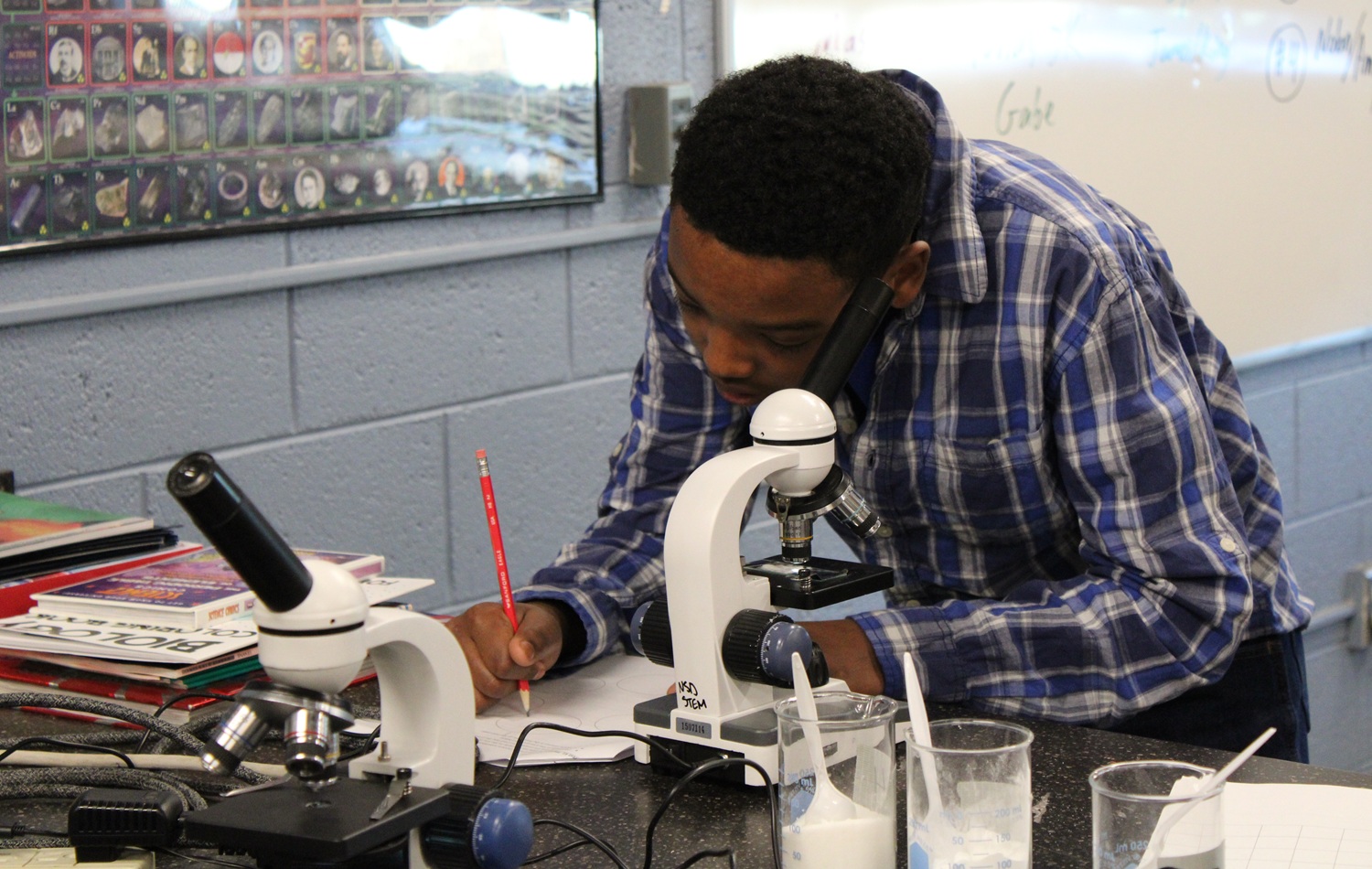
Norris School District
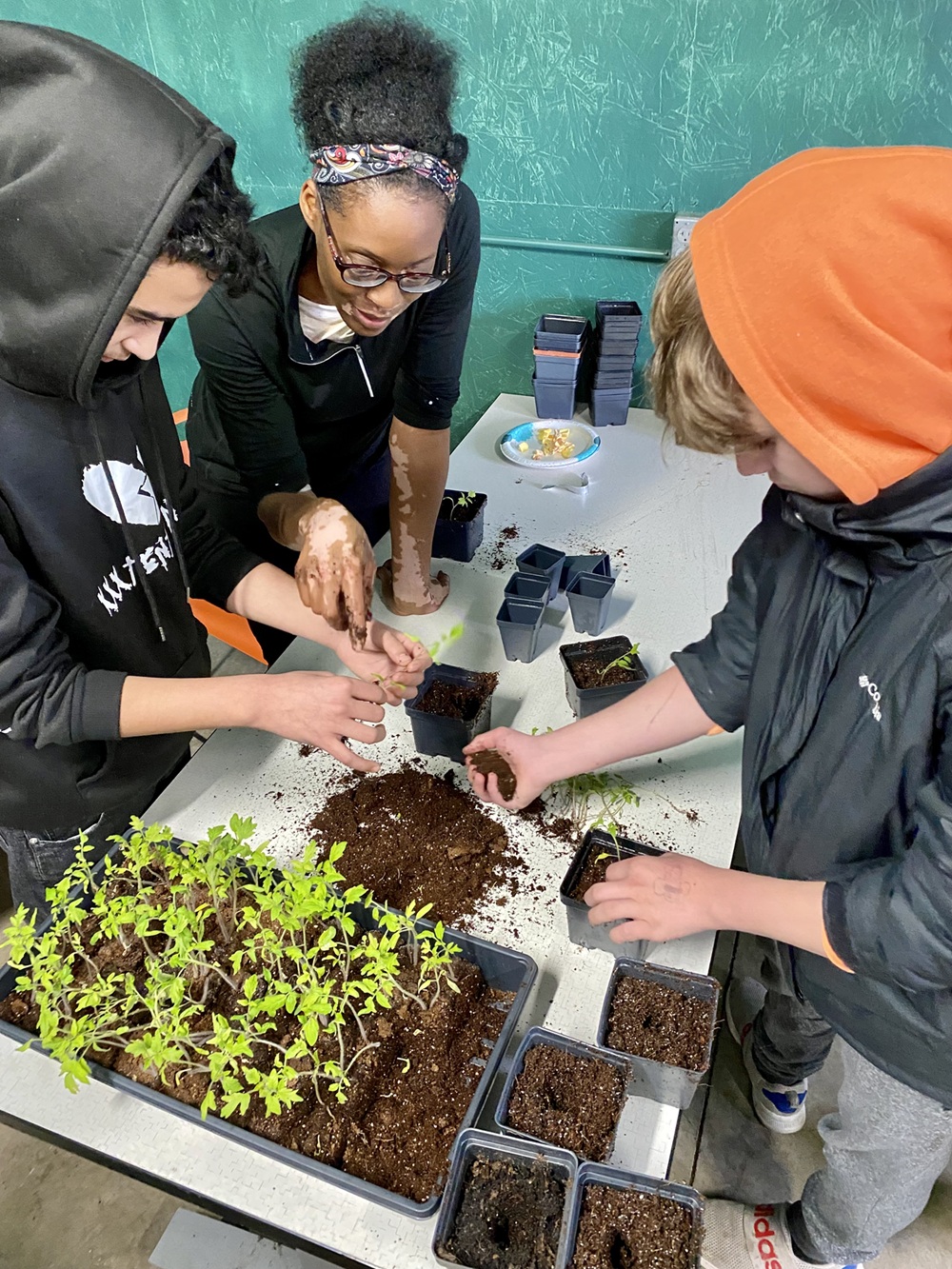
A group of Norris School District students work with soils and plants for a class project.
Students build self-advocacy from day one. One parent explained how students are asked, “How do you think you’ve done? What can you do better next time?” and how educators “let them guide the conversation first.” This helps students learn to identify and articulate their needs, with many viewing their learning differences as variations or even “superpowers,” as one student shared, rather than deficits.
Support extends beyond the school walls and school calendar. The relationships and skills students develop in these environments can lead to year-round opportunities. For example, a woman shared how her godson’s internship calls him during spring break, winter break, and the summer asking, “Can you come work for us?” In amazement, she wonders, “Where does a kid get that?!” Meanwhile, another school develops partnerships to serve students during summer months, providing families with much needed support when school is out.
Schools offer parents profound relief by demonstrating they “have it covered.” Parents can finally relax, knowing they don’t need to be constantly vigilant or fight for their child’s needs. One parent shared: “I don’t have to battle, and I don’t have to struggle.” Another said, “There’s days when I walk out of here going, ‘God, I’m cheating,’ or ‘This is too easy.'”
These findings reveal something profound: when we design educational environments around learners’ needs, rather than trying to get learners to fit in existing systems, everyone benefits.
Through this research, I finally found the answers I couldn’t provide when asked “What should we do?” I can see that the educators and medical professionals asking me that question were facing the same challenge I was—we all need access to models designed to offer more comprehensive support for youth with learning differences and those who serve them.
What this means for youth-serving professionals across the learning ecosystem
Our study shows that, in learner-centered environments, young people’s needs aren’t just accommodated. Rather, they’re supported holistically by people and integrated systems designed to address all of their needs. For those working with families navigating learning differences, this raises an important question: How can you help parents move beyond feeling lost and uncertain to knowing about learner-centered approaches and advocating for them?
[Related: Young people are telling us what they want: Are you listening?]
Here are some strategies to consider as you partner with parents and young people to be advocates for their learning journeys:
- Show families what’s possible through concrete examples. Evidence of youth with learning differences thriving can help parents and students shift educational expectations and drive advocacy. The article When Accommodations Are the Norm, Not the Exception offers compelling stories you can share with families.
- Introduce learner-centered practices within existing systems. Inclusive design pilots, strength-based IEP assessments and student-led conferences can be presented as alternatives within conventional systems. The report Learner-Centered in Focus illustrates such approaches in greater depth.
- Use research to advocate for systemic change. Research showing how designing for learning differences benefits all students can strengthen parents’, educators’ and youth-serving professionals’ advocacy efforts with administrators and policymakers. The Benefits of UDL is an example of a research-backed resource that can support advocacy efforts.
As educators and youth-serving professionals, we have the opportunity to ensure that families don’t have to accept uncertainty and overwhelm as the norm. Young people deserve more than to survive through their education — they deserve to flourish, and we can help young people and their parents settle for nothing less.
***
To learn more about learner-centered education, and keep updated on our forthcoming research series on learning differences, please visit Education Reimagined and subscribe to our mailing list.
This blog is part of a project supported by Oak Foundation. The project explored learning differences in learner-centered environments, highlighting inclusive practices, learner outcomes and conditions that support all young people to thrive.
Khara is director of field research for Education Reimagined. She has taught K–12 students for over a decade in the U.S. and internationally, taught teacher education courses and led programs at the university level, and researched alternative learning approaches, including unschooling. She holds a Ph.D. in Teacher Education & Professional Development and a M.Ed. in Art Education.