
As Mental Health Awareness Month comes to a close, I had the opportunity to talk with Catherine Hubbard, from Camp Fire National Headquarters, about the connection between the outdoors and mental well-being. Hubbard is the manager of outdoor connections, and in this role she focuses on program support with an emphasis on well-being. She supports the design of outdoor experiences that help support overall physical, mental, emotional and social well-being.
This interview has been edited for length and clarity.
The Conversation
Katherine Plog Martinez: Why do you think time spent outdoors is so effective in supporting young people’s well-being?

Courtesy C.Hubbard
Catherine Hubbard, Camp Fire National Headquarters
Catherine Hubbard: There’s a lot of research to show that being in nature brings our cortisol levels down and brings our dopamine levels up. So automatically, we tend to feel a little calmer and a little happier when we’re outside. Nature can affect our cardiovascular systems as well, so that we actually adjust our breathing, so that our breathing is a little more relaxed, when we’re spending time in nature. So, for people who are feeling agitated and overstimulated, time in nature has the potential to put us into a calmer, more regulated state.
There have been studies that show that the muffled sounds you get in nature, as well as the more muted color palette, can be really soothing on the brain. So often in schools there’s this fluorescent lighting that kind of flickers and hums. You have a lot of bright, primary colors or else very little natural light. Nature can help soothe the sensory overstimulation or unease we often feel in classrooms or other indoor, institutional spaces.
There’s also evidence that being near water, especially moving water, changes something about how our brains connect. A lot of people feel more content, more peaceful and more focused near water. Taking off our shoes and walking around on soft dirt and grass can also help. Being barefoot on certain surfaces can help us feel more connected to the ground, to the soil, to the earth. It’s that feeling people mean when they talk about grounding … feeling attached to the earth can be really comforting.
How does Camp Fire integrate the connection between nature and mental wellbeing into a program? What would we see if we were at a Camp Fire program?
One of the things that we have been developing very recently is a series of “Get Outside” activities. And we’ve created one activity booklet that is all about well-being. It features activities like listening to music or playing instruments outside, watercolor painting, poetry or nature journaling, or doing yoga and different types of movement. My goal was to bring in gentle practices that focus on emotional comfort.
We’re also going back through older curriculum and courses, and we’re adding in small ways we can use nature to support well-being. We’re making use of things like water and birdsong and adding those to our emotional regulation practices.
We know that access to natural spaces looks really different from community to community. How at Camp Fire are you thinking about addressing those disparities to ensure that all young people can have access to some sort of nature-based programming?
A lot of our focus right now is to find ways to get historically marginalized young people who have not had access to nature into nature spaces. This is done largely through camper scholarships and through grants that get young people onto buses, traveling to where the nature is.
But I think we all agree, within the next 25 years or so, we’d really like to see more nature in the places where people actually live. So that we’re no longer putting young people onto buses to access nature, but that there’s a real push to bring nature into communities where they live and go to school. There are opportunities to develop green outdoor playgrounds and school yards, to create green learning spaces — in communities where currently there just is a lack of green space — which could serve multiple age groups. That kind of work is going to require coordinated partnerships, as I’m not sure any of us are positioned to do that work alone.
Are there any stories or specific feedback that you can share that really underscore what you’re starting to see in terms of the impact of your intentional efforts around outdoor programming and wellbeing?
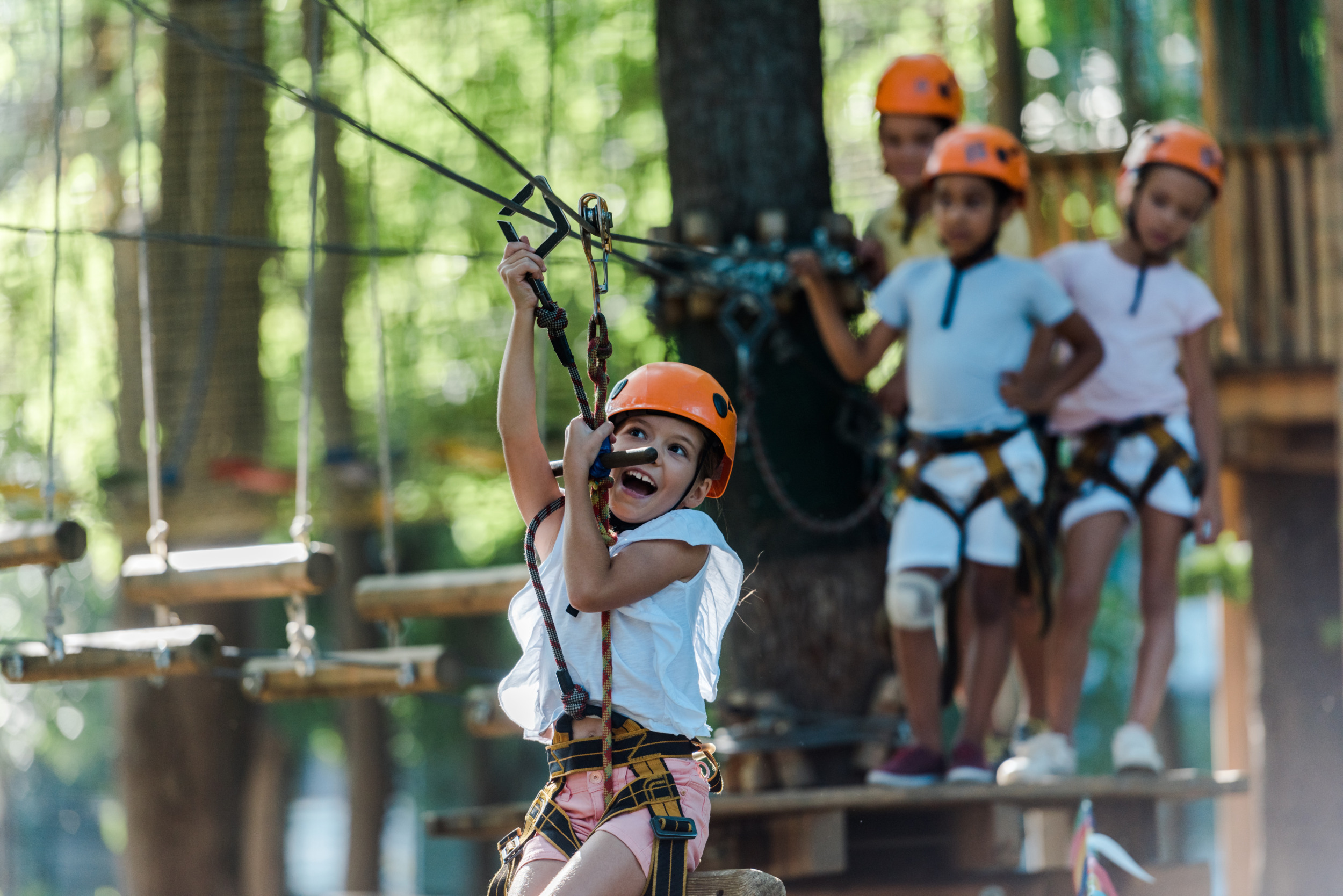
I frequently hear from camp directors about how outdoor play and outdoor engagement takes that young person who struggles inside and turns them into a leader outside. How arguments and conflicts that may arise indoors vanish outside. Outdoors, everybody is cooperatively engaged in making the biggest fort they can out of driftwood from the beach. I hear from program leaders, and I’ve seen it myself, about the joy that comes from being outside, the change in facial expressions and body language, as young people learn and connect with nature using their whole bodies.
[Related Report: The nature of the outdoors — Stronger youth development through exploration]
We’ve partnered with groups that are doing research in this area, including Hello Insight, and it’s been really interesting to see how so many young people thrive in outdoor spaces, across demographics, and that we can measure this. Hello Insight found that Latinx youth, especially, reported feelings of great happiness and joy outdoors. Their sense of connection to the school, to the outdoor space and to each other improve dramatically having opportunities to play outdoors and to just be outdoors and follow their own inquiry outdoors. So that was really interesting.
What would you say to a school or a youth organization that’s really looking at either incorporating nature into their focus on well-being, or incorporating a focus on well-being into their nature-based programming? What advice would you offer?
The advice I’ve often given to people over the years who are new to outdoor learning is just take a whole bunch of things outside that would normally be inside. A lot of schools did this during the pandemic. They would bring baskets and wagons outside, filled with all of their books, art supplies and STEM supplies. And they essentially set up outdoor learning centers on the school playgrounds. And that’s a great first step if you’re really much more comfortable teaching indoors. You can essentially bring a lot of your classroom outdoors and start there.
Once you develop greater confidence, then I think you can actually start using things like meadows and streams and woods – and green and living outdoor classrooms – as your teaching space. And you realize you can learn so much when the natural world is your teaching partner!
[Related Grant Opportunity: Indiana residential youth camp improvement grants]
***
Catherine Hubbard is the co-author of “Partnering with Nature – A Guide to Outdoor Experiences in Early Childhood,” with Dr. Patti Bailie — written for educators by educators. Partnering with Nature turns theoretical ideas about the benefits of nature in childhood into achievable results. It explores how teachers can meet state-mandated early learning standards while enjoying daily nature-based activities with students.