
This story was originally published by Chalkbeat. Sign up for their newsletters.

Educators have long been asked to perform miracles. So what’s new?
Once upon a time, we in America may have looked to houses of worship for support and safety in times of chaotic danger. In 2025, many families turn to public schools.
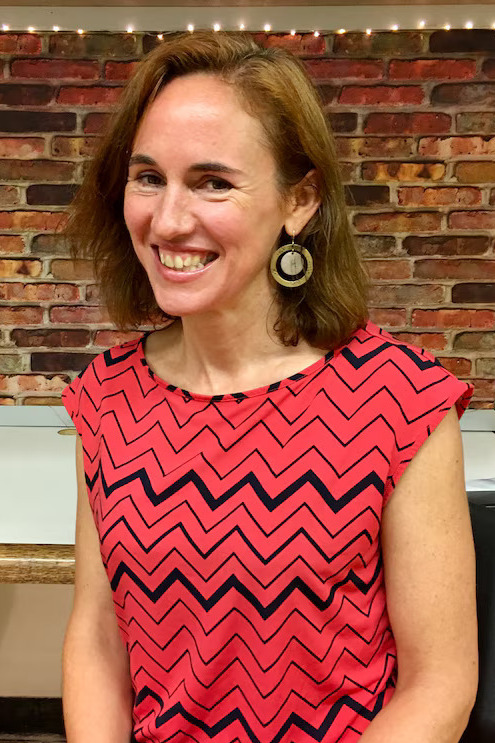
Courtesy K. CAHILL
Kristin Cahill, founding principal, HERO High School in South Bronx, New York.
Ever since Election Day, educators around the country have been planning how to protect students amid heightened risks of immigration raids and threatened cuts to public benefits and school funding. Here in New York City, where I am a high school principal, school staff have been trained how to respond if “non-local law enforcement,” such as Immigration and Customs Enforcement, or ICE, were to show up at school and demand entry.
By now, every principal in New York City knows that they do not have the right to enter without a judicial warrant.
During a training session on immigration enforcement, another school-based educator asked if we could provide sanctuary to families fleeing ICE. The response of the trainers was to restate the protocol:
ICE does not automatically have a right to enter schools. Call the staff attorney for your district immediately if they arrive.
Both the question and the response clarify a new role for schools in our faltering society. But it’s not a new direction. Our daily tasks include what was once considered religious work, though we do it for the secular purpose of developing responsible young adults who contribute to a just society.
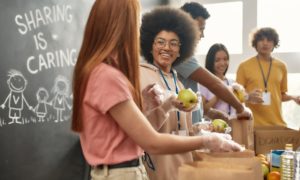
Our schools already provide as much social service support as our budgets can stretch to provide, including food baskets, winter coats, backpacks, and laundry facilities. During COVID, educators braved pre-vaccine infection to deliver Chromebooks and hotspots.
Building school community
We build our school communities on positive values, such as empathy, justice, hope, and perseverance. We turn these values into habits of encouragement, as you can see from the mantras lining classroom walls: You can do it! … Dream big! … You are stronger than you seem and smarter than you believe! We promote these values at assemblies and through social-emotional learning because such a foundation is a precursor for the hopeful work of learning.
We provide correction when students do harm, sometimes with traditional consequences, but most often through long conversations with students and families. We help young people find the courage to admit their role in wrongdoing and the strength to change.
Sometimes, things go terribly wrong, and despite our best efforts, students do things to harm themselves and others. In these moments of despair, it often falls to me to hold another mother’s hands and remind her of the good in her child and the power of her love.
Visitors who come to school for events are not immune to the currents of hope coursing through a school. This is because our work is based on the conviction that there is good in all children and families, that there is a way to help each child succeed, and that together, we can build a better world.
Expectations for educators
In many ways, the expectations for educators are in the realm of miracles. We are asked to teach students the skills and knowledge that will enable social mobility, absent the support of a just society. We have mostly accepted this challenge. The opportunities offered at high schools have expanded to include advanced and college-level classes, intensive academic and social-emotional support, and career training.
Building such schools requires much more than love and hope; it demands creativity, strategic thinking, organizational skills, and the endurance to work 14-hour days for years. At schools, every teacher, counselor, school aide, and secretary is a partner in visioning, planning, and monitoring progress, even as our compensated workday is spent in student-facing roles. The work can feel punishing.
As a principal, I know what my school needs the most is more smart, committed teachers and staff.
Yet every year, teacher shortages make hiring more challenging. I wish I could find a way to communicate to young people starting their careers that working in schools involves the kind of challenge and significance that many of the highest-performing college graduates yearn for. And in New York, at least, we are compensated well by nonprofit standards.
Supporting undocumented students
When I talk to students, teachers, and parents about how we will support newly arrived and undocumented students during this time, I see indications of a broad consensus. We believe that all children should be safe at school, regardless of immigration status or any other aspect of their identity. We believe that schools are sanctuaries and should remain that way.
It does not surprise me that the New York State Department of Education stuck to its values in the face of threats to reduce funding, even though the leaders of some prestigious universities and law firms responded with markedly less conviction. Educators choose meaning and service over profit and status every day. Our students and families can depend on us to try to do what’s best, no matter what the context.
Today, educators are tasked with promoting positive values, making sure children and families have their needs met, and teaching students the skills they will need to survive and thrive.
We do this work for everyone, including undocumented immigrants, Trump supporters, students who can’t read in high school, trans students, homophobic students, and students who bully and are bullied. We do this work for students who will take on the challenge of saving the world from the problems they inherited.
***
Kristin Cahill is the founding Principal of HERO High School in the South Bronx. HERO High opened in 2013 with an early college and career P-Tech pathway in nursing and community health, and it has since added career pathways, PSAL teams, and grown its paid internship program.
First Person is where Chalkbeat features personal essays by educators, students, parents, and others thinking and writing about public education.
Chalkbeat is a nonprofit news site covering educational change in public schools.